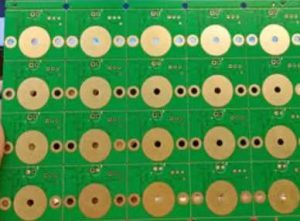
Any-Layer HDI
1. Understanding Any-Layer HDI in Modern PCB Design
1.1 Definition and Core Concept of Any-Layer HDI
Any-Layer HDI refers to a PCB architecture where microvias can connect any two adjacent layers, rather than being restricted to sequential layer build-ups. Unlike conventional HDI (1+N+1 or 2+N+2 structures), this approach enables full vertical interconnection flexibility.
Key characteristics include:
- Use of laser-drilled microvias
- Elimination of traditional through-hole vias in many cases
- Layer-by-layer lamination cycles
- High routing density and miniaturization capability
In essence, Any-Layer HDI allows designers to treat each layer as an independent routing plane, interconnected with precision via microvias.
1.2 Evolution Toward Any-Layer HDI
The transition toward Any-Layer HDI has been driven by:
- Increasing I/O counts in IC packages
- Demand for thinner and lighter devices
- Signal integrity challenges at high frequencies
- The need for shorter electrical paths
As device geometries shrink, traditional via structures become bottlenecks. Any-Layer HDI removes these constraints, enabling true 3D interconnectivity.
1.3 Structural Characteristics of Any-Layer HDI
Typical stack-up features include:
- Multiple sequential lamination cycles
- Microvias between every adjacent layer pair
- Copper-filled vias for enhanced conductivity
- Thin dielectric layers for improved signal performance
These characteristics directly influence how microvias—stacked or staggered—behave under operational stress.
2. Microvia Structures in Any-Layer HDI
2.1 What Are Microvias?
Microvias are small-diameter vias (typically ≤150 µm) created using laser drilling. They are essential in HDI designs due to their:
- Minimal footprint
- High aspect ratio control
- Compatibility with fine-pitch components
2.2 Stacked Microvias in Any-Layer HDI
Stacked microvias are vertically aligned vias placed directly on top of one another across multiple layers.
Advantages:
- Direct vertical connection
- Reduced routing complexity
- Ideal for ultra-high-density designs
Disadvantages:
- Higher stress concentration
- Increased risk of failure under thermal cycling
- More complex fabrication process
2.3 Staggered Microvias in Any-Layer HDI
Staggered microvias are offset from each other, creating a “stepped” connection path.
Advantages:
- Improved mechanical reliability
- Lower stress accumulation
- Easier manufacturability
Disadvantages:
- Increased routing space
- Slightly longer signal paths
3. Reliability Considerations for Any-Layer HDI
3.1 Thermal Stress and Fatigue in Any-Layer HDI
Thermal cycling is one of the primary failure mechanisms in HDI PCBs.
- Stacked microvias experience concentrated stress at the interfaces.
- Staggered microvias distribute stress more evenly.
Repeated expansion and contraction can lead to:
- Copper cracking
- Delamination
- Interconnect failure
3.2 Copper Filling Quality in Any-Layer HDI
Copper filling is critical for stacked microvias:
- Voids or seams can become failure initiation points
- Uniform plating is essential
Staggered structures are less sensitive but still require high-quality metallization.
3.3 Mechanical Reliability in Any-Layer HDI
Mechanical stress arises from:
- Board flexing
- Assembly processes
- Environmental conditions
Stacked microvias act as rigid vertical columns, making them more susceptible to cracking under bending forces.
Staggered microvias, with their offset geometry, provide better stress distribution.
3.4 CAF and Insulation Reliability in Any-Layer HDI
Conductive Anodic Filament (CAF) formation is another reliability concern:
- High-density designs increase CAF risk
- Proper material selection and spacing are critical
Any-Layer HDI requires high-performance laminates to mitigate these risks.
4. Advanced Materials for Any-Layer HDI Reliability
Material selection plays a pivotal role in ensuring the success of Any-Layer HDI designs. As densities increase, traditional materials often fail to meet performance expectations.
4.1 Low-CTE Materials in Any-Layer HDI
Coefficient of Thermal Expansion (CTE) mismatch is a primary driver of microvia fatigue. Advanced laminates with low CTE values help:
- Reduce mechanical stress
- Improve dimensional stability
- Extend microvia lifespan
These materials are especially important for stacked microvia structures, where stress accumulation is more severe.
4.2 High-Tg Laminates in Any-Layer HDI
High glass transition temperature (Tg) materials provide better thermal resistance. In Any-Layer HDI:
- They prevent excessive softening during reflow soldering
- Maintain structural integrity under high temperatures
- Improve overall reliability
4.3 Resin Systems and Their Role in Any-Layer HDI
Modern resin systems are engineered for:
- Enhanced adhesion to copper
- Reduced moisture absorption
- Improved dielectric performance
The synergy between resin and copper is particularly critical in stacked microvias, where adhesion failure can lead to catastrophic defects.
Comparison of Stacked vs. Staggered Microvias in Any-Layer HDI
| Parameter | Stacked Microvias (Any-Layer HDI) | Staggered Microvias (Any-Layer HDI) |
|---|---|---|
| Structure | Vertically aligned microvias stacked layer-by-layer | Offset microvias forming a stepped connection |
| Routing Density | Extremely high, ideal for compact designs | Moderate, requires more مساحة |
| Signal Path Length | Shortest possible vertical path | Slightly longer بسبب offset |
| Thermal Reliability | Lower, high stress concentration at interfaces | Higher, stress distributed across layers |
| Mechanical Strength | More rigid but prone to cracking under flex | More flexible and resistant to mechanical stress |
| Manufacturing Complexity | Very high, requires precise alignment and filling | Lower complexity, easier to fabricate |
| Copper Filling Requirement | Critical (must be void-free) | Important but less stringent |
| Cost Impact | High due to process difficulty and lower yield | Lower, better yield rates |
| Failure Risk | Higher risk of interfacial separation and crack propagation | Lower risk due to distributed stress paths |
| Inspection Difficulty | Difficult, requires advanced X-ray and analysis | Easier to inspect and verify |
| Best Use Cases | Smartphones, high-end computing, ultra-dense boards | Automotive, industrial, reliability-critical systems |
| Design Flexibility | Maximum vertical interconnect efficiency | More layout flexibility horizontally |
| Recommended Approach | Use selectively, avoid excessive stacking | Preferred for reliability-focused designs |
Conclusion
The evolution of PCB technology toward higher density, finer pitch, and greater functional integration has made Any-Layer HDI an indispensable solution for modern electronic systems. By enabling interconnections between any adjacent layers, this architecture unlocks unprecedented routing flexibility and electrical performance. However, with this flexibility comes increased complexity—particularly in the design and implementation of microvia structures.
The comparison between stacked and staggered microvias reveals a fundamental engineering trade-off. Stacked microvias offer unmatched vertical interconnection efficiency, making them ideal for ultra-compact and high-speed designs. Yet, this advantage is accompanied by elevated risks related to thermal fatigue, interfacial separation, and manufacturing challenges. On the other hand, staggered microvias provide a more robust and forgiving structure, distributing mechanical stress more effectively and improving long-term reliability, albeit at the cost of increased routing space.
From a cost perspective, Any-Layer-HDI introduces significant considerations. Sequential lamination cycles, laser drilling precision, copper filling quality, and advanced material requirements all contribute to higher production costs. Stacked microvias further amplify these costs due to their stringent process requirements and lower yield margins. Therefore, designers must carefully evaluate whether the performance benefits justify the added expense.
In terms of PCB performance, Any-Layer-HDI excels in signal integrity, power distribution, and high-frequency behavior. The ability to minimize via stubs and shorten interconnect paths directly enhances electrical efficiency. However, these benefits can only be fully realized when reliability is not compromised. Poorly designed or improperly manufactured microvias can negate performance gains and lead to premature failure.
In practical engineering scenarios, the most effective approach is rarely absolute. A hybrid microvia strategy, combining stacked and staggered structures, often delivers the best balance between density, reliability, and cost. Equally important is early collaboration with experienced PCB manufacturers. Working with capable partners such as SQ PCB ensures access to advanced fabrication technologies, optimized process control, and consistent quality—factors that are critical for successful Any-Layer-HDI implementation.
Looking forward, the continued advancement of materials, simulation tools, and manufacturing techniques will further enhance the viability of Any-Layer HDI. However, the core principle remains unchanged: reliability must always be the foundation of design decisions. Engineers who prioritize this principle while leveraging the strengths of both stacked and staggered microvias will be best positioned to deliver high-performance, cost-effective, and durable PCB solutions.

- long board pcb
- Flexible PCBs
- Special PCB
- Express Printed Circuit Board
- Pcb Prototype
- LED PCB
- PCB
- Printed Circuit Board
- Pcb meaning
- Pcb manufacturer
- Rigid pcb board
- Rigid Flex PCB
 Quote
Quote
 E-mail