Tenting Vias: The Standard Approach to Solder Mask Coverage and Its Limitations
Introduction
Printed circuit board manufacturing has evolved significantly over the past several decades, driven by the rapid advancement of consumer electronics, telecommunications, automotive electronics, aerospace systems, industrial automation, and medical devices. As electronic assemblies become smaller, denser, and more powerful, PCB fabrication techniques must continually adapt to satisfy stricter reliability requirements while maintaining competitive manufacturing costs. Among the many design and manufacturing considerations, via protection has become an increasingly important topic because vias directly influence electrical integrity, assembly yield, long-term reliability, and manufacturing efficiency.
Among various methods available for protecting vias, tenting remains the most commonly adopted solution throughout the PCB industry. It offers an economical way to isolate drilled holes from solder exposure by covering the via opening with liquid photoimageable solder mask during fabrication. Although the technique appears relatively straightforward, its implementation involves numerous engineering considerations related to hole diameter, solder mask properties, manufacturing capability, thermal cycling, reliability, and assembly requirements.
Many PCB designers automatically specify tented vias without fully understanding where the process performs exceptionally well and where its limitations begin to appear. In reality, tenting is neither universally suitable nor obsolete. Instead, it occupies an important middle ground between leaving vias exposed and employing more expensive processes such as via plugging, resin filling, or copper capping. Understanding these trade-offs enables engineers to optimize both manufacturing cost and product performance.
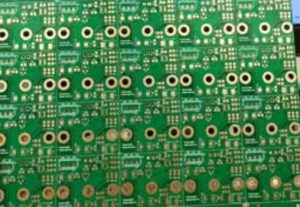
Tenting vias
Tenting Vias Definition: Understanding the Fundamental Concept
Before evaluating the advantages and disadvantages of this technique, it is essential to establish a clear understanding of what tented vias actually are and why they are widely used in PCB fabrication.
A via is a plated hole that electrically connects copper layers within a multilayer printed circuit board. Since vias penetrate insulating laminate materials, they expose openings on one or both board surfaces. Without adequate protection, these openings may become locations where solder accumulates, contaminants enter, or corrosion develops over long periods of operation.
Tenting refers to covering the via opening with solder mask during the solder mask imaging process. The solder mask forms a thin membrane across the drilled hole, resembling a small tent suspended over the opening. This characteristic appearance gives the process its name.
Unlike plugged vias, no additional filling material is introduced into the hole. The plated barrel remains hollow internally while only the surface opening is covered by cured solder mask.
The process generally follows these steps:
- PCB drilling
- Hole metallization
- Copper plating
- Pattern etching
- Surface cleaning
- LPI solder mask coating
- Photo imaging
- Developing
- Final curing
During solder mask application, liquid photoimageable (LPI) solder mask flows across the entire board surface. If the via diameter is sufficiently small and the solder mask viscosity is properly controlled, the mask bridges over the opening and cures into a continuous film.
This membrane isolates the via from direct environmental exposure while preserving the electrical connection inside the plated barrel.
However, the solder mask membrane has physical limitations. Excessively large via openings cannot reliably support the mask film, resulting in broken tents or partially open holes. Therefore, successful tenting depends heavily on via geometry and manufacturing capability.
Because tenting does not introduce additional filling materials or secondary processing steps, it remains one of the simplest and most economical methods for protecting vias during PCB fabrication.
Tenting Vias Manufacturing Process: How the Solder Mask Forms a Protective Barrier
Although via tenting appears simple from a finished PCB perspective, achieving consistent solder mask coverage requires precise control throughout multiple fabrication stages.
The process begins after copper circuitry has already been etched and inspected.
The board surface undergoes thorough cleaning to remove oxidation, fingerprints, drilling debris, chemical residues, and organic contaminants. Any contamination remaining beneath the solder mask may reduce adhesion strength and eventually cause mask lifting.
After cleaning, liquid photoimageable solder mask is coated across the entire PCB using screen printing, curtain coating, or spray coating depending on the manufacturer’s production line.
The coating thickness must satisfy several competing requirements simultaneously.
If the solder mask layer is too thin:
- The membrane may rupture.
- Pinholes become more likely.
- Chemical resistance decreases.
- Mechanical durability suffers.
Conversely, if the coating becomes excessively thick:
- Registration accuracy declines.
- Fine-pitch component spacing becomes difficult.
- Surface flatness deteriorates.
- Fine solder mask dams become unstable.
Following coating, the board undergoes a controlled drying process to partially solidify the solder mask before exposure.
A phototool defines which areas remain protected and which copper pads remain exposed for soldering.
Ultraviolet light polymerizes the desired solder mask regions.
The board is then developed using alkaline chemistry that removes unexposed solder mask while leaving cured regions intact.
Finally, thermal curing fully crosslinks the polymer, greatly improving hardness, chemical resistance, moisture resistance, and long-term adhesion.
The resulting tent should ideally form a smooth dome over the via opening without cracks, voids, or excessive thinning.
Manufacturers continuously monitor parameters such as:
- Solder mask viscosity
- Coating thickness
- Exposure energy
- Developing time
- Oven temperature
- Cure duration
- Via aspect ratio
- Hole diameter
Small deviations in any of these variables can significantly affect tent reliability.
Tenting Vias Design Rules: Why Hole Size Determines Success
One of the most misunderstood aspects of via tenting is that not every via can be successfully covered simply by requesting the process in fabrication notes.
The primary limiting factor is via diameter.
The solder mask behaves like a flexible membrane suspended over an opening. As the opening increases, mechanical stress within the membrane also increases.
Eventually the membrane becomes incapable of spanning the hole without collapsing.
Most PCB manufacturers therefore publish recommended tenting limits based on their solder mask material and process capability.
Typical guidelines include:
| Via Hole Diameter | Tenting Success Probability |
|---|---|
| ≤0.20 mm | Excellent |
| 0.20–0.30 mm | Very Good |
| 0.30–0.40 mm | Acceptable with process optimization |
| >0.40 mm | Increasing risk of mask breakage |
| >0.50 mm | Usually not recommended |
These values are not universal. Different solder mask chemistries possess different viscosities, elasticity, and curing characteristics.
Likewise, laser-drilled microvias are much easier to tent successfully than mechanically drilled through holes because of their significantly smaller diameter.
Designers should therefore consult fabrication capability tables before assuming all vias can be tented reliably.
Ignoring these recommendations often leads to unexpected fabrication yield loss.
Tenting Vias Cost Factors: Understanding the Economics of Manufacturing
One of the primary reasons tented vias remain widely adopted across the electronics industry is their exceptional cost efficiency. In highly competitive markets where manufacturing cost directly influences product pricing, even seemingly minor process selections can have substantial financial consequences when production volumes reach hundreds of thousands or millions of circuit boards.
Unlike filled or capped vias, tenting does not require dedicated filling equipment, specialized resin dispensing systems, vacuum filling chambers, or secondary planarization machinery. The solder mask coating already forms part of the standard PCB fabrication sequence, meaning that tenting introduces very little additional processing beyond normal production.
However, this does not imply that tenting is entirely cost-free. Several manufacturing variables continue to influence both fabrication cost and production yield.
One important factor is via size. Extremely small vias generally tent more successfully because the solder mask can bridge the opening with less mechanical stress. Larger vias increase the likelihood of membrane collapse, requiring tighter process control and potentially reducing manufacturing yield. Lower yield translates directly into higher production cost because defective panels must be reworked or scrapped.
Solder mask material quality also contributes to overall economics. Premium solder masks offer superior adhesion, higher chemical resistance, improved flexibility, and greater reliability under thermal cycling. Although these materials cost more than basic formulations, they often reduce defect rates sufficiently to lower the total manufacturing cost across large production volumes.
Panel design influences cost as well. Boards containing exceptionally high via densities require more precise solder mask registration and greater consistency during coating. Closely spaced vias may interact during solder mask flow, making process optimization increasingly important. Manufacturers may need to adjust coating parameters, exposure settings, or curing conditions to maintain acceptable tenting quality.
Inspection requirements represent another economic consideration. High-reliability industries such as aerospace, medical electronics, automotive safety systems, and industrial automation frequently require extensive quality verification. Automated Optical Inspection (AOI), X-ray analysis, solder mask thickness measurements, adhesion testing, and destructive cross-sectional analysis all contribute additional manufacturing expense. Although these inspections increase production costs, they also reduce the likelihood of field failures that would be far more expensive over the product lifecycle.
From a supply chain perspective, tenting also offers economic advantages because it minimizes dependence on specialized filling materials or proprietary process chemicals. Standard solder mask materials are widely available from multiple global suppliers, improving procurement flexibility and reducing vulnerability to material shortages.
Conclusion
Tenting vias has remained one of the most widely adopted PCB manufacturing techniques for decades because it delivers an effective balance between cost, manufacturability, and practical performance. As PCB designs continue to evolve toward higher component density, smaller footprints, and increasingly demanding reliability requirements, engineers are presented with a growing range of via protection technologies. Nevertheless, tenting continues to hold a valuable position because it satisfies the needs of a large percentage of commercial, industrial, communication, and consumer electronic products without introducing unnecessary manufacturing complexity.
From a manufacturing perspective, the process is straightforward. During solder mask application, the via opening is covered by a cured solder mask membrane that protects the plated hole from direct environmental exposure. Since no filling material, planarization, or secondary copper plating is required, fabrication remains both efficient and economical. This simplicity explains why tenting has become the standard option offered by virtually every PCB manufacturer around the world.
The benefits extend well beyond manufacturing convenience. Properly tented vias reduce the likelihood of solder wicking during assembly, improve board cleanliness, minimize contamination entering via barrels, enhance cosmetic appearance, and provide additional electrical insulation. For standard multilayer PCBs, these advantages often outweigh the relatively small limitations associated with the process.
However, understanding those limitations is equally important. Tenting should never be viewed as a universal solution suitable for every application. Large via openings, Via-in-Pad structures, high-power thermal designs, and ultra-high-reliability aerospace or medical electronics frequently require more advanced technologies such as via plugging, resin filling, or copper capping. Engineers must evaluate the operating environment, assembly process, mechanical stress, thermal requirements, inspection standards, and expected product lifetime before selecting the most appropriate via protection strategy.
Cost analysis further reinforces the value of tenting. Compared with filled or capped vias, tented vias significantly reduce fabrication expenses by eliminating additional process steps while still providing substantial improvements in reliability over completely exposed vias. For many high-volume products, this cost-performance balance directly contributes to competitive manufacturing and improved profitability.
Looking toward the future, advancements in solder mask chemistry, coating technologies, laser drilling accuracy, and automated process control will continue improving the reliability and consistency of tented vias. Modern LPI solder masks already demonstrate excellent adhesion, chemical resistance, and thermal durability, enabling manufacturers to successfully tent increasingly smaller vias as PCB miniaturization progresses.
Ultimately, selecting the proper via protection method is an engineering decision rather than a manufacturing preference. Successful PCB design requires balancing electrical performance, thermal management, mechanical reliability, manufacturability, inspection capability, and production cost. Tented vias remain one of the industry’s most practical solutions precisely because they achieve this balance for an exceptionally broad range of applications.
FAQs
1. What is the difference between rolled copper foil and electrolytic copper foil?
Rolled copper foil is produced by mechanically rolling copper into thin sheets, offering better surface quality, superior ductility, and higher mechanical strength. Electrolytic copper foil is manufactured through an electroplating process, making it more cost-effective, easier to produce in large volumes, and highly suitable for most standard PCB applications.
2. Are tented vias suitable for high-frequency PCB designs?
Yes. Tented vias are commonly used in RF and high-speed digital PCBs because the thin solder mask covering has very little influence on electrical performance. Signal integrity is primarily determined by via geometry, stack-up design, impedance control, and return current paths rather than the solder mask itself. However, designers should still optimize via placement and minimize via stubs for high-frequency applications.
3. What is the maximum via size that can usually be tented successfully?
The practical limit depends on the PCB manufacturer’s solder mask process and material capability. In general, vias with finished hole diameters up to approximately 0.30 mm can usually be tented with high reliability. Larger openings increase the likelihood of solder mask collapse or cracking, making via plugging or filling a better choice.
4. Can tented vias completely prevent moisture from entering the via?
No. Tented vias provide excellent environmental protection but do not create a completely hermetic seal. Microscopic defects or long-term material aging may eventually allow limited moisture penetration under harsh environmental conditions. Applications requiring absolute sealing generally use resin-filled or copper-filled vias.
5. When should designers choose filled vias instead of tented vias?
Filled vias are recommended for designs involving Via-in-Pad structures, fine-pitch BGA packages, high-power thermal management, aerospace electronics, medical equipment, and other applications requiring perfectly flat surfaces or maximum long-term reliability. Although filled vias increase manufacturing cost, they offer superior mechanical strength and assembly performance.

- long board pcb
- Flexible PCBs
- Special PCB
- Express Printed Circuit Board
- Pcb Prototype
- LED PCB
- PCB
- Printed Circuit Board
- Pcb meaning
- Pcb manufacturer
- Rigid pcb board
- Rigid Flex PCB
 Quote
Quote
 E-mail