PTFE-Based Laminates: Ultra-Low Dielectric Loss for mmWave Applications
Introduction
The rapid expansion of wireless communication technologies has dramatically transformed the performance expectations placed on printed circuit boards. Fifth-generation (5G) infrastructure, automotive radar, satellite communication, aerospace electronics, advanced imaging systems, and emerging sixth-generation (6G) research all rely heavily on high-frequency circuits operating well into the millimeter-wave (mmWave) spectrum. As frequencies increase from several gigahertz to tens or even hundreds of gigahertz, conventional PCB materials begin to exhibit significant electrical losses, signal degradation, impedance instability, and thermal reliability concerns. These limitations have encouraged the electronics industry to adopt specialized substrate materials capable of supporting increasingly demanding RF and microwave applications.
Among these advanced materials, PTFE-based laminates have established themselves as one of the most important dielectric platforms for ultra-high-frequency circuit design. Their exceptionally low dielectric constant, remarkably low dissipation factor, excellent chemical stability, and outstanding temperature resistance make them indispensable for applications where signal integrity directly determines overall system performance. From phased-array antennas and radar front-end modules to high-speed backplanes and low-noise amplifiers, PTFE substrates enable engineers to minimize insertion loss while maintaining excellent impedance consistency across extremely wide frequency ranges.
Selecting an RF laminate is no longer a decision based solely on dielectric constant. Modern PCB designers must simultaneously consider dielectric loss, dimensional stability, thermal expansion, manufacturability, copper foil characteristics, drilling quality, multilayer lamination compatibility, environmental reliability, and production cost. The optimal material is often determined by balancing electrical performance with manufacturing efficiency rather than maximizing only one parameter.
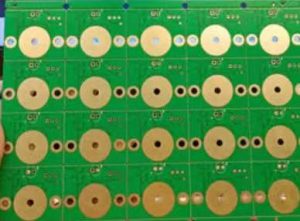
PTFE-based laminates
PTFE-Based Laminates Definition and Material Fundamentals
PTFE-based laminates are high-performance PCB substrate materials primarily composed of polytetrafluoroethylene (PTFE), a fluoropolymer widely recognized for its exceptional electrical insulation, chemical inertness, and thermal resistance. Unlike conventional FR-4 materials that utilize woven fiberglass impregnated with epoxy resin, PTFE laminates replace the epoxy matrix with fluoropolymer compounds specifically engineered to support high-frequency signal transmission.
The molecular structure of PTFE plays a crucial role in its electrical behavior. Carbon atoms form the backbone of the polymer chain, while fluorine atoms completely surround the carbon framework. This unique arrangement creates one of the strongest chemical bonds found in organic materials, resulting in extraordinary stability against heat, moisture, chemicals, ultraviolet radiation, and oxidation. Because molecular polarization remains extremely low under alternating electric fields, PTFE exhibits remarkably small dielectric losses even at microwave and millimeter-wave frequencies.
One defining characteristic of PTFE substrates is their consistently low dielectric constant. Typical values range between 2.0 and 2.3, depending on reinforcement materials and filler content. More importantly, the dielectric constant remains relatively stable across a wide frequency spectrum, reducing impedance fluctuations that can otherwise complicate RF circuit design.
Equally significant is the extremely low dissipation factor, often below 0.001 at microwave frequencies. Since dielectric loss directly contributes to insertion loss in transmission lines, PTFE allows electromagnetic signals to travel through PCB traces with minimal energy attenuation. This property becomes increasingly valuable as operating frequencies exceed 24 GHz, 60 GHz, 77 GHz, and eventually approach 110 GHz and beyond.
Unlike traditional laminates, PTFE substrates are rarely manufactured using pure fluoropolymer alone. Most commercial materials incorporate reinforcement systems designed to improve dimensional stability, mechanical strength, and fabrication reliability. Common reinforcement methods include woven fiberglass, ceramic fillers, quartz fibers, or proprietary composite structures developed to optimize both electrical and mechanical performance.
The evolution of PTFE laminate technology reflects decades of continuous innovation. Early generations emphasized electrical performance but suffered from poor machinability and high thermal expansion. Modern formulations successfully integrate advanced fillers that significantly enhance drilling accuracy, plated through-hole reliability, multilayer registration, and thermal stability while preserving the exceptionally low dielectric loss that distinguishes PTFE from competing substrate materials.
PTFE-Based Laminates vs. Other Common PCB Materials
| Property | PTFE-Based Laminates | Standard FR-4 | High-Tg FR-4 | Hydrocarbon Ceramic | Polyimide |
|---|---|---|---|---|---|
| Typical Dielectric Constant (Dk) | 2.0–2.3 | 4.2–4.8 | 4.1–4.7 | 3.0–3.6 | 3.2–3.8 |
| Dissipation Factor (Df) | Extremely Low (<0.001–0.002) | Moderate | Moderate | Low | Low to Moderate |
| Frequency Range | Up to mmWave (100+ GHz) | Low to Medium Frequency | Medium Frequency | High Frequency | High Frequency |
| Signal Loss | Extremely Low | High | Moderate | Low | Low |
| Moisture Absorption | Extremely Low | Moderate | Moderate | Low | Low |
| Thermal Stability | Excellent | Good | Excellent | Excellent | Excellent |
| Mechanical Rigidity | Moderate | Excellent | Excellent | Good | Very Good |
| Manufacturing Difficulty | High | Low | Low | Medium | Medium |
| Relative Material Cost | High | Low | Medium | Medium-High | High |
| Typical Applications | 5G, Radar, Satellite, Aerospace | Consumer Electronics | Industrial Electronics | RF Modules | Aerospace, Flexible PCB |
PTFE-Based Laminates Manufacturing Technologies
Producing high-frequency laminates involves manufacturing processes considerably more sophisticated than those used for standard epoxy-based PCB materials. Every production stage must preserve the dielectric uniformity that ultimately determines RF performance.
Raw PTFE resin is initially processed into thin films using controlled extrusion and sintering techniques. Unlike thermosetting epoxy systems, PTFE is a thermoplastic fluoropolymer that does not undergo conventional curing reactions. Instead, particles are compressed and sintered at carefully controlled temperatures approaching the polymer’s melting point. During this stage, molecular chains fuse together while maintaining the material’s crystalline structure.
To improve dimensional stability, manufacturers often introduce reinforcement materials before lamination. Glass fabric remains common due to its mechanical strength and relatively low dielectric impact. However, ceramic-filled PTFE systems have become increasingly popular because ceramic particles reduce thermal expansion while improving drilling performance and maintaining excellent electrical properties.
Copper bonding represents one of the most technically demanding manufacturing stages. Since untreated PTFE exhibits poor adhesion characteristics, specialized surface activation processes are required before copper foil lamination. Plasma treatment, sodium etching, or proprietary chemical activation methods create microscopic surface structures that significantly increase bonding strength between copper and fluoropolymer.
Multilayer PTFE PCB fabrication introduces additional complexity. Unlike FR-4 prepregs that readily flow during lamination, PTFE requires carefully controlled pressure profiles, temperature cycles, and bonding films specifically formulated for fluoropolymer systems. Precise process control becomes essential for minimizing dielectric variation across multiple layers.
Drilling technology also differs substantially from conventional PCB production. Because PTFE is comparatively soft, drill bit geometry, spindle speed, feed rate, and backup materials require optimization to prevent burr formation, hole deformation, or excessive smear. Laser drilling is increasingly employed for microvias in advanced RF packaging applications, although mechanical drilling remains widely used for larger plated through holes.
Quality assurance throughout manufacturing involves far more than visual inspection. Manufacturers routinely monitor dielectric constant uniformity, copper adhesion strength, thermal expansion coefficients, moisture absorption, insertion loss, impedance consistency, dimensional stability, and surface roughness. These parameters directly influence the final electrical behavior of microwave circuits.
PTFE-Based Laminates Dielectric Constant and Loss Tangent Analysis
The electrical superiority of PTFE laminates originates primarily from two closely related material parameters: dielectric constant (Dk) and dissipation factor (Df), also known as loss tangent. Together, these characteristics determine how efficiently electromagnetic energy propagates through the substrate and how much signal power is lost during transmission. As communication systems migrate toward millimeter-wave frequencies, even minor differences in these values can significantly influence overall system performance.
The dielectric constant describes the material’s ability to store electrical energy relative to a vacuum. In PCB transmission lines, dielectric constant directly affects propagation velocity, characteristic impedance, wavelength, and circuit dimensions. PTFE typically exhibits dielectric constant values ranging from approximately 2.0 to 2.3 for unfilled materials, although ceramic-filled variants may extend well beyond this range depending on design objectives.
A low dielectric constant provides several important engineering benefits. Electromagnetic signals propagate faster, reducing propagation delay in high-speed communication systems. Lower Dk also decreases parasitic capacitance between adjacent conductors, helping minimize crosstalk and preserving signal integrity in densely routed RF layouts. Furthermore, transmission lines built on low-Dk materials often exhibit wider trace widths for a given impedance, simplifying PCB fabrication and improving manufacturing tolerance.
Equally important is dielectric constant stability across frequency. Many conventional PCB materials experience noticeable changes in dielectric constant as operating frequency increases, introducing impedance variations and phase errors that complicate RF circuit design. PTFE maintains remarkably stable dielectric properties from low megahertz frequencies through microwave and millimeter-wave bands, allowing simulation models to closely match actual hardware performance.
Temperature stability represents another significant advantage. In practical applications, electronic systems experience substantial environmental temperature variation. Materials whose dielectric properties fluctuate with temperature may cause resonant frequencies to drift, filter bandwidths to shift, or antenna radiation patterns to degrade. PTFE exhibits minimal dielectric variation over an extremely broad temperature range, providing exceptional frequency stability for precision RF equipment.
While dielectric constant influences signal propagation, dissipation factor determines how much electrical energy converts into heat during transmission. Every dielectric material absorbs a small portion of electromagnetic energy as signals travel through transmission lines. This energy loss accumulates with trace length and becomes increasingly significant as frequency rises.
PTFE possesses one of the lowest dissipation factors available among commercially practical PCB substrate materials. Values below 0.001 are common for premium laminate formulations, substantially outperforming standard epoxy systems. Such ultra-low dielectric loss enables engineers to design longer transmission paths while maintaining acceptable insertion loss budgets, reducing the need for additional amplification stages and improving overall communication efficiency.
Insertion loss consists of several components, including conductor loss, dielectric loss, radiation loss, and mismatch loss. As operating frequency increases, dielectric loss becomes an increasingly dominant contributor. Selecting PTFE laminates therefore allows designers to minimize one of the largest sources of signal attenuation in modern microwave systems.
The relationship between dielectric constant and loss tangent is particularly important in phased-array antenna design. Beam steering accuracy depends on maintaining precise phase relationships among numerous transmission paths. Low-loss PTFE substrates preserve signal amplitude while stable dielectric constant ensures accurate phase propagation. Together, these characteristics enable highly efficient beamforming across wide frequency ranges.
Accurate dielectric characterization has also become increasingly important during PCB design. Material suppliers now provide dielectric measurements obtained using advanced techniques such as split-post dielectric resonators, stripline resonators, and differential phase methods over multiple frequency bands. Engineers can incorporate these measured parameters directly into electromagnetic simulation software, improving agreement between simulation and manufactured hardware while reducing costly design iterations.
As communication technology continues evolving toward frequencies exceeding 100 GHz, dielectric characterization will become even more critical. PTFE remains one of the few substrate materials capable of maintaining sufficiently low dielectric loss to support these emerging applications without fundamentally limiting system performance.
PTFE-Based Laminates Thermal Performance and Long-Term Reliability
Electrical performance alone cannot guarantee successful deployment in advanced electronic systems. Modern RF modules frequently operate under demanding thermal conditions created by increasing power densities, compact packaging, and continuous high-frequency operation. Consequently, thermal stability has become an equally important criterion when selecting PCB substrate materials for millimeter-wave applications.
PTFE possesses excellent intrinsic thermal resistance. The polymer remains chemically stable over an exceptionally broad temperature range and resists degradation at temperatures far exceeding those tolerated by many conventional engineering plastics. This inherent stability contributes to reliable electrical performance even during prolonged exposure to elevated operating temperatures.
One significant thermal characteristic is PTFE’s relatively high melting point combined with its resistance to thermal oxidation. Unlike many organic polymers that gradually degrade when repeatedly exposed to high temperatures, PTFE maintains its molecular integrity over long service periods. This durability makes it particularly attractive for aerospace electronics, military communication equipment, industrial microwave systems, and automotive radar modules expected to operate continuously under harsh environmental conditions.
Thermal expansion, however, presents both opportunities and challenges. Pure PTFE exhibits a relatively high coefficient of thermal expansion compared with copper conductors. Excessive thermal expansion mismatch can generate mechanical stress around plated through holes, solder joints, and multilayer interfaces during repeated heating and cooling cycles. Manufacturers address this issue through reinforcement materials and ceramic fillers that substantially reduce overall laminate expansion while preserving low dielectric loss.
Thermal conductivity is another important consideration. Although PTFE itself is not highly thermally conductive, ceramic-filled variants often demonstrate significantly improved heat dissipation capabilities. Enhanced thermal conductivity allows heat generated by active RF components to spread more efficiently throughout the PCB structure, reducing localized hot spots and improving long-term component reliability.
The thermal properties of PTFE also influence manufacturing processes. During multilayer lamination, controlled heating profiles are necessary to ensure dimensional stability while maintaining reliable interlayer bonding. Excessive thermal gradients can introduce internal stress, making precise temperature control an essential part of high-quality PCB fabrication.
Repeated thermal cycling is one of the most severe reliability challenges encountered in practical applications. Automotive radar systems, for example, may experience thousands of cycles between subzero outdoor temperatures and elevated operating temperatures during their service life. Every thermal cycle produces expansion and contraction within the PCB structure, gradually accumulating mechanical fatigue around plated vias and solder joints.
Properly reinforced PTFE laminates exhibit excellent resistance to thermal fatigue. Stable reinforcement systems minimize mechanical stress while maintaining dimensional consistency throughout repeated temperature excursions. This improved reliability contributes directly to longer product lifetimes, lower maintenance requirements, and greater confidence in mission-critical electronic systems.
Another important reliability advantage involves moisture resistance during thermal aging. Because PTFE absorbs extremely little moisture, it experiences minimal property changes during humidity exposure followed by elevated-temperature operation. In contrast, moisture-sensitive materials may suffer dielectric degradation, delamination, or conductive anodic filament formation over extended service periods.
Long-term aging studies have consistently demonstrated that PTFE laminates retain their electrical characteristics remarkably well after prolonged environmental exposure. Dielectric constant, dissipation factor, insulation resistance, and chemical stability remain highly consistent even after years of operation under demanding conditions. This long-term predictability reduces maintenance costs while increasing confidence in applications where replacement or repair is difficult, expensive, or impossible.
For designers developing next-generation mmWave systems, thermal reliability should therefore be evaluated alongside electrical specifications. The true value of PTFE laminates lies not only in their ability to minimize insertion loss on the first day of operation, but also in their capacity to preserve that performance throughout many years of continuous service under challenging environmental conditions.
PTFE-Based Laminates Impact on PCB Performance
The selection of a PCB substrate fundamentally influences every aspect of circuit behavior. While components such as integrated circuits, antennas, connectors, and passive devices often receive the greatest attention during system design, the laminate itself forms the electrical foundation upon which the entire circuit operates. PTFE-based laminates affect PCB performance in numerous interconnected ways, extending well beyond simple dielectric loss reduction.
Perhaps the most obvious impact is signal transmission efficiency. Every transmission line experiences attenuation as electromagnetic energy propagates through both the dielectric material and the conductor. PTFE’s exceptionally low dissipation factor minimizes dielectric absorption, allowing a greater percentage of signal energy to reach its destination. This improved efficiency becomes increasingly valuable in long transmission paths, high-frequency backplanes, antenna feed networks, and complex phased-array architectures.
Lower insertion loss directly improves communication range in wireless systems. Because less signal energy is lost within the PCB itself, transmitters can deliver greater effective radiated power without increasing amplifier output. Similarly, receivers experience improved sensitivity because incoming signals arrive with higher amplitudes after traversing the RF circuitry. These advantages contribute to longer communication distances, stronger signal margins, and more reliable wireless connections.
Impedance stability represents another major performance benefit. High-speed digital interfaces and RF transmission lines require carefully controlled characteristic impedance to minimize reflections and preserve waveform integrity. PTFE’s highly stable dielectric constant allows engineers to maintain consistent impedance across wide frequency ranges and varying environmental conditions. This predictability simplifies PCB layout while improving correlation between simulation and physical hardware.
Phase accuracy is particularly important for microwave systems employing beamforming, coherent detection, or precision timing. PTFE’s dielectric stability minimizes phase variation caused by temperature fluctuations or frequency changes, enabling more accurate synchronization among multiple RF channels. This capability is essential for applications such as phased-array radar, satellite tracking antennas, and advanced imaging systems.
Noise performance also improves with lower dielectric loss. Reduced energy absorption decreases thermal noise generation within transmission paths, contributing to higher signal-to-noise ratios and improved receiver sensitivity. Low-noise amplifiers, mixers, oscillators, and frequency synthesizers all benefit from cleaner signal propagation throughout the RF subsystem.
Thermal stability significantly influences long-term electrical consistency. Many PCB materials experience measurable changes in dielectric constant as operating temperature varies, potentially shifting resonant frequencies or altering impedance characteristics. PTFE maintains highly consistent electrical behavior across wide temperature ranges, ensuring stable system performance in demanding environmental conditions.
Moisture resistance further enhances PCB reliability. Since PTFE absorbs extremely little water, humidity has minimal impact on dielectric properties. Outdoor communication equipment, marine electronics, aerospace systems, and industrial automation devices therefore maintain consistent performance even under prolonged exposure to challenging environmental conditions.
Mechanical stability also affects electrical performance. Modern reinforced PTFE laminates minimize dimensional changes during fabrication and thermal cycling, helping preserve trace geometry, via alignment, and impedance accuracy throughout the product lifecycle. Stable mechanical behavior reduces the likelihood of fatigue-related failures while supporting increasingly complex multilayer PCB architectures.
Manufacturing repeatability represents another important advantage. Consistent laminate properties allow PCB manufacturers to achieve tighter process control, resulting in more predictable electrical performance across large production volumes. Improved repeatability simplifies product qualification and reduces variability between individual assemblies.
Conclusion
The rapid advancement of high-frequency electronics has fundamentally changed the way engineers evaluate PCB materials. As operating frequencies continue moving beyond traditional microwave bands into the millimeter-wave spectrum, substrate selection has become one of the most influential factors affecting overall system performance. Parameters such as dielectric constant, dissipation factor, thermal stability, dimensional accuracy, moisture resistance, and manufacturing consistency now play a decisive role in determining whether an RF design achieves its intended performance.
PTFE-based laminates have earned their reputation as one of the industry’s premier high-frequency substrate technologies because they address these demanding requirements exceptionally well. Their ultra-low dielectric loss enables signals to travel farther with less attenuation, while their stable dielectric constant supports accurate impedance control, predictable phase behavior, and consistent electromagnetic performance across wide frequency ranges. These characteristics make PTFE an ideal material for advanced wireless communication, automotive radar, aerospace electronics, satellite communication, medical imaging, scientific instrumentation, and many other mission-critical applications.
Nevertheless, selecting PTFE should never be viewed as a universal solution for every PCB project. Material selection must always reflect the specific electrical requirements, environmental conditions, mechanical constraints, manufacturing capabilities, and commercial objectives of the final product. For lower-frequency applications, conventional materials may provide sufficient performance at significantly lower cost. Conversely, when every decibel of insertion loss matters or long-term reliability under harsh conditions is essential, the investment in PTFE-based laminates often delivers substantial technical and economic benefits throughout the product lifecycle.
Successful implementation also depends heavily on manufacturing expertise. The unique processing characteristics of PTFE require specialized drilling technologies, optimized lamination procedures, advanced copper bonding techniques, precise impedance control, and rigorous quality assurance. Without appropriate fabrication experience, even the highest-quality laminate cannot fully realize its electrical potential.
Looking toward the future, emerging technologies such as 6G communication, satellite internet constellations, autonomous transportation, high-resolution radar, quantum communication, advanced sensing platforms, and artificial intelligence infrastructure will continue pushing operating frequencies higher while demanding even lower signal loss and greater manufacturing precision. PTFE-based laminates are expected to remain one of the foundational materials supporting these innovations. Ongoing developments in reinforcement technologies, ceramic fillers, copper foil engineering, hybrid composite structures, and automated manufacturing processes will further enhance their electrical performance while gradually improving manufacturability and reducing production costs.
Ultimately, PTFE-based laminates represent far more than simply another PCB material. They provide a sophisticated engineering platform that enables designers to overcome the increasingly difficult challenges associated with modern high-frequency electronics. As communication systems continue evolving, their combination of electrical excellence, environmental stability, and proven reliability will ensure that PTFE remains one of the most valuable substrate technologies for future RF and millimeter-wave circuit design.
FAQ
1. What is the difference between rolled copper foil and electrolytic copper foil?
Rolled copper foil is produced by mechanically rolling copper into thin sheets, resulting in a smoother surface, better grain structure, higher mechanical strength, and improved flexibility. Because of its lower surface roughness, it is often preferred for high-frequency RF and flexible circuit applications where minimizing conductor loss is important.
Electrolytic copper foil is manufactured through an electroplating process in which copper is deposited onto a rotating drum. It is generally more cost-effective, easier to produce in large volumes, and offers excellent adhesion to PCB substrates. Although its surface is typically rougher than rolled copper, advanced low-profile and reverse-treated electrolytic foils have significantly improved high-frequency performance.
2. Why are PTFE-based laminates preferred for millimeter-wave applications?
Millimeter-wave circuits operate at extremely high frequencies where dielectric loss becomes one of the primary limitations to signal transmission. PTFE-based laminates possess exceptionally low dielectric loss and stable dielectric constant, allowing electromagnetic signals to travel with minimal attenuation while maintaining excellent impedance consistency and phase stability.
These properties improve antenna efficiency, communication distance, receiver sensitivity, and overall RF system performance, making PTFE one of the preferred materials for applications such as 5G infrastructure, automotive radar, satellite communication, and aerospace electronics.
3. Why are PTFE-based laminates more expensive than conventional FR-4?
The higher cost results from several combined factors. PTFE resin itself is significantly more expensive than epoxy resin due to its complex manufacturing process and stringent purity requirements. In addition, PTFE laminates often incorporate specialized ceramic fillers, premium copper foils, and reinforcement materials that increase production costs.
Manufacturing also requires dedicated drilling, lamination, surface treatment, and quality inspection processes that are considerably more demanding than those used for standard FR-4 boards. However, the improved electrical performance and long-term reliability frequently justify the higher investment in demanding RF applications.
4. What design considerations are important when using PTFE-based laminates?
Engineers should carefully evaluate transmission line impedance, dielectric thickness tolerance, copper surface roughness, via design, thermal expansion, stack-up configuration, and manufacturing capabilities. Maintaining tight dimensional control is particularly important because even very small geometric variations can influence electrical performance at millimeter-wave frequencies.
Close collaboration between PCB designers, simulation engineers, and manufacturers during the early design stage helps optimize both electrical performance and fabrication yield.
5. Can PTFE-based laminates be used in multilayer PCBs?
Yes. Modern PTFE-based laminates are widely used in multilayer RF and microwave printed circuit boards. However, multilayer fabrication requires specialized bonding materials, carefully controlled lamination cycles, precise layer registration, and optimized drilling techniques to maintain dimensional stability and electrical consistency.
Advanced reinforcement systems and ceramic fillers have significantly improved the manufacturability of multilayer PTFE structures compared with earlier generations of fluoropolymer laminates.

- long board pcb
- Flexible PCBs
- Special PCB
- Express Printed Circuit Board
- Pcb Prototype
- LED PCB
- PCB
- Printed Circuit Board
- Pcb meaning
- Pcb manufacturer
- Rigid pcb board
- Rigid Flex PCB
 Quote
Quote
 E-mail