Rogers 4000 Series: Low-Loss Laminates for RF and Microwave Circuits
Introduction
The continuous evolution of wireless communication has fundamentally reshaped printed circuit board technology. Applications that once operated comfortably at several hundred megahertz are now routinely designed for frequencies extending into tens of gigahertz. Fifth-generation cellular networks, automotive radar, satellite communication, phased-array antennas, aerospace electronics, and high-speed networking equipment all require circuit materials capable of preserving signal integrity while maintaining excellent manufacturing consistency.
Traditional FR-4 laminates have served the PCB industry exceptionally well for decades because of their low cost, mechanical strength, and mature manufacturing processes. However, as frequencies increase, the electrical limitations of conventional epoxy-based materials become increasingly apparent. Dielectric loss, inconsistent dielectric constant, excessive insertion loss, and poor phase stability can significantly degrade overall system performance.
This demand for higher electrical performance has driven the development of specialized laminate systems specifically engineered for radio frequency (RF) and microwave circuits. Among these advanced materials, the Rogers 4000 Series has become one of the most widely adopted families of high-frequency laminates. By combining low dielectric loss, stable electrical properties, excellent thermal performance, and compatibility with conventional FR-4 fabrication processes, these laminates successfully bridge the gap between premium PTFE-based materials and standard epoxy systems.
Unlike many fluoropolymer laminates that require specialized drilling, plasma processing, and complex multilayer bonding techniques, this material family was intentionally engineered to simplify manufacturing while still delivering the electrical performance demanded by modern RF designs. This balance has made it a preferred choice for engineers seeking reliable performance without dramatically increasing production complexity or manufacturing costs.
Another reason for its popularity is versatility. Engineers designing cellular infrastructure, military communication systems, automotive radar modules, GPS receivers, IoT gateways, and microwave filters often encounter competing design priorities. Electrical performance, thermal reliability, fabrication yield, mechanical stability, and overall cost must all be optimized simultaneously. Few laminate systems address these requirements as effectively across such diverse applications.
As wireless standards continue evolving toward higher frequencies, broader bandwidths, and greater integration density, material selection is becoming one of the earliest and most influential engineering decisions. The substrate no longer serves merely as a mechanical support for copper traces; it has become an active electrical component that directly influences impedance, attenuation, phase matching, thermal behavior, and long-term reliability.
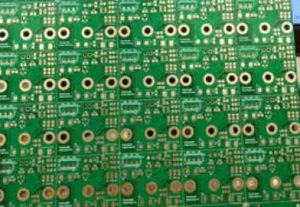
Rogers 4000 Series
Rogers 4000 Series Definition
What Is Rogers 4000 Series?
The Rogers 4000 Series is a family of high-frequency laminate materials specifically engineered for radio frequency, microwave, millimeter-wave, and high-speed digital printed circuit boards. Unlike conventional FR-4 substrates that primarily emphasize mechanical support and general-purpose electrical insulation, these laminates are designed with electrical performance as a primary objective.
At its core, the material family utilizes a hydrocarbon ceramic-filled thermoset resin system. This formulation differs significantly from traditional epoxy chemistry while avoiding many of the processing complexities associated with PTFE (polytetrafluoroethylene) materials. Ceramic fillers are carefully distributed throughout the resin to provide stable dielectric properties, improved thermal conductivity, lower dielectric loss, and excellent dimensional stability.
One of the defining characteristics of the series is its ability to combine low-loss electrical performance with fabrication processes similar to standard epoxy laminates. Manufacturers can drill, plate, laminate, and assemble these materials using equipment already common in most PCB fabrication facilities, significantly reducing production barriers compared with PTFE-based substrates.
The series includes several well-known grades, each optimized for specific engineering requirements:
- Rogers 4003C
- Rogers 4350B
- Rogers 4360G2
- Rogers 4835T
- Other specialized variants developed for thermal management or environmental compliance.
Although these materials share a common design philosophy, each grade provides unique combinations of dielectric constant, thermal expansion coefficient, glass transition temperature, oxidation resistance, and dielectric loss, allowing engineers to select the most appropriate substrate for their specific applications.
Rather than replacing every FR-4 board, these laminates are typically reserved for applications where electrical performance directly influences system functionality. Examples include microwave amplifiers, RF filters, antennas, power dividers, couplers, phased-array radar modules, automotive sensing systems, and satellite communication hardware.
An important engineering advantage is consistency. Electrical properties remain highly uniform across production lots, reducing impedance variation and simplifying large-volume manufacturing. For RF systems where even minor dielectric variations can shift resonant frequencies or degrade insertion loss, this consistency contributes significantly to predictable product performance.
From a design perspective, the laminate should be considered an active component within the electrical system. Every transmission line, resonator, matching network, and antenna interacts with the substrate’s dielectric properties. Selecting an appropriate material therefore directly influences overall circuit efficiency, insertion loss, return loss, radiation characteristics, and long-term operational stability.
Rogers 4000 Series Material Composition
The excellent electrical performance originates from its carefully engineered material composition rather than from any single constituent.
Instead of relying solely on woven fiberglass reinforced epoxy, the laminate incorporates hydrocarbon resin technology combined with precision-controlled ceramic fillers. These ceramic particles serve multiple purposes simultaneously.
First, ceramic loading stabilizes the dielectric constant over broad frequency ranges. Stable dielectric properties enable predictable impedance calculations and minimize frequency-dependent performance variation.
Second, ceramic fillers reduce dielectric loss by limiting energy dissipation within the substrate during high-frequency signal propagation. Lower dielectric loss translates directly into reduced insertion loss, longer transmission distances, and improved receiver sensitivity.
Third, the ceramic structure improves thermal conductivity. Heat generated by power amplifiers, RF front-end modules, and microwave integrated circuits can be transferred more efficiently throughout the board, improving component reliability and reducing thermal stress.
Meanwhile, the hydrocarbon resin system provides mechanical flexibility and manufacturing compatibility. Unlike PTFE materials, which often require specialized surface preparation before copper adhesion, the resin chemistry supports strong copper bonding using established PCB fabrication techniques.
Fiberglass reinforcement further enhances dimensional stability during multilayer lamination, drilling, soldering, and thermal cycling. Maintaining precise dimensional accuracy is particularly important for phased-array antennas, differential transmission lines, and tightly controlled impedance structures where even slight dimensional deviations can affect circuit behavior.
The combination of hydrocarbon resin, ceramic filler, and fiberglass reinforcement represents a carefully balanced engineering solution. Rather than maximizing one property at the expense of others, the formulation seeks to optimize electrical, thermal, mechanical, and manufacturing performance simultaneously.
As a result, designers gain access to a laminate capable of supporting increasingly demanding RF applications while remaining practical for large-scale commercial PCB production.
Rogers 4000 Series Manufacturing Compatibility
One of the defining advantages of this laminate family is its compatibility with conventional PCB manufacturing processes. Many high-performance RF materials require specialized drilling parameters, plasma treatments, unique bonding films, or complex multilayer lamination procedures, increasing both production cost and manufacturing risk.
In contrast, these laminates were intentionally engineered to integrate more easily into existing FR-4 fabrication environments. PCB manufacturers can often process them using equipment already installed for standard multilayer production, requiring only moderate adjustments to process parameters rather than complete manufacturing changes.
Mechanical drilling generally produces clean hole quality with minimal smear, reducing post-drilling preparation requirements. Copper adhesion is strong, allowing reliable plating and solderability without the extensive surface treatments commonly associated with PTFE substrates.
Multilayer lamination is likewise more straightforward. Because the resin system exhibits processing characteristics familiar to many PCB fabricators, layer registration, bonding quality, and dimensional control are easier to maintain. This compatibility contributes to higher manufacturing yields and lower production costs, particularly for medium- and high-volume orders.
Lead-free assembly processes also benefit from the material’s thermal stability. Modern electronics increasingly rely on high-temperature reflow soldering to comply with environmental regulations. Stable laminate properties help maintain board flatness and reduce the likelihood of delamination or excessive expansion during repeated soldering cycles.
From an engineering management perspective, manufacturing compatibility offers an often-overlooked advantage: shorter product development cycles. Designers can transition from prototype to mass production with fewer process modifications, reducing qualification time and accelerating product launches.
Rogers 4000 Series Material Variants and Their Engineering Characteristics
The Rogers 4000 Series is not a single laminate but rather a comprehensive family of high-frequency materials developed to address different electrical, thermal, and manufacturing requirements. Although all members share the same fundamental design philosophy—delivering low dielectric loss while maintaining compatibility with conventional PCB fabrication processes—each material has been optimized for specific performance targets.
Understanding the differences among these materials enables PCB designers to select the most suitable substrate for their applications instead of choosing solely based on cost or familiarity. In practice, the optimal laminate is determined by balancing electrical performance, thermal reliability, mechanical stability, production complexity, and overall project budget.
Engineers often discover that the substrate contributing the lowest insertion loss is not always the most economical choice. Likewise, a material with the highest thermal performance may not provide significant advantages if the operating frequency is relatively low. Therefore, selecting an appropriate laminate requires evaluating the complete system rather than focusing on individual specifications.
Rogers 4000 Series Rogers 4003C
Among all members of the family, Rogers 4003C is one of the most widely used materials in commercial RF PCB manufacturing. It has earned this position because it successfully balances electrical performance, fabrication simplicity, and reasonable manufacturing cost.
The material provides a stable dielectric constant, low dissipation factor, and excellent dimensional stability, making it suitable for microwave circuits operating well into the multi-gigahertz frequency range. Because of its hydrocarbon ceramic construction, it avoids many of the processing challenges associated with PTFE while still offering significantly lower electrical loss than conventional FR-4.
Engineers frequently select Rogers 4003C for applications such as RF amplifiers, microwave filters, antenna feed networks, couplers, impedance transformers, and communication modules. In these designs, signal attenuation must remain low while manufacturing consistency remains high.
Another reason for its popularity is predictable fabrication. The material drills cleanly, bonds well to copper foil, and supports multilayer construction without requiring highly specialized manufacturing equipment. This compatibility helps reduce production costs while maintaining excellent electrical repeatability across large manufacturing volumes.
From an engineering perspective, Rogers 4003C often represents an excellent compromise between premium electrical performance and practical manufacturability. It enables designers to achieve impressive RF performance without significantly increasing fabrication complexity.
Rogers 4000 Series Rogers 4350B
If Rogers 4003C is regarded as the workhorse of commercial RF PCB manufacturing, Rogers 4350B is often viewed as the premium choice for applications demanding higher thermal stability and greater reliability under harsh operating conditions.
One of its distinguishing features is improved thermal performance. As RF power levels increase, the substrate must dissipate heat efficiently while maintaining stable electrical characteristics. Rogers 4350B performs particularly well in high-power microwave circuits because its material structure minimizes dielectric drift even during prolonged exposure to elevated temperatures.
Another important advantage is mechanical reliability during lead-free assembly. Modern electronic products typically undergo multiple solder reflow cycles at temperatures exceeding 240°C. Materials experiencing excessive expansion or internal stress during these cycles may develop microcracks, delamination, or plated-through-hole failures.
The excellent dimensional stability of Rogers 4350B reduces these risks and contributes to higher long-term reliability.
This material is commonly found in:
- High-power RF amplifiers
- Base station power modules
- Automotive radar sensors
- Aerospace communication systems
- Military microwave electronics
- Satellite communication equipment
Many designers appreciate the material because it provides high electrical performance without introducing complicated fabrication requirements. Manufacturing engineers can therefore maintain relatively high production yields while producing sophisticated RF products.
Rogers 4000 Series Rogers 4360G2
As environmental regulations continue evolving, PCB materials must not only deliver high electrical performance but also satisfy increasingly stringent sustainability requirements.
Rogers 4360G2 was developed with these considerations in mind. It combines excellent microwave performance with improved thermal characteristics while supporting environmentally responsible manufacturing processes.
Its electrical properties remain highly stable across broad frequency ranges, making it suitable for modern wireless communication systems operating at increasingly higher frequencies. At the same time, the material offers enhanced oxidation resistance and long-term reliability under elevated operating temperatures.
Engineers developing communication infrastructure appreciate its ability to maintain consistent dielectric properties over extended service lives. This consistency reduces maintenance requirements while improving equipment reliability.
Applications commonly include:
- Wireless infrastructure
- 5G communication equipment
- Broadband networking hardware
- RF backhaul systems
- Microwave transmission modules
- High-speed digital backplanes
As communication networks become increasingly complex, materials like Rogers 4360G2 help ensure stable operation over years of continuous service.
Rogers 4000 Series Rogers 4835T
The demand for higher data rates continues pushing communication systems toward increasingly higher frequencies. As frequencies rise, dielectric loss becomes an even greater concern.
Rogers 4835T addresses this challenge by providing exceptionally low dielectric loss while maintaining excellent oxidation resistance and thermal stability.
Oxidation resistance may appear to be a secondary characteristic, but it significantly influences long-term reliability. Copper oxidation can increase conductor loss, reduce solderability, and negatively affect signal integrity over extended operating periods. By improving oxidation resistance, the material contributes to stable electrical performance throughout the product lifecycle.
Its low insertion loss makes it particularly attractive for:
- Millimeter-wave communication
- High-speed networking
- Microwave antennas
- Satellite transceivers
- Precision radar systems
- Broadband communication equipment
As communication frequencies continue approaching millimeter-wave bands, materials with extremely low dielectric loss will become increasingly valuable.
Typical Rogers 4000 Series Material Grades
| Material Grade | Main Features | Typical Frequency Range | Typical Applications |
|---|---|---|---|
| Rogers 4003C | Balanced electrical performance and cost | Up to tens of GHz | RF Modules, Antennas, Filters |
| Rogers 4350B | Higher thermal reliability | High Microwave Frequencies | Base Stations, Radar, Aerospace |
| Rogers 4360G2 | Environmentally friendly with excellent stability | Microwave & High-Speed Digital | 5G Infrastructure |
| Rogers 4835T | Ultra-low dielectric loss | Millimeter Wave | Satellite, Automotive Radar |
Rogers 4000 Series Cost Factors
Selecting a high-frequency laminate is not simply a technical decision—it is also an economic one. Every PCB project is developed under cost constraints, whether for consumer electronics, industrial automation, telecommunications infrastructure, or aerospace systems. While the Rogers 4000 Series is generally more expensive than conventional FR-4 materials, its overall value should be evaluated from a system-level perspective rather than by considering laminate price alone.
Many engineers initially compare only the raw material cost and conclude that specialized RF laminates are significantly more expensive. However, this comparison overlooks the broader financial implications of electrical performance, manufacturing efficiency, product reliability, and lifecycle costs. In many high-frequency applications, the substrate directly influences system efficiency, production yield, maintenance requirements, and product lifespan. Consequently, a higher material investment can often reduce the total cost of ownership.
Understanding the factors that contribute to the overall cost of a PCB built with this laminate family enables designers to make informed decisions and optimize both technical performance and commercial competitiveness.
Rogers 4000 Series Material Cost
The most visible cost component is the laminate itself. Hydrocarbon ceramic-filled materials require more sophisticated formulations, tighter manufacturing controls, and higher-quality raw materials than standard epoxy laminates. These factors naturally increase production costs at the material supplier level.
Unlike commodity FR-4, which is manufactured in extremely high volumes worldwide, high-frequency laminates are produced in comparatively smaller quantities with stricter quality assurance procedures. Every production batch undergoes extensive testing to verify dielectric constant, dissipation factor, thickness tolerance, copper adhesion, dimensional stability, and thermal performance.
This additional quality control contributes to higher purchase prices but also provides engineers with greater confidence in electrical consistency.
Material thickness also affects cost. Thicker laminates require more raw material, while thinner precision laminates demand tighter manufacturing tolerances. Both situations may increase overall pricing depending on the specific product configuration.
Copper weight further influences laminate cost. High-power RF applications often require thicker copper layers to improve current-carrying capability and thermal management. Increased copper thickness raises material consumption while also affecting drilling, plating, and etching processes.
Although the initial material investment is higher than conventional substrates, the improved electrical performance frequently eliminates the need for additional amplification stages, signal compensation networks, or extensive circuit tuning, partially offsetting the increased laminate expense.
FAQ
1. Why is choosing an experienced PCB manufacturer important for high-frequency boards?
High-frequency PCB fabrication requires precise impedance control, accurate multilayer registration, optimized drilling, controlled lamination, strict quality inspection, and comprehensive RF manufacturing expertise. An experienced manufacturer can ensure that the electrical advantages of advanced laminate materials are fully realized in the finished PCB, resulting in higher production yields, better reliability, and more consistent RF performance.
2. Why is the Rogers 4000 Series preferred over standard FR-4 for RF applications?
The Rogers 4000 Series provides lower dielectric loss, more stable dielectric constant, better thermal performance, and improved impedance consistency than standard FR-4. These characteristics reduce signal attenuation, improve RF efficiency, and provide more predictable electrical performance at microwave frequencies, making it a better choice for communication, radar, and satellite applications.
3. Can the Rogers 4000 Series be manufactured using standard PCB fabrication equipment?
Yes. One of the major advantages of the Rogers 4000 Series is its compatibility with conventional FR-4 PCB manufacturing processes. Most experienced PCB manufacturers can process these laminates with only minor adjustments to drilling, lamination, and fabrication parameters, making production more economical than many PTFE-based materials.
4. Which industries commonly use the Rogers 4000 Series?
These laminates are widely used in 5G communication infrastructure, automotive radar systems, aerospace electronics, satellite communications, military RF equipment, medical imaging devices, wireless networking equipment, microwave filters, power amplifiers, and high-speed digital systems where signal integrity is critical.
5. What factors should engineers consider when selecting a Rogers 4000 Series laminate?
Engineers should evaluate operating frequency, dielectric constant requirements, insertion loss targets, thermal performance, PCB stack-up, manufacturing capabilities, mechanical reliability, environmental conditions, layer count, and overall project budget. Selecting the most appropriate material requires balancing electrical performance with manufacturing efficiency and cost.

- long board pcb
- Flexible PCBs
- Special PCB
- Express Printed Circuit Board
- Pcb Prototype
- LED PCB
- PCB
- Printed Circuit Board
- Pcb meaning
- Pcb manufacturer
- Rigid pcb board
- Rigid Flex PCB
 Quote
Quote
 E-mail