Photoimageable Solder Mask: LPI Technology for Fine Feature Definition
Introduction
Printed circuit boards have evolved dramatically over the past several decades. As electronic devices continue to become smaller, faster, and more complex, PCB manufacturing technologies must keep pace with increasingly demanding requirements. Among the many innovations that have enabled modern electronics, Photoimageable Solder Mask has emerged as one of the most important materials used in PCB fabrication.
The solder mask serves as a protective layer covering copper circuitry while exposing only the areas intended for soldering. Although solder mask technology may appear simple from a distance, its influence extends far beyond cosmetic appearance. It affects manufacturability, electrical reliability, assembly yield, environmental resistance, and long-term product performance.
Among the various solder mask technologies available today, Liquid Photoimageable (LPI) solder mask has become the dominant industry standard. Its ability to achieve fine feature definition, excellent adhesion, high throughput manufacturing, and compatibility with advanced PCB designs makes it indispensable in modern electronics production.
From smartphones and wearable devices to automotive control systems, telecommunications equipment, aerospace electronics, and medical instruments, this technology supports countless applications where precision and reliability are essential.
In my view, the success of modern PCB manufacturing is not driven solely by advances in copper circuitry or semiconductor packaging. Equally important are enabling technologies that quietly improve manufacturing precision. The widespread adoption of LPI solder mask is a perfect example. While often overlooked compared with high-profile technologies such as HDI or advanced semiconductor packaging, it plays a critical role in making those technologies possible.
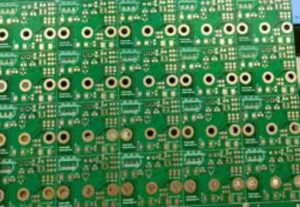
Photoimageable Solder Mask
Photoimageable Solder Mask: Understanding the Fundamental Definition
Photoimageable Solder Mask is a photosensitive polymer coating applied to the surface of a printed circuit board. After application, the coating is selectively exposed to ultraviolet light through a phototool or direct imaging system. The exposed areas undergo chemical changes that allow the desired pattern to be developed and permanently cured.
The primary purpose of the solder mask is to:
- Protect copper traces from oxidation
- Prevent solder bridging during assembly
- Improve electrical insulation
- Enhance environmental resistance
- Increase mechanical durability
- Improve overall PCB reliability
Unlike older screen-printed masks that relied heavily on mechanical alignment, photoimageable materials enable significantly higher precision and repeatability.
The process is conceptually similar to photographic film development. A photosensitive coating receives controlled light exposure, creating a patterned image that is subsequently developed. This imaging capability allows manufacturers to create extremely accurate openings over pads, vias, test points, and other functional features.
The material itself typically consists of:
- Epoxy-based polymers
- Photoinitiators
- Pigments
- Solvents
- Additives for adhesion and thermal resistance
Once fully cured, the resulting protective layer becomes highly resistant to heat, chemicals, moisture, and mechanical wear.
As PCB geometries continue shrinking, the importance of accurate solder mask definition becomes increasingly significant. Modern designs often require spacing measured in tens of microns, making precise imaging capabilities essential.
Photoimageable Solder Mask: Influence on PCB Electrical Performance
The contribution of solder mask technology to PCB electrical performance is often underestimated. Many engineers primarily associate the solder mask with protection against oxidation and solder bridging, yet its presence also affects electrical behavior throughout the life cycle of a circuit board. As signal frequencies continue to increase and circuit densities continue to grow, the interaction between solder mask materials and electrical performance becomes increasingly significant.
One of the primary electrical functions of a solder mask is insulation. The cured polymer layer separates adjacent conductive features and helps prevent unintended electrical paths. Without a properly functioning protective layer, contamination, moisture absorption, and conductive debris could create leakage currents between neighboring traces. Such leakage may not be immediately apparent during manufacturing but can gradually lead to reliability issues in field operation.
The dielectric properties of the solder mask also contribute to overall PCB behavior. Although the thickness of the coating is relatively small compared with the dielectric substrate, the solder mask still influences electromagnetic fields surrounding conductors. At high frequencies, even subtle changes in dielectric characteristics can affect impedance control and signal propagation. Modern high-speed digital systems operating at multi-gigabit data rates require engineers to account for every factor that may influence signal integrity, including the characteristics of the protective coating.
Another important consideration involves insulation resistance. High-quality materials maintain excellent electrical isolation even under elevated humidity conditions. This characteristic becomes particularly important in industrial environments where condensation, pollution, and temperature fluctuations are common. A stable insulation resistance helps ensure consistent performance throughout the service life of the product.
Electrical reliability is especially critical in applications such as automotive safety systems, aerospace control modules, medical monitoring devices, and telecommunications infrastructure. In these environments, even minor electrical failures can lead to serious consequences. Therefore, the selection and processing of solder mask materials directly contribute to the overall dependability of the electronic system.
From my perspective, modern PCB design should treat the solder mask not merely as a protective coating but as an integrated component of the electrical system. As frequencies rise and tolerances become tighter, every layer on the board contributes to performance, including the layer that many engineers once viewed as purely cosmetic.
Photoimageable Solder Mask: Effects on Signal Integrity and High-Speed Design
The rapid development of 5G communications, cloud computing, artificial intelligence hardware, and high-speed networking equipment has placed unprecedented demands on PCB performance. Signal integrity has become a central design challenge, and solder mask characteristics play a subtle but important role in achieving stable signal transmission.
Signal integrity refers to the ability of electrical signals to travel through a circuit without excessive distortion, attenuation, reflection, or noise. Several aspects of solder mask technology influence these factors.
First, the dielectric constant of the material affects electromagnetic field distribution around conductors. Since a portion of the field exists above the trace surface, the solder mask becomes part of the signal transmission environment. Variations in dielectric properties can alter characteristic impedance, especially in tightly controlled high-speed designs.
Second, surface roughness and coating uniformity influence conductor performance. Uneven coating thickness may introduce small variations in electromagnetic behavior across the board. While such effects may be negligible at low frequencies, they become increasingly important as operating frequencies approach several gigahertz.
Third, advanced photoimageable materials contribute to manufacturing consistency. High-quality registration and dimensional control reduce variability between production batches, allowing designers to achieve more predictable electrical performance.
Many high-speed PCB designers now evaluate solder mask properties alongside traditional considerations such as dielectric materials, copper roughness, and trace geometry. Simulation tools increasingly incorporate solder mask characteristics into signal integrity models.
As electronic systems continue moving toward higher frequencies and faster edge rates, the importance of material consistency will only increase. The ability of LPI technology to provide repeatable electrical performance represents one of its most valuable contributions to advanced PCB manufacturing.
Photoimageable Solder Mask: Thermal Performance and Heat Resistance
Thermal performance represents another critical aspect of solder mask technology. Modern electronics often operate under demanding thermal conditions, requiring materials capable of maintaining stability across wide temperature ranges.
During assembly, solder mask materials must survive multiple thermal excursions. Reflow soldering temperatures commonly exceed 240°C in lead-free manufacturing environments. The coating must maintain adhesion and structural integrity despite exposure to these elevated temperatures.
Thermal cycling presents an even greater challenge. Products may repeatedly transition between low and high temperatures throughout their operational life. Automotive electronics, for example, can experience temperatures ranging from below freezing during winter operation to extremely high temperatures within engine compartments.
A high-performance solder mask must resist:
- Thermal cracking
- Delamination
- Discoloration
- Loss of adhesion
- Mechanical degradation
Modern epoxy-based photoimageable materials are specifically engineered to withstand these stresses. Their cross-linked polymer structures provide excellent dimensional stability while maintaining strong adhesion to copper and substrate surfaces.
Heat resistance also contributes to long-term reliability. Elevated temperatures accelerate chemical reactions that can degrade materials over time. High-quality formulations are designed to minimize such degradation and maintain protective properties throughout extended service periods.
Thermal management has become increasingly important as power densities continue rising in electronic systems. While the solder mask itself is not a primary heat dissipation pathway, its stability under thermal stress remains essential for maintaining overall PCB integrity.
Photoimageable Solder Mask: Mechanical Protection and Environmental Resistance
Electronic products encounter numerous environmental challenges throughout their service life. Dust, humidity, chemicals, vibration, and mechanical stress all have the potential to damage exposed circuitry. The solder mask serves as the first line of defense against many of these threats.
Mechanical protection begins with physical coverage of copper conductors. Without a protective layer, traces can be scratched, abraded, or damaged during manufacturing, assembly, transportation, and operation. The cured polymer coating provides a durable barrier that helps preserve circuit integrity.
Moisture resistance is equally important. Water absorption can contribute to corrosion, electrical leakage, and reliability degradation. Modern solder mask materials are formulated to minimize moisture uptake while maintaining strong adhesion to the underlying substrate.
Chemical resistance enables PCBs to survive exposure to cleaning agents, industrial contaminants, fuels, lubricants, and other potentially aggressive substances. Different industries impose different environmental requirements, but the need for robust protection remains universal.
For outdoor applications, ultraviolet stability may also be important. Prolonged UV exposure can degrade certain polymer systems, leading to discoloration and reduced mechanical properties. Specialized formulations are available for products expected to operate in harsh outdoor environments.
Mechanical durability contributes directly to product longevity. A well-formulated and properly processed solder mask can continue protecting the PCB for many years, even under challenging operating conditions.
Photoimageable Solder Mask: Cost Factors in PCB Manufacturing
The cost of implementing solder mask technology depends on numerous interconnected factors. While the solder mask represents only one component of overall PCB manufacturing cost, its influence extends across multiple stages of production.
Material cost is the most obvious factor. High-performance formulations designed for advanced applications typically command higher prices than standard products. Specialized properties such as ultra-fine imaging capability, high-temperature resistance, or enhanced chemical resistance often require more sophisticated chemical formulations.
Equipment investment also contributes significantly to cost considerations. Modern LPI production lines require:
- Precision coating systems
- UV exposure equipment
- Direct imaging systems
- Development equipment
- Thermal curing ovens
- Automated inspection systems
These capital investments enable superior quality and productivity but increase manufacturing overhead.
Process control requirements further affect overall cost. High-resolution imaging demands careful monitoring of exposure energy, coating thickness, development parameters, and curing conditions. Maintaining these controls requires skilled personnel and advanced quality management systems.
Yield improvement, however, often offsets much of the additional expense. Better registration accuracy and improved process consistency reduce defects, rework, and scrap. For complex PCBs, the resulting yield benefits can significantly outweigh the added material and equipment costs.
Another important consideration involves product complexity. As PCB designs become more advanced, the value provided by precise imaging increases dramatically. Fine-pitch components, HDI structures, and high-density routing often require capabilities that only modern photoimageable technologies can provide.
In my opinion, evaluating solder mask cost solely on the basis of material price is a mistake. Manufacturers should instead consider the total cost of ownership, including yield improvement, reliability enhancement, reduced rework, and customer satisfaction. When viewed from this broader perspective, high-quality LPI technology often proves highly cost-effective.
Photoimageable Solder Mask Cost Factors
| Cost Factor | Description | Impact on Total PCB Cost |
|---|---|---|
| Raw Material Cost | Resin, photoinitiators, pigments, additives | Medium |
| Coating Equipment | Automated coating machines | Medium to High |
| Exposure Systems | UV exposure or direct imaging equipment | High |
| Development Equipment | Chemical development systems | Medium |
| Curing Ovens | Thermal curing infrastructure | Medium |
| Process Control | Monitoring and quality assurance | Medium |
| Labor Cost | Skilled operators and engineers | Medium |
| Yield Improvement | Reduced defects and rework | Positive Cost Reduction |
| Reliability Improvement | Fewer field failures | Positive Cost Reduction |
| Inspection Systems | AOI and quality verification | Medium |
Photoimageable Solder Mask: Impact on Manufacturing Yield
Manufacturing yield directly influences profitability and customer satisfaction. Even small improvements in yield can produce substantial economic benefits, particularly for high-volume production programs.
One of the greatest strengths of photoimageable technology is its ability to support consistent, repeatable manufacturing processes. Accurate imaging reduces registration errors and minimizes defects associated with solder mask misalignment.
Common defects reduced by modern LPI processes include:
- Exposed copper
- Pad encroachment
- Incomplete development
- Solder bridging risks
- Adhesion failures
By minimizing these defects, manufacturers can achieve higher first-pass yields and reduce costly rework operations.
The impact becomes especially significant for advanced products incorporating fine-pitch components. In such designs, even minor registration errors may lead to assembly failures. High-resolution imaging provides the precision necessary to support increasingly demanding design requirements.
Manufacturers competing in global markets often view yield improvement as a critical strategic advantage. Consistent production quality enables faster delivery, lower costs, and improved customer confidence.
Conclusion
Photoimageable Solder Mask has become one of the foundational technologies enabling modern printed circuit board manufacturing. While it may appear to be merely a protective coating, its impact extends throughout nearly every aspect of PCB performance, reliability, manufacturability, and long-term durability.
The adoption of Liquid Photoimageable technology has transformed the industry’s ability to support fine-feature circuitry, high-density interconnect architectures, advanced semiconductor packaging, and increasingly complex electronic systems. Its precision imaging capability allows manufacturers to meet the demands of modern miniaturization while maintaining excellent production yields and quality standards.
Beyond its imaging advantages, Photoimageable Solder Mask contributes significantly to electrical insulation, environmental protection, thermal stability, and mechanical durability. These characteristics are essential for applications ranging from consumer electronics and telecommunications equipment to automotive control systems, medical devices, aerospace platforms, and defense electronics.
Cost considerations remain important, but the true value of LPI technology lies in its ability to improve manufacturing consistency and long-term reliability. When viewed from a total lifecycle perspective, investments in high-quality solder mask materials and well-controlled manufacturing processes frequently deliver substantial returns through enhanced yield, reduced field failures, and improved customer satisfaction.
Looking toward the future, ongoing advancements in semiconductor packaging, HDI technology, artificial intelligence, autonomous systems, and high-speed communications will continue driving demand for increasingly sophisticated solder mask solutions. Emerging innovations in direct imaging, digital manufacturing, environmental sustainability, and smart factory integration are likely to further strengthen the role of photoimageable technology within the PCB industry.
In my view, Photoimageable Solder Mask represents an excellent example of how a seemingly modest manufacturing technology can exert a profound influence on the success of modern electronics. As devices become more powerful, compact, and interconnected, the importance of accurate and reliable solder mask processing will only continue to grow.
FAQ
1. What is the difference between Photoimageable Solder Mask and traditional screen-printed solder mask?
Photoimageable Solder Mask uses a photosensitive material that is patterned through UV exposure and chemical development, allowing much finer feature definition and higher registration accuracy. Traditional screen-printed solder mask relies on mechanical printing and generally offers lower resolution, making it less suitable for HDI and fine-pitch PCB designs.
2. Why is Photoimageable Solder Mask widely used in HDI PCB manufacturing?
HDI boards require extremely precise solder mask openings because conductor spacing and component pitches are very small. Photoimageable Solder Mask provides superior imaging accuracy, excellent registration control, and consistent manufacturing performance, making it the preferred choice for HDI applications.
3. How does Photoimageable Solder Mask affect PCB reliability?
The solder mask protects copper circuitry from oxidation, moisture, chemicals, and mechanical damage. It also improves electrical insulation and reduces the risk of solder bridging during assembly. These benefits significantly enhance the long-term reliability and operational stability of the PCB.
4. What factors influence the cost of Photoimageable Solder Mask processing?
Major cost factors include raw material quality, coating equipment, exposure systems, development processes, curing equipment, inspection systems, process control requirements, and production yield. Although LPI technology may require higher initial investment, improved yields and reliability often reduce overall lifecycle costs.
5. Why is green the most common solder mask color?
Green solder mask offers an excellent balance of process stability, inspection visibility, and manufacturing efficiency. It provides strong contrast against copper traces and component markings, making defect detection easier during production and quality control processes.

- long board pcb
- Flexible PCBs
- Special PCB
- Express Printed Circuit Board
- Pcb Prototype
- LED PCB
- PCB
- Printed Circuit Board
- Pcb meaning
- Pcb manufacturer
- Rigid pcb board
- Rigid Flex PCB
 Quote
Quote
 E-mail