OSP (Organic Solderability Preservative): Ultra-Flat, Ultra-Clean for Fine-Pitch Assembly
Introduction
As printed circuit boards continue to evolve toward higher density, smaller package sizes, and faster signal transmission, the choice of surface finish has become more critical than ever. Surface finish technology is no longer a simple protective layer added at the final stage of fabrication. Instead, it directly influences solderability, assembly yield, reliability, electrical performance, storage stability, and manufacturing cost. Among the many surface finishes available today, OSP has emerged as one of the most practical and economical solutions for modern electronic manufacturing.
Organic Solderability Preservative is widely recognized for its exceptionally flat surface, clean interface characteristics, and compatibility with fine-pitch components. In industries where miniaturization dominates product design—such as smartphones, wearable devices, automotive electronics, industrial controls, networking equipment, and consumer electronics—surface planarity is extremely important. Even microscopic unevenness may lead to solder bridging, insufficient joints, or assembly failures. This is one reason why many manufacturers increasingly rely on OSP technology.
Compared with metallic surface finishes such as ENIG, HASL, immersion silver, and immersion tin, OSP provides a simpler and more environmentally friendly alternative. It avoids thick metal deposition while still protecting exposed copper pads from oxidation before soldering. The result is a clean copper surface capable of excellent solder wetting during SMT assembly.
Another important reason for the popularity of OSP lies in cost control. Electronics manufacturing is highly competitive, especially for mass-market products with thin profit margins. OSP offers a relatively low-cost surface finish while still meeting the assembly requirements of fine-pitch and high-density PCB designs. This balance between performance and affordability makes it especially attractive for large-scale production.
However, despite its advantages, OSP is not a universal solution. It has limitations regarding shelf life, handling sensitivity, thermal cycling exposure, and repeated reflow capability. Engineers must carefully evaluate whether OSP fits the reliability expectations of the final product.
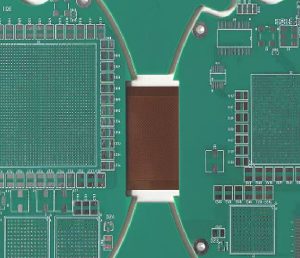
Organic Solderability Preservative
Understanding Organic Solderability Preservative
What Is Organic Solderability Preservative?
Organic Solderability Preservative is a thin organic coating applied to exposed copper surfaces on a PCB to protect them from oxidation before soldering. Unlike metallic finishes that deposit nickel, gold, tin, or silver layers, OSP forms an ultra-thin organic film through chemical adsorption onto copper pads.
The coating is typically based on azole compounds such as benzotriazole or imidazole derivatives. These organic molecules chemically bond with copper atoms, creating a protective barrier that slows oxidation while remaining removable during soldering.
The thickness of the coating is usually extremely thin, often ranging between 0.2 and 0.5 microns. Because the layer is so thin, the original copper surface topography remains nearly unchanged. This creates one of the flattest PCB finishes available in the industry.
The coating decomposes during soldering exposure, allowing molten solder to wet directly onto clean copper. This mechanism differentiates OSP from metallic finishes that remain part of the final solder joint structure.
From an engineering perspective, the elegance of OSP lies in its simplicity. Rather than adding multiple metallic layers, it preserves the natural solderability of copper until the assembly process occurs.
Organic Solderability Preservative Manufacturing Process
Organic Solderability Preservative Surface Preparation
The performance of OSP heavily depends on proper copper surface preparation. Any contamination, oxidation, or micro-etch inconsistency may reduce coating uniformity.
The preparation process typically includes:
- Degreasing
- Acid cleaning
- Micro-etching
- Water rinsing
- Surface activation
Micro-etching is particularly important because it slightly roughens the copper surface, improving molecular bonding between the organic compound and copper.
Poor cleaning may create localized coating failures, which later appear as oxidation spots or solderability defects.
Organic Solderability Preservative Coating Formation
After surface preparation, panels enter the OSP chemical bath. The azole compounds react with copper atoms and form organometallic complexes.
This reaction creates a self-limiting protective film. Once the copper surface becomes fully coated, the reaction naturally slows.
Key process parameters include:
- Bath temperature
- Immersion time
- pH level
- Chemical concentration
- Copper surface roughness
Maintaining stable process control is essential because the coating thickness is extremely thin.
Organic Solderability Preservative Drying and Final Inspection
After coating, the PCB undergoes drying to stabilize the organic layer.
Inspection methods may include:
- Visual inspection
- Water break testing
- Thickness verification
- Solderability testing
- Ionic contamination testing
Unlike metallic finishes, OSP coatings are nearly invisible. This sometimes makes quality verification more challenging.
Organic Solderability Preservative and PCB Performance
Organic Solderability Preservative Influence on Solderability
One of the greatest strengths of OSP is excellent initial solderability.
Because the organic layer decomposes during reflow, molten solder contacts clean copper directly. This often creates:
- Fast wetting speed
- Strong solder joints
- Uniform fillets
- Reduced voiding
- Good paste spread
Fine-pitch assemblies particularly benefit from the smooth pad geometry.
In my observation, OSP performs extremely well when manufacturing discipline is strong. However, if handling procedures are careless, oxidation sensitivity may become problematic much faster than with ENIG.
Organic Solderability Preservative Thermal Reliability
OSP generally performs well under standard SMT thermal conditions. However, repeated thermal exposure gradually degrades the coating.
Potential concerns include:
- Multiple reflow cycles
- Excessive storage time
- Rework operations
- High-temperature assembly exposure
Unlike ENIG, OSP does not provide long-term metallic protection after repeated heating.
This limitation becomes important in:
- Aerospace electronics
- Military systems
- Harsh industrial environments
- Long-life automotive applications
For highly demanding reliability environments, engineers sometimes prefer ENIG or ENEPIG despite higher cost.
Organic Solderability Preservative Cost Factors
Organic Solderability Preservative Material Cost Advantages
OSP is generally considered one of the lowest-cost PCB surface finishes.
Major reasons include:
- No precious metals
- Simple chemistry
- Reduced process steps
- Lower energy consumption
- Faster throughput
Compared with ENIG, OSP eliminates expensive gold and nickel deposition stages.
For high-volume consumer electronics production, even small cost reductions per PCB can create enormous savings.
Organic Solderability Preservative Compared with Other Surface Finishes
Organic Solderability Preservative vs HASL
HASL remains popular because of its strong solderability and robustness.
However, compared with OSP:
| Feature | OSP | HASL |
|---|---|---|
| Surface Flatness | Excellent | Moderate |
| Fine-Pitch Suitability | Excellent | Limited |
| Cost | Low | Low |
| Shelf Life | Moderate | Good |
| Thermal Robustness | Moderate | Good |
| Environmental Performance | Better | Moderate |
OSP is generally superior for dense SMT assemblies.
Organic Solderability Preservative vs ENIG
ENIG offers outstanding reliability and shelf life but at significantly higher cost.
| Feature | OSP | ENIG |
|---|---|---|
| Cost | Low | High |
| Flatness | Excellent | Excellent |
| Shelf Life | Moderate | Excellent |
| Rework Resistance | Limited | Strong |
| RF Performance | Good | Moderate |
| Process Complexity | Low | High |
ENIG dominates high-reliability sectors, while OSP dominates cost-sensitive consumer electronics.
Conclusion
Organic Solderability Preservative has become one of the most influential PCB surface finish technologies in modern electronics manufacturing. Its combination of ultra-flat surface geometry, excellent solderability, environmental friendliness, and low cost makes it highly attractive for fine-pitch SMT assembly and high-volume consumer electronics production.
Unlike metallic finishes that rely on thick deposited layers, OSP protects copper through an elegant organic molecular coating. This approach preserves surface planarity exceptionally well while enabling direct copper solder wetting during assembly.
The advantages of OSP are clear:
- Excellent flatness
- Low manufacturing cost
- Strong SMT compatibility
- Environmentally friendly processing
- Good high-frequency characteristics
- Efficient large-scale production suitability
However, engineers must also recognize its limitations:
- Shorter shelf life
- Sensitivity to handling
- Limited multiple reflow tolerance
- Reduced robustness under harsh environments
In practical engineering, the “best” surface finish always depends on application priorities. For mission-critical aerospace systems, ENIG may still dominate. For rugged industrial environments, HASL may remain attractive. But for compact, cost-sensitive, fine-pitch consumer electronics, OSP often provides one of the most balanced solutions available today.
Personally, I believe OSP reflects a broader trend within electronics manufacturing: achieving higher performance through smarter process optimization rather than simply adding more material complexity. As assembly density continues increasing and manufacturing competition intensifies, elegant low-cost solutions like OSP will likely remain highly relevant for years to come.
FAQ
1. What is the difference between Organic Solderability Preservative and ENIG?
Organic Solderability Preservative uses a thin organic coating to protect copper surfaces, while ENIG uses electroless nickel and immersion gold layers. OSP is cheaper and provides excellent flatness, whereas ENIG offers longer shelf life and stronger long-term reliability.
2. Is Organic Solderability Preservative suitable for high-frequency PCB applications?
In many cases, yes. Because OSP does not introduce thick nickel layers, it may reduce conductor loss compared with certain metallic finishes. This can benefit RF and high-speed digital applications requiring improved signal integrity.
3. Why is Organic Solderability Preservative suitable for fine-pitch assembly?
Organic Solderability Preservative creates an ultra-flat surface because the coating is extremely thin. This minimizes coplanarity variation and improves solder paste printing accuracy for fine-pitch components such as BGA, CSP, and QFN packages.
4. Does Organic Solderability Preservative have a shorter shelf life than ENIG?
Yes. OSP coatings are more sensitive to oxidation, humidity, and handling conditions. ENIG generally provides better long-term storage stability because of its metallic gold protection layer.
5. Can Organic Solderability Preservative support lead-free soldering?
Yes. Modern OSP chemistries are fully compatible with lead-free assembly processes and RoHS manufacturing requirements. Many consumer electronics products use OSP together with SAC lead-free solder alloys.

- long board pcb
- Flexible PCBs
- Special PCB
- Express Printed Circuit Board
- Pcb Prototype
- LED PCB
- PCB
- Printed Circuit Board
- Pcb meaning
- Pcb manufacturer
- Rigid pcb board
- Rigid Flex PCB
 Quote
Quote
 E-mail