Conductive Anodic Filament (CAF) Resistant Materials & Structures: Engineering Reliability in Advanced PCB Systems
Introduction
In the rapidly evolving world of electronics, reliability has become just as critical as performance. As printed circuit boards (PCBs) move toward higher density, finer pitch, and increased operational voltages, latent failure mechanisms that were once negligible are now major concerns. One of the most insidious of these is Conductive Anodic Filament formation.
Often invisible until catastrophic failure occurs, this electrochemical phenomenon can silently degrade insulation resistance between vias or traces, ultimately leading to short circuits. In mission-critical applications such as automotive electronics, aerospace systems, and high-speed communication infrastructure, even a minor reliability issue can translate into significant financial and safety risks.
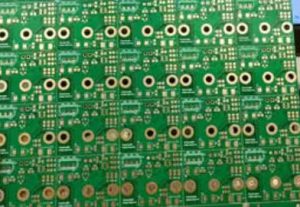
Conductive Anodic Filament
1. Conductive Anodic Filament Definition and Mechanism
1.1 Understanding Conductive Anodic Filament Formation
Conductive Anodic Filament (CAF) refers to the electrochemical migration of metal ions—typically copper—along the interface between glass fibers and resin within a PCB substrate. This migration results in the formation of conductive filaments that bridge adjacent conductive elements, causing electrical leakage or short circuits.
CAF formation requires three essential conditions:
- Electrical bias (voltage difference)
- Moisture presence
- Susceptible material interface
The process typically initiates at the anode, where copper dissolves into ions. These ions migrate through microvoids or weak bonding regions and deposit at the cathode, forming a conductive path.
1.2 Conductive Anodic Filament Growth Pathways
CAF propagation typically occurs along:
- Glass fiber-resin interfaces
- Microcracks in laminate structures
- Poorly bonded resin-rich regions
The anisotropic nature of PCB laminates makes these pathways particularly vulnerable under environmental stress conditions.
2. Conductive Anodic Filament Cost Factors and Economic Impact
2.1 Material Cost Implications of Conductive Anodic Filament Resistance
Enhancing resistance to Conductive Anodic Filament often requires advanced materials, including:
- Modified epoxy resins with improved adhesion
- Low ionic contamination glass fibers
- High-purity copper foils
These materials typically increase base laminate costs by 10–30%, depending on supplier and specification.
2.2 Manufacturing Process Costs Related to Conductive Anodic Filament
CAF-resistant designs also introduce additional process requirements:
- Tighter drilling tolerances
- Enhanced desmear processes
- Controlled lamination pressure and temperature
Each step contributes to higher manufacturing complexity and cost.
2.3 Lifecycle Cost Benefits of Conductive Anodic Filament Prevention
Despite higher upfront costs, CAF-resistant designs reduce:
- Field failure rates
- Warranty claims
- Maintenance and recall costs
From a total cost of ownership perspective, investing in CAF resistance is economically justified, particularly in high-reliability sectors.
3. Conductive Anodic Filament Impact on PCB Performance
3.1 Electrical Reliability and Conductive Anodic Filament
CAF directly affects insulation resistance (IR), leading to:
- Signal leakage
- Crosstalk
- Unexpected circuit activation
In high-speed digital circuits, even minor leakage can disrupt signal integrity.
3.2 Mechanical Integrity and Conductive Anodic Filament
CAF is often associated with microstructural weaknesses, which can:
- Reduce interlayer adhesion
- Increase susceptibility to delamination
- Accelerate failure under thermal cycling
4. Conductive Anodic Filament Resistant Materials
4.1 Resin Systems for Conductive Anodic Filament Resistance
Advanced resin formulations include:
- Epoxy systems with improved glass adhesion
- Cyanate ester blends
- Modified polyimide resins
These materials reduce ionic mobility and improve interface bonding.
4.2 Glass Fiber Treatments for Conductive Anodic Filament Mitigation
Glass fibers are treated with silane coupling agents to:
- Enhance resin bonding
- Reduce interfacial voids
- Improve moisture resistance
4.3 Copper Foil Considerations in Conductive Anodic Filament Resistance
Copper foil type influences CAF susceptibility:
- Rolled annealed copper: smoother surface, better adhesion
- Electrolytic copper: rougher, may introduce microvoids
Selecting appropriate foil is critical in high-reliability designs.
5. Conductive Anodic Filament Resistant Structural Design
5.1 Via Spacing Strategies for Conductive Anodic Filament Prevention
Increasing via-to-via spacing reduces electric field intensity, lowering CAF risk. Industry guidelines often recommend:
- Minimum spacing based on voltage levels
- Additional margins for high-humidity environments
5.2 Layer Stack-Up Optimization for Conductive Anodic Filament
Optimized stack-ups include:
- Symmetrical layer distribution
- Balanced resin content
- Controlled dielectric thickness
5.3 Drilling and Hole Quality in Conductive Anodic Filament Control
Poor drilling can create:
- Resin smear
- Glass fiber protrusion
- Microcracks
These defects serve as initiation points for CAF growth.
6. Conductive Anodic Filament Testing and Standards
6.1 Industry Standards for Conductive Anodic Filament Testing
CAF resistance is evaluated using standardized methods such as:
- IPC-TM-650 2.6.25
- Highly Accelerated Stress Testing (HAST)
6.2 Accelerated Life Testing for Conductive Anodic Filament
Typical conditions include:
- 85°C / 85% RH
- Applied voltage bias
These tests simulate long-term field conditions within shorter timeframes.
Comparison of Standard vs CAF-Resistant PCB Approaches
| Aspect | Standard PCB | CAF-Resistant PCB |
|---|---|---|
| Material Cost | Lower | 10–30% higher |
| Resin Quality | Standard epoxy | Modified, high-adhesion resin |
| Glass Fiber Interface | Basic treatment | Enhanced coupling treatment |
| Via Spacing | Minimum design rule | Increased for reliability |
| Process Control | Moderate | Tight and controlled |
| Reliability | Suitable for consumer electronics | Suitable for high-reliability applications |
| CAF Risk | Higher | Significantly reduced |
| Application Areas | Consumer devices | Automotive, aerospace, telecom |
| Long-Term Cost | Potentially higher due to failures | Lower due to reliability |
Conclusion
Conductive Anodic Filament (CAF) remains one of the most subtle yet destructive failure mechanisms in modern PCB systems. As electronic products continue to evolve toward higher density, finer geometries, and harsher operating environments, the probability of CAF-related failures increases correspondingly. Unlike visible defects, CAF develops internally within the laminate structure, making early detection difficult and amplifying its long-term reliability risks.
From a technical standpoint, mitigating Conductive Anodic Filament is not a single-point solution but a comprehensive engineering challenge. It requires the integration of material science, electrical design, and precision manufacturing. High-quality resin systems, properly treated glass fibers, and optimized copper foil selection form the foundation of CAF resistance. Meanwhile, structural considerations—such as via spacing, layer stack-up symmetry, and drilling quality—serve as critical enablers in minimizing electrochemical migration pathways.
Economically, while CAF-resistant materials and processes introduce higher upfront costs, they significantly reduce lifecycle risks. Failures caused by CAF can lead to expensive recalls, system downtime, and reputational damage. Therefore, investing in CAF prevention is not merely a technical decision but a strategic one. In high-reliability sectors, this investment often determines product success or failure.
From my perspective, the future of Conductive Anodic Filament mitigation lies in predictive engineering. With the advancement of simulation tools and AI-driven reliability modeling, designers will increasingly be able to anticipate CAF risks before fabrication begins. This shift from reactive to proactive design will redefine how reliability is approached in PCB engineering.
Equally important is collaboration across the supply chain. Material suppliers, PCB manufacturers, and OEM designers must work together to establish standardized CAF-resistant practices. Companies like SQ PCB, which emphasize process control and advanced material selection, illustrate how manufacturing expertise can play a decisive role in overcoming CAF challenges.
Ultimately, Conductive Anodic Filament is not just a failure mode—it is a benchmark of how well the industry can integrate knowledge across disciplines to build robust, reliable electronic systems. As applications expand into AI, electric vehicles, and high-frequency communications, mastering CAF resistance will become an essential competency for the next generation of PCB innovation.

- long board pcb
- Flexible PCBs
- Special PCB
- Express Printed Circuit Board
- Pcb Prototype
- LED PCB
- PCB
- Printed Circuit Board
- Pcb meaning
- Pcb manufacturer
- Rigid pcb board
- Rigid Flex PCB
 Quote
Quote
 E-mail