A Greener Circuit: The Strategic Shift to Halogen-Free Manufacturing in the PCB Industry
Introduction: Why H-alogen-Free Is No Longer Optional
For decades, the printed circuit board (PCB) industry has quietly relied on halogen-based flame retardants to meet safety and reliability requirements. Brominated and chlorinated compounds, particularly brominated epoxy resins, became the default solution for achieving flame resistance in multilayer boards. This choice was driven not by sustainability concerns, but by performance stability, processing familiarity, and cost control.
However, the global electronics industry is now undergoing a fundamental transformation. Environmental regulations, corporate ESG commitments, and end-user awareness are collectively reshaping how materials are selected and evaluated. In this new context, Halogen-Free manufacturing is no longer a niche option—it is becoming a strategic necessity.
The shift toward H-alogen-Free PCB manufacturing is not simply about replacing one chemical formulation with another. It represents a deeper change in design philosophy, material science, supply chain strategy, and long-term product positioning. Engineers must reconsider thermal behavior, resin chemistry, dielectric stability, and process windows. Manufacturers must balance environmental compliance with yield, reliability, and cost competitiveness. Brands must align sustainability messaging with real, verifiable material choices.
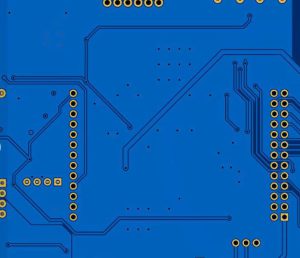
Halogen-Free
Halogen-Free Definition and Regulatory Foundations in PCB Manufacturing
What “H-alogen-Free” Truly Means in PCB Materials
In the PCB industry, the term Halogen-Free refers to laminate materials and substrates that intentionally exclude halogen elements—primarily bromine (Br) and chlorine (Cl)—from their chemical composition. These elements are traditionally introduced through flame retardants such as tetrabromobisphenol A (TBBPA), widely used in conventional FR-4 materials.
A material is generally recognized as Halogen-Free when it meets the following thresholds:
-
Chlorine (Cl) content < 900 ppm
-
Bromine (Br) content < 900 ppm
-
Total halogens < 1500 ppm
These limits are defined by international standards such as IEC 61249-2-21 and referenced by major OEM material specifications.
What is important to understand is that H-alogen-Free does not mean flame-retardant-free. Instead, halogenated flame retardants are replaced by alternative chemistries, such as:
-
Phosphorus-based compounds
-
Nitrogen-based synergists
-
Inorganic fillers with flame suppression properties
This substitution fundamentally alters how flame resistance is achieved, affecting everything from thermal decomposition pathways to smoke toxicity during combustion.
Regulatory Pressure as the Catalyst for H-alogen-Free Adoption
The rise of H-alogen-Free PCB manufacturing cannot be separated from regulatory evolution. Environmental and safety regulations did not initially target PCBs specifically—but PCBs quickly became part of broader compliance frameworks.
Key regulatory drivers include:
-
RoHS (Restriction of Hazardous Substances)
While RoHS does not explicitly ban halogens, it restricts certain brominated flame retardants, accelerating industry-wide reevaluation. -
REACH (Registration, Evaluation, Authorization, and Restriction of Chemicals)
REACH focuses on chemical lifecycle safety, making halogenated compounds increasingly difficult to justify from a risk-management standpoint. -
Corporate ESG and Carbon Disclosure Policies
Large OEMs now impose Halogen-Free requirements through internal material standards, often exceeding legal minimums.
From my perspective, regulation alone did not “force” Halogen-Free adoption. Instead, it created a risk asymmetry: continuing to use halogenated materials exposes manufacturers to future compliance uncertainty, while Halogen-Free materials provide long-term regulatory resilience.
H-alogen-Free as a Strategic, Not Merely Compliant, Choice
Early Halogen-Free materials were often viewed as compromises—more expensive, harder to process, and less predictable. That perception is increasingly outdated.
Modern Halogen-Free laminates now match or exceed traditional FR-4 in:
-
Glass transition temperature (Tg)
-
Thermal decomposition resistance
-
Electrical stability at high frequencies
-
CAF resistance and insulation reliability
Leading PCB manufacturers, including SQ PCB, have integrated Halogen-Free material systems into their standard production lines—not as special requests, but as default options for high-reliability and export-oriented products. This signals a broader industry shift: Halogen-Free is no longer an exception; it is becoming the baseline for forward-looking PCB fabrication.
H-alogen-Free Chemical Mechanisms and Material Science Evolution
Halogen-Free Flame Retardancy: A Different Chemical Philosophy
Traditional FR-4 materials rely heavily on halogenated compounds—especially brominated epoxy resins—to suppress flame propagation. The mechanism is largely gas-phase inhibition: when exposed to high temperatures, halogen radicals interfere with combustion chain reactions, effectively quenching flames.
H-alogen-Free materials operate under a fundamentally different philosophy.
Instead of interrupting combustion chemically, they emphasize condensed-phase protection, which includes:
-
Formation of a stable char layer on the laminate surface
-
Reduced release of flammable volatiles
-
Thermal insulation that slows heat transfer
Phosphorus-based systems dominate this approach. When heated, phosphorus compounds promote dehydration and carbonization of the resin matrix, creating a protective barrier that physically limits oxygen access.
From a material science standpoint, this shift changes how energy is absorbed, dissipated, and contained during thermal stress events.
Resin Systems Used in H-alogen-Free PCB Laminates
Modern Halogen-Free laminates typically rely on advanced resin blends rather than single-resin systems. Common formulations include:
-
Phosphorus-modified epoxy resins
-
Epoxy–phenolic hybrids
-
Polyphenylene ether (PPE) blends
-
Modified cyanate ester systems (for high-frequency applications)
Each formulation presents trade-offs in Tg, dielectric constant, moisture absorption, and process tolerance.
One key insight often overlooked: Halogen-Free materials demand tighter resin formulation control. Without halogens’ aggressive flame-quenching capability, resin balance becomes critical. Excess filler content may compromise drill quality, while insufficient flame-retardant loading risks UL94 non-compliance.
This is why not all Halogen-Free laminates perform equally—and why supplier selection matters more than material labels.
H-alogen-Free vs Traditional FR-4: A Performance-Based Comparison
H-alogen-Free and FR-4 Material Philosophy Differences
Traditional FR-4 materials were optimized for a different era—one defined by lower operating temperatures, slower signal speeds, and less regulatory pressure. Their success was rooted in simplicity, cost efficiency, and wide process tolerance.
Halogen-Free materials, by contrast, are designed for modern performance envelopes, where thermal stress, signal integrity, and environmental accountability coexist.
This difference in design philosophy explains why direct, one-parameter comparisons often miss the bigger picture.
H-alogen-Free and FR-4 Electrical Performance Comparison
From an electrical standpoint:
-
Dielectric constant values are broadly comparable
-
Halogen-Free materials often show lower dielectric loss at high frequencies
-
Signal stability across temperature ranges is more consistent in advanced Halogen-Free systems
In high-speed digital designs, predictability matters more than nominal values—and this is where Halogen-Free materials increasingly excel.
H-alogen-Free and FR-4 Thermal Reliability Comparison
Thermal performance is one of the clearest differentiators.
Halogen-Free laminates typically provide:
-
Higher Tg options
-
Improved lead-free reflow resilience
-
Lower degradation under thermal aging
While premium FR-4 grades can match some of these characteristics, Halogen-Free materials achieve them without relying on halogen chemistry, reducing long-term risk.
H-alogen-Free and FR-4 Environmental Risk Comparison
This is where the gap becomes structural rather than technical.
Halogenated FR-4 materials:
-
Carry higher combustion toxicity
-
Face increasing regulatory scrutiny
-
Introduce future compliance uncertainty
Halogen-Free materials align more naturally with global environmental trajectories, making them a safer strategic choice.
H-alogen-Free vs Traditional FR-4 – Comprehensive Comparison
| Category | Halogen-Free PCB Materials | Traditional Halogenated FR-4 |
|---|---|---|
| Flame Retardant Mechanism | Phosphorus- / nitrogen-based, char-forming | Bromine/chlorine-based, gas-phase inhibition |
| Halogen Content | <900 ppm Cl, <900 ppm Br | High bromine/chlorine content |
| Environmental Impact | Low smoke toxicity, reduced corrosive gases | Toxic and corrosive combustion byproducts |
| Electrical Performance | Stable Dk and low Df, suitable for high-speed designs | Adequate for low–mid-speed applications |
| Thermal Reliability | High Tg options, strong lead-free reflow resistance | Acceptable but more sensitive to high reflow stress |
| Mechanical Stability | Balanced stiffness and reduced warpage | Wider tolerance but higher long-term risk |
| HDI Compatibility | Fully compatible with microvias and multilayer builds | Compatible, but with higher CAF and aging risk |
| Regulatory Risk | Low, future-proof | Increasing scrutiny and uncertainty |
| Typical Applications | Automotive, medical, industrial, high-end consumer | Legacy consumer and cost-sensitive designs |
Conclusion
The transition toward Halogen-Free manufacturing marks a defining moment in the evolution of the PCB industry. What began as a response to environmental regulation has matured into a comprehensive shift in material science, design philosophy, and manufacturing strategy.
Halogen-Free is no longer merely a compliance-driven alternative to traditional halogenated FR-4. It represents a new equilibrium—one where electrical performance, thermal reliability, mechanical stability, and environmental responsibility coexist without mutual compromise. Advances in resin chemistry and laminate engineering have closed historical performance gaps, while improved process control has transformed Halogen-Free production from a challenge into a repeatable, scalable capability.
From a strategic standpoint, H-alogen-Free materials reduce long-term regulatory risk, support global market access, and align naturally with OEM ESG commitments. More importantly, they enable engineers and manufacturers to design for the future rather than react to it. Products built on Halogen-Free platforms are inherently more adaptable to rising power density, higher signal speeds, and stricter safety expectations.
In this sense, H-alogen-Free manufacturing is not simply about “greener circuits.”
It is about more resilient, more reliable, and more future-ready circuits.
For PCB manufacturers, EMS providers, and OEMs alike, the question is no longer whether Halogen-Free materials are viable. The real question is how quickly and how effectively they can be integrated into standard design and production ecosystems.
Those who make this transition deliberately and systematically will not only meet today’s requirements—they will define tomorrow’s standards.
FAQs
FAQ 1: Is Halogen-Free required by law?
Not universally, but many OEMs require it internally. Choosing Halogen-Free reduces future regulatory and market access risks.
FAQ 2: Does Halogen-Free mean flame-retardant-free?
No. Halogen-Free materials still meet flame-retardant standards but use alternative chemistries such as phosphorus- or nitrogen-based systems instead of bromine or chlorine.
FAQ 3: Are Halogen-Free PCBs more expensive?
Material costs can be slightly higher, but improved reliability, reduced compliance risk, and long-term stability often offset the initial premium.
FAQ 4: Do Halogen-Free materials affect signal integrity?
Modern Halogen-Free laminates offer stable dielectric properties and low loss, making them suitable for high-speed and high-frequency designs.
FAQ 5: Can Halogen-Free materials be used in HDI and multilayer PCBs?
Yes. Halogen-Free materials are fully compatible with HDI architectures, including microvias and sequential lamination.

- long board pcb
- Flexible PCBs
- Special PCB
- Express Printed Circuit Board
- Pcb Prototype
- LED PCB
- PCB
- Printed Circuit Board
- Pcb meaning
- Pcb manufacturer
- Rigid pcb board
- Rigid Flex PCB
 Quote
Quote
 E-mail