2026 PCB Tin Material Cost Calculation: Exact Tin Costs for Circuit Fabrication Plating & Hot Air Solder Leveling (No Processing Fees Included)
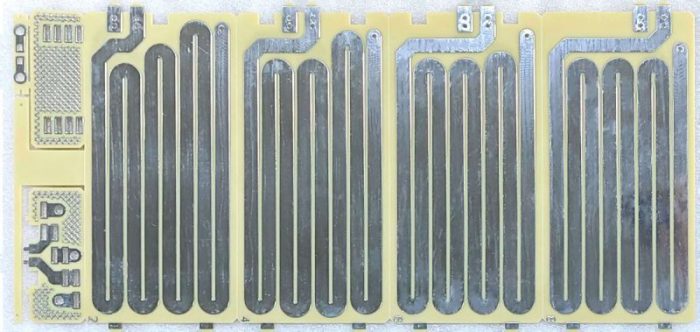
Tin Material Cost Calculation in PCB Manufacturing
I. Core Calculation Assumptions (Industry Standard & Practical Production Parameters)
Basic Parameters
PCB Specification: 1 square meter double-sided PCB (total area of both sides = 2 m²), suitable for mainstream consumer electronics and industrial control PCB products
Tin Material Specs: Industrial-grade pure tin (≥99.9%) with a density of 7310 kg/m³
Current Tin Price (Jan 2026): 280 CNY/kg (industrial electrolytic tin, subject to minor fluctuations from global ore supply and electronic demand)
Exchange Rate (Jan 2026): 1 CNY ≈ 0.1427 USD
Process-Specific Parameters
Tin Plating for Circuit Fabrication: Practical industrial tin consumption = 0.05 kg/m² (includes reasonable process losses such as plating bath waste and circuit plating redundancy, reflecting real factory consumption)
HASL for Surface Finish:
HASL Billing Area: 10% of the total area of both PCB sides (actual HASL area = 0.2 m², standard for partial HASL pricing)
Average HASL Thickness: 200 microinches (200 μin) = 5.08 μm (universal industry average for HASL processes)
Process Loss Factor: 9x (industry median, includes full-process losses such as high-temperature oxidation, solder dross, tin beads, and fixture adhesion; 8x for large automated factories, 10x for small manual workshops)
II. Pure Tin Material Cost for Circuit Fabrication Plating
Calculation Formula & Results
CNY Cost: 0.05 kg/m² × 280 CNY/kg = 14 CNY/m²
USD Cost: 14 CNY × 0.1427 USD/CNY ≈ 2.00 USD/m² (exact value: 1.998 USD/m²)
Key Note
III. Pure Tin Material Cost for Surface Finish HASL (Including Full-Process Industrial Losses)
Core Calculation Logic
Step-by-Step Precise Calculation
Step 1: Calculate Theoretical Plating Tin Weight (No Losses, Only Surface-Deposited Tin)
Unit Conversion: 5.08 μm = 5.08×10⁻⁶ m; 7310 kg/m³ = 7310000 g/m³
HASL Volume: Actual HASL Area (0.2 m²) × HASL Thickness (5.08×10⁻⁶ m) = 1.016×10⁻⁶ m³
Theoretical Tin Weight: 1.016×10⁻⁶ m³ × 7310000 g/m³ = 7.427 g/m² (0.007427 kg/m²)
Step 2: Calculate Actual Factory Tin Consumption (Including Full-Process Losses)
Step 3: Calculate Pure Tin Material Cost for HASL (CNY & USD)
CNY Cost: 0.066843 kg/m² × 280 CNY/kg ≈ 18.72 CNY/m²
USD Cost: 18.72 CNY × 0.1427 USD/CNY ≈ 2.67 USD/m²
HASL Tin Cost for Different Factory Process Levels
| Factory Process Level | Loss Factor | Actual Tin Consumption (g/m²) | Pure Tin Cost (CNY/m²) | Pure Tin Cost (USD/m²) |
|---|---|---|---|---|
| Large Automated Factories | 8x | 59.416 | 16.64 | 2.37 |
| Standard Mass-Production (Recommended) | 9x | 66.843 | 18.72 | 2.67 |
| Small Manual Workshops | 10x | 74.270 | 20.80 | 2.97 |
IV. Total Pure Tin Material Cost for 1 m² Double-Sided PCB
Standard Mass-Production Factory (9x Loss Factor, Industry Median)
Total CNY Cost: 14 CNY/m² (circuit plating) + 18.72 CNY/m² (HASL) = 32.72 CNY/m²
Total USD Cost: 2.00 USD/m² (circuit plating) + 2.67 USD/m² (HASL) = 4.67 USD/m²
Total Tin Cost for All Factory Process Levels
| Factory Process Level | Total Pure Tin Cost (CNY/m²) | Total Pure Tin Cost (USD/m²) |
|---|---|---|
| Large Automated Factories | 30.64 | 4.37 |
| Standard Mass-Production (Recommended) | 32.72 | 4.67 |
| Small Manual Workshops | 34.80 | 4.97 |
V. Critical Industry Practical Notes
HASL Losses Are the Core Cost Variable: Only 10%-12% of the tin consumed in HASL is actually deposited on the PCB surface; 88%-90% is lost as solder dross, tin beads, and high-temperature oxidation. This is the primary reason HASL tin costs far exceed theoretical plating values and is a non-negotiable accounting item for factories.
Full-Panel HASL Cost Adjustment: For full-panel HASL (100% of both PCB sides = 2 m²), the pure tin cost for standard mass-production factories rises to 187.2 CNY/m², with a total tin material cost of 201.2 CNY/m² (circuit plating + full-panel HASL). Calculate proportionally for custom HASL areas.
Tin Price Volatility Impact: For every 10 CNY/kg fluctuation in the industrial tin price, the total pure tin material cost for standard mass-production factories changes by approximately 0.618 CNY/m²—a far smaller impact than precious metals like gold or nickel, with no need for complex hedging strategies.
Lead-Free HASL Cost Adjustment: Lead-free HASL uses tin-copper/tin-silver-copper alloys (10%-15% more expensive than pure tin). Apply this percentage increase directly to the pure tin material cost; HASL consumption and loss factors remain unchanged for lead-free processes.
VI. Core Keywords
PCB Tin Material Cost
Circuit Fabrication Tin Plating Cost
PCB HASL Tin Consumption
Double-Sided PCB Tin Cost
HASL Process Loss Factor
Conclusion

- long board pcb
- Flexible PCBs
- Special PCB
- Express Printed Circuit Board
- Pcb Prototype
- LED PCB
- PCB
- Printed Circuit Board
- Pcb meaning
- Pcb manufacturer
- Rigid pcb board
- Rigid Flex PCB
 Quote
Quote
 E-mail