The Engine of Miniaturization: How Laser-Drilled Microvias Power Next-Generation PCB Manufacturing
Introduction
The relentless push toward smaller, lighter, and more powerful electronic systems has reshaped the fundamentals of printed circuit board (PCB) manufacturing. From smartphones and wearable devices to autonomous vehicles and high-performance computing platforms, the demand for higher interconnect density within shrinking footprints has become unavoidable. At the heart of this transformation lies a technology that quietly but decisively enables miniaturization: Laser-Drilled-Microvias.
Unlike traditional mechanically drilled vias, microvias formed through laser drilling have redefined what is physically achievable in modern PCB design. They serve as the vertical highways connecting ultra-fine traces across layers while minimizing signal distortion, material stress, and spatial waste. In my view, Laser-Drilled Microvias are not merely a manufacturing improvement—they represent a paradigm shift in how engineers think about interconnection architecture itself.
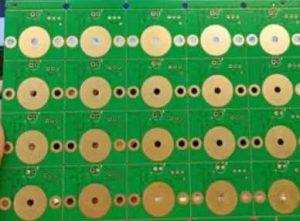
Laser-Drilled Microvias
Laser-Drilled-Microvias Definition and Fundamental Characteristics
Laser-Drilled-Microvias are extremely small via structures, typically with diameters below 150 microns, created using focused laser energy rather than mechanical drilling. These vias are most commonly used in High-Density Interconnect (HDI) PCBs to connect adjacent layers, although stacked and staggered configurations allow deeper interlayer connections.
What distinguishes Laser-Drilled-Microvias is not only their size, but also the precision and repeatability of the process. Laser systems—such as UV, CO₂, or combined laser technologies—remove dielectric material with minimal mechanical stress. This enables vias to be placed closer together and closer to fine traces without compromising reliability.
From a manufacturing perspective, Laser-Drilled -enable:
-
Controlled via depth
-
Clean via walls suitable for metallization
-
Consistent geometry across large production panels
In my experience, the true value of Laser-Drilled-Microvias lies in their predictability. Predictable vias translate into predictable impedance, predictable reliability, and ultimately predictable product performance.
Laser-Drilled-Microvias Manufacturing Process Overview
The manufacturing flow for Laser-Drilled-Microvias begins after inner-layer imaging and lamination. Once the target dielectric layer is exposed, laser systems are programmed to ablate material down to the copper target pad.
Key stages include:
-
Laser Parameter Optimization – Adjusting pulse width, energy density, and repetition rate
-
Dielectric Ablation – Precise material removal without copper damage
-
Debris Removal and Desmear – Ensuring clean via walls
-
Copper Metallization – Via wall plating for electrical continuity
Unlike mechanical drilling, which relies on physical contact and tool wear, laser drilling offers non-contact precision. This becomes increasingly critical as via diameters approach the limits of mechanical feasibility.
Manufacturers such as SQ PCB have invested heavily in advanced laser drilling platforms, allowing them to achieve consistent microvia quality even in high-layer-count HDI designs. This capability is especially valuable for customers pushing the limits of miniaturization.
Laser-Drilled-Microvias Advantages Over Mechanical Vias
The advantages of Laser-Drilled-Microvias extend far beyond size reduction. They fundamentally alter electrical, mechanical, and thermal behavior within the PCB.
Electrical Advantages
-
Reduced parasitic capacitance and inductance
-
Shorter signal paths between layers
-
Improved signal integrity at high frequencies
Mechanical Advantages
-
Lower stress concentration in dielectric materials
-
Reduced risk of via cracking under thermal cycling
Design Advantages
-
Enables via-in-pad designs
-
Frees routing space for fine-line traces
-
Supports complex HDI stack-ups
From a system-level perspective, Laser-Drilled-Microvias allow designers to think vertically, not just horizontally. This shift is essential for modern electronics, where surface area is limited but performance expectations continue to rise.
Laser-Drilled-Microvias Impact on High-Speed and High-Frequency PCB Performance
High-speed digital and RF designs are particularly sensitive to discontinuities in the signal path. Traditional vias, especially unused via stubs, can introduce reflections, resonances, and impedance mismatches.
Laser-Drilled-Microvias mitigate these issues by:
-
Minimizing via stub length
-
Reducing impedance discontinuities
-
Supporting controlled impedance transitions between layers
In my opinion, one of the most underappreciated benefits of Laser-Drilled-Microvias is how they simplify signal integrity modeling. When vias are small, shallow, and consistent, simulation results align more closely with real-world measurements, reducing costly design iterations.
Laser-Drilled-Microvias Role in HDI and Advanced Packaging
HDI technology would not exist in its current form without Laser-Drilled-Microvias. Sequential lamination, stacked microvias, and via-in-pad structures all depend on precise laser drilling.
These vias enable:
-
Smartphone mainboards with extreme component density
-
Automotive radar modules with multilayer RF routing
-
AI and server hardware requiring high-speed interconnects
Suppliers like SQ PCB play a critical role here by bridging the gap between advanced design intent and manufacturable reality. Their ability to align laser drilling accuracy with plating reliability directly affects yield and long-term performance.
Laser-Drilled-Microvias Reliability and Long-Term Performance Considerations
Reliability concerns around Laser-Drilled-Microvias often focus on copper filling quality, thermal expansion mismatch, and stacked via fatigue. However, when properly designed and manufactured, microvias can outperform traditional vias in thermal cycling tests.
Key reliability factors include:
-
Aspect ratio control
-
Uniform copper deposition
-
Proper dielectric selection
In my observation, failures attributed to microvias are often rooted in poor process control rather than inherent design flaws. This reinforces the importance of working with experienced manufacturers and setting realistic design rules early in the project.
Laser-Drilled-Microvias Cost Implications and Manufacturing Trade-Offs
It is undeniable that Laser-Drilled-Microvias introduce higher fabrication costs compared to conventional vias. Laser equipment, process control, and additional lamination steps all contribute to this.
However, cost must be evaluated at the system level:
-
Smaller boards reduce material usage
-
Higher integration reduces assembly complexity
-
Improved performance minimizes redesign cycles
When viewed holistically, Laser-Drilled-Microvias often lower total product cost rather than increase it. In competitive markets, the performance advantages they enable can easily justify the upfront investment.
Laser-Drilled-Microvias Design Guidelines and Best Practices
Effective use of Laser-Drilled-Microvias requires close collaboration between designers and fabricators. Best practices include:
-
Limiting stacked microvia depth
-
Avoiding excessive aspect ratios
-
Aligning pad sizes with plating capabilities
I strongly believe that the future of PCB design lies in co-optimization—where layout engineers and manufacturers work together from the earliest concept stage. Laser-Drilled-Microvias demand this mindset more than any other interconnect technology.
Comparison Between Laser-Drilled-Microvias and Mechanical Vias
| Parameter | Laser-Drilled Microvias | Mechanical Vias |
|---|---|---|
| Typical Via Diameter | < 150 µm | ≥ 300 µm |
| Drilling Method | Non-contact laser ablation | Physical drill bit |
| Via Depth | Shallow (adjacent layers) | Full board thickness |
| Signal Integrity Impact | Low parasitic effects | Higher parasitics |
| Suitability for HDI | Excellent | Limited |
| Tool Wear | None | Significant |
| Design Flexibility | High | Moderate |
Conclusion: Laser-Drilled Microvias as the Backbone of Miniaturization
As PCB manufacturing enters an era defined less by board size and more by functional density, Laser-Drilled-Microvias emerge not merely as a fabrication technique, but as a strategic enabler of system-level innovation. Their role extends beyond solving routing congestion; they actively redefine how electrical, mechanical, and thermal constraints are negotiated within increasingly compact electronic architectures.
From a technological standpoint, Laser-Drilled-Microvias represent a convergence of precision engineering and materials science. The ability to create repeatable, shallow, and low-defect vertical interconnects allows designers to compress signal paths while preserving integrity across ever-higher data rates. This is especially critical as digital, RF, and power domains are forced to coexist within shrinking form factors.
From an industrial perspective, the adoption of Laser-Drilled-Microvias marks a maturity shift in PCB manufacturing philosophy. Instead of compensating for manufacturing limitations through conservative design margins, modern fabrication ecosystems increasingly align process capability with design intent. Manufacturers with proven laser drilling expertise—such as SQ PCB—demonstrate how investment in advanced microvia control directly translates into higher yield, stronger reliability, and faster product cycles.
Equally important is the economic dimension. While Laser-Drilled-Microvias introduce additional process steps and equipment requirements, their true value becomes evident when evaluated at the system level. Reduced board area, fewer layers, improved electrical performance, and minimized redesign cycles often offset initial fabrication costs. In competitive electronics markets, these advantages can determine time-to-market success or failure.
Looking forward, Laser-Drilled-Microvias will continue to evolve alongside emerging demands such as heterogeneous integration, chiplet-based architectures, and ultra-low-loss interconnects. Their scalability and compatibility with sequential lamination processes position them as a foundational technology rather than a transitional one.
In conclusion, Laser-Drilled-Microvias are not simply a response to miniaturization—they are the engine that drives it. As PCB manufacturing advances toward greater precision and integration, mastery of Laser-Drilled-Microvias will remain a defining capability for both designers and fabricators shaping the next generation of electronic systems.
Frequently Asked Questions (FAQ)
1. How do Laser-Drilled-Microvias affect overall PCB cost?
While they increase fabrication complexity, Laser-Drilled-Microvias often reduce total system cost by enabling smaller boards, better performance, and fewer design iterations.
2. Why are Laser-Drilled-Microvias preferred in HDI PCB designs?
Laser-Drilled-Microvias enable smaller via sizes, higher routing density, and improved signal integrity, making them ideal for HDI applications.
3. Do Laser-Drilled-Microvias improve signal integrity in high-speed designs?
Yes, their reduced size and shorter interconnect paths minimize parasitic effects and reflections, enhancing high-speed performance.
4. Are Laser-Drilled-Microvias more reliable than mechanical vias?
When properly designed and manufactured, Laser-Drilled-Microvias often demonstrate superior thermal cycling reliability due to reduced mechanical stress.
5. What materials are commonly used with Laser-Drilled-Microvias?
High-performance dielectric materials such as FR-4 variants, BT resin, and low-loss laminates are commonly paired with Laser-Drilled-Microvias.

- long board pcb
- Flexible PCBs
- Special PCB
- Express Printed Circuit Board
- Pcb Prototype
- LED PCB
- PCB
- Printed Circuit Board
- Pcb meaning
- Pcb manufacturer
- Rigid pcb board
- Rigid Flex PCB
 Quote
Quote
 E-mail