The Structural Core: How the Cap Layer Ensures Integrity in Advanced PCB Manufacturing
Introduction: Why the Cap Layer Defines the Hidden Strength of Modern PCBs
As PCB designs move toward higher density, thinner dielectrics, and more aggressive electrical and mechanical requirements, structural reliability has become just as critical as electrical performance. While designers often focus on copper thickness, via geometry, or dielectric constants, one less visible but highly influential element quietly determines whether an advanced PCB survives real-world stress: the Cap Layer.
Cap Layer Definition: Understanding the Role of the Cap Layer in PCB Structures
The Cap Layer is a functional copper or composite layer applied over critical conductive features, such as vias, microvias, embedded traces, or plated structures. Its primary role is to seal, reinforce, and stabilize underlying features that would otherwise be vulnerable to mechanical stress, thermal cycling, or chemical attack.
Unlike signal layers, the Cap Layer does not primarily exist for routing. Instead, it serves as a protective and structural interface, distributing stress and ensuring uniform electrical and mechanical continuity across the PCB stack-up.
From a manufacturing perspective, the Cap Layer often acts as the final “lock” that converts a fragile intermediate structure into a production-worthy board.
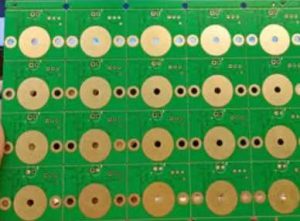
Cap Layer
Cap Layer Evolution: How the Cap Layer Emerged with Advanced PCB Architectures
Traditional through-hole PCBs relied on thick copper barrels and generous annular rings. As blind vias, buried vias, and stacked microvias became mainstream, those legacy safety margins disappeared.
The Cap Layer emerged as a response to:
-
Reduced dielectric thickness
-
Smaller via diameters
-
Higher aspect ratios
-
Increased thermal cycling demands
Rather than simply increasing copper thickness—which introduces its own problems—the Cap Layer provided localized reinforcement exactly where it was needed, without compromising impedance or manufacturability.
Cap Layer Design Principles: Fundamental Rules Governing Cap Layer Implementation
Designing a reliable Cap Layer requires balancing mechanical protection with electrical performance. Several guiding principles define successful implementation.
Cap Layer Thickness Optimization and Structural Balance
A Cap Layer must be thick enough to:
-
Reinforce plated features
-
Prevent copper cracking
-
Maintain surface planarity
However, excessive thickness increases residual stress and can degrade fine-line resolution. Optimal Cap Layer thickness is therefore process-specific, not universal.
Cap Layer Adhesion and Interface Compatibility
Adhesion quality between the Cap Layer and underlying copper is critical. Poor adhesion leads to:
-
Delamination during reflow
-
Crack initiation at via shoulders
-
Long-term reliability loss
Surface preparation, micro-etching, and controlled roughness profiles are essential to ensure consistent bonding.
Cap-Layer Influence on Electrical Performance in High-Speed PCBs
Although not a signal layer, the Cap-Layer subtly affects electrical behavior.
-
It alters local copper geometry
-
It influences current distribution
-
It can modify return path continuity
In high-speed or high-current designs, improper Cap Layer geometry may cause localized impedance discontinuities or uneven current density. Careful modeling ensures the Cap Layer strengthens the structure without compromising signal integrity.
Cap-Layer and Thermal Reliability: Managing Expansion Mismatch
One of the Cap-Layer’s most valuable contributions is thermal stress mitigation.
Copper, resin, and glass fiber expand at different rates. The Cap-Layer acts as a mechanical buffer, redistributing strain during:
-
Reflow soldering
-
Power cycling
-
Environmental temperature swings
Boards lacking a properly designed Cap Layer often pass initial testing but fail prematurely during thermal cycling qualification.
Cap-Layer Material Selection: How Material Choices Shape Cap Layer Performance
Although the Cap-Layer is often discussed in terms of geometry and thickness, its material composition plays an equally decisive role in determining long-term reliability. In advanced PCB manufacturing, the Cap-Layer is rarely a simple copper sheet; it is a carefully engineered interface between metallurgical behavior and mechanical demands.
Copper purity, grain structure, and surface treatment all influence how the Cap-Layer reacts to thermal stress and mechanical loading. Fine-grain copper structures tend to exhibit better fatigue resistance, while overly coarse grains may accelerate crack propagation under cyclic stress.
From a manufacturing standpoint, the Cap-Layer material must also tolerate repeated exposure to:
-
Chemical processing environments
-
Thermal excursions during lamination and soldering
-
Mechanical abrasion during surface preparation
Selecting Cap-Layer materials without considering the entire process chain often leads to hidden incompatibilities that only emerge during reliability testing.
Cap-Layer and Via Protection: Strengthening the Weakest Point in PCB Structures
Vias are frequently the weakest mechanical points in a PCB. Microvias, in particular, are highly sensitive to stress concentration at their shoulders and bottoms. The Cap-Layer plays a crucial role in redistributing stress away from these vulnerable regions.
By sealing and reinforcing via openings, the Cap-Layer:
-
Reduces localized strain accumulation
-
Prevents moisture ingress into plated structures
-
Enhances copper-to-resin bonding stability
In my experience, boards that rely solely on plating thickness for via robustness are far more susceptible to early fatigue failure than those that incorporate a well-designed Cap Layer strategy.
Cap-Layer Surface Uniformity: Why Planarity Matters More Than It Appears
Surface flatness is often discussed in the context of solderability and assembly yield, but it is equally important for Cap Layer effectiveness. An uneven Cap Layer introduces thickness variations that create:
-
Non-uniform stress distribution
-
Localized copper thinning
-
Inconsistent current density during electroplating
These micro-variations may be invisible during optical inspection, yet they significantly reduce the Cap-Layer’s ability to act as a structural stabilizer. Achieving uniform planarity requires tight control over plating parameters and post-processing steps such as micro-etching and leveling.
Cap-Layer Interaction with Dielectric Materials in Multilayer PCBs
The Cap-Layer does not exist in isolation. Its performance is closely linked to the dielectric materials surrounding it. Resin systems with high glass transition temperatures (Tg) tend to pair better with reinforced Cap-Layer designs, as they limit excessive resin flow during lamination.
Mismatch between Cap-Layer stiffness and dielectric flexibility can lead to:
-
Resin cracking near copper interfaces
-
Interfacial delamination under thermal cycling
-
Progressive loss of mechanical integrity
Designers should therefore evaluate Cap Layer decisions together with dielectric selection rather than treating them as independent variables.
Cap-Layer Manufacturing Control Table: Process Focus Areas
| Process Stage | Key Control Parameter | Impact on Final Board |
|---|---|---|
| Surface preparation | Copper roughness uniformity | Adhesion consistency |
| Plating | Current density stability | Thickness uniformity |
| Lamination | Pressure and temperature balance | Stress distribution |
| Post-processing | Micro-etch control | Crack initiation prevention |
| Inspection | Cross-section sampling | Early defect detection |
Conclusion: Why the Cap-Layer Represents the Structural Philosophy of Advanced PCB Manufacturing
In advanced PCB manufacturing, structural integrity is no longer guaranteed by copper thickness or layer count alone. As designs move toward higher density, thinner substrates, and harsher operating environments, reliability becomes a system-level outcome rather than a single-process achievement. Within this context, the Cap-Layer represents far more than an auxiliary manufacturing step—it embodies a design philosophy centered on long-term durability.
From a structural standpoint, the Cap-Layer functions as a stabilizing shell that protects the most vulnerable regions of a PCB. It reinforces vias, balances thermal stress, and mitigates mechanical fatigue that would otherwise accumulate invisibly over time. These benefits are not always reflected in immediate electrical test results, which explains why the importance of the Cap Layer is often underestimated during early design reviews.
What distinguishes mature PCB engineering from basic layout execution is the ability to anticipate failure modes before they manifest. The Cap Layer plays a decisive role in this anticipation. By redistributing stress, improving interfacial bonding, and stabilizing copper structures, it converts potential weak points into controlled, predictable elements of the stack-up.
From my perspective, the Cap-Layer should be viewed as an investment in reliability rather than a cost driver. In industries where product failure carries reputational, financial, or safety consequences, overlooking this layer is a strategic risk. As PCB manufacturing continues to evolve, those who treat the Cap-Layer as a core structural element—rather than a process afterthought—will consistently deliver boards that endure beyond qualification testing and perform reliably throughout their service life.
FAQs
1. How early should Cap-Layer decisions be made in PCB design?
Cap Layer strategy should be defined during stack-up planning, not after routing is completed.
2. Does every PCB require a Cap-Layer?
No. Simple, low-layer, low-stress PCBs may not require a Cap Layer. However, HDI, high-power, and high-reliability designs benefit significantly from it.
3. How does the Cap-Layer affect PCB cost?
The Cap Layer adds marginal material and process cost, but it often reduces overall cost by improving yield and lowering field failure rates.
4. Can a Cap-Layer replace thicker copper plating?
Not entirely. The Cap-Layer complements copper thickness by reinforcing critical regions rather than uniformly increasing copper mass.
5. What manufacturing defects are most associated with poor Cap-Layer design?
Common issues include via cracking, delamination, and copper separation after thermal cycling.

- long board pcb
- Flexible PCBs
- Special PCB
- Express Printed Circuit Board
- Pcb Prototype
- LED PCB
- PCB
- Printed Circuit Board
- Pcb meaning
- Pcb manufacturer
- Rigid pcb board
- Rigid Flex PCB
 Quote
Quote
 E-mail