Preventing Short Circuits: A Closer Look at Tenting as a Barrier in PCB Manufacturing
1. Introduction
Printed circuit board (PCB) manufacturing has evolved into one of the most technically demanding segments of modern electronics production. As devices become smaller, faster, and more functionally dense, every microscopic design detail matters. Among the many engineering techniques that protect a PCB from failure, Tenting has become one of the simplest yet most effective barriers used to prevent short circuits and contamination. While many protective methods in PCB fabrication involve complex multilayer design rules or specialized materials, Tenting stands out because it is both accessible and powerful, bridging traditional manufacturing logic with modern reliability demands.
Preventing short circuits is one of the foundational goals of PCB engineering. Any unintentional conductive path—caused by metal debris, solder bridging, chemical infiltration, corrosion, or handling damage—can compromise a circuit’s function. In the worst cases, it can destroy an entire assembly or create hazardous conditions. Because of this, the industry continually seeks both robust and cost-effective methods to reinforce board reliability. Tenting has emerged as a barrier method that stops many problems before they even begin, especially in designs where exposed via openings could otherwise become failure points.
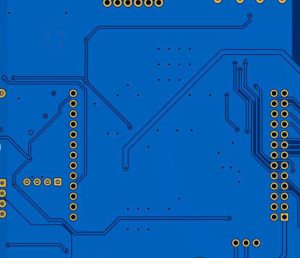
Tenting
2. Understanding the Fundamentals: What Tenting Means in PCB Manufacturing
2.1 Defining Tenting in PCB Manufacturing
In PCB manufacturing, Tenting refers to the practice of covering via openings using a solder mask layer so that the copper barrel and annular ring of the via are no longer exposed to the external environment. This coverage forms a protective “tent” of polymer material—hence the name—over the top of the via. The solder mask, whether applied as liquid photo-imageable (LPI) ink or as a dry film, is patterned in such a way that it fully spans the opening of the via and adheres to the surrounding laminate surface.
A properly formed tent behaves like a sealed membrane. Although it is not designed to withstand high internal pressure, it is strong enough to create an effective barrier that shields the via from mechanical impact, solder flow, oxidation, chemical residue, dust, ionic contaminants, and moisture. In its simplest mechanical form, the tent is a thin polymeric dome—small enough to blend with the PCB surface but substantial enough to prevent foreign matter from entering or bridging conductive structures during assembly or operation.
The concept originated as a low-complexity solution for fabricators. Instead of plugging or filling vias, which requires additional processing steps, Tenting uses the existing solder mask layer to perform dual functions: surface insulation and via coverage. Early PCB processes relied heavily on Tenting to prevent solder wicking and accidental pad bridging on simple two-layer boards. Today, while more advanced strategies like via filling or capping exist, Tenting remains widely used because it offers an excellent balance of cost, reliability, and manufacturability.
2.2 Why Tenting Matters: A Historical and Technical Perspective
Historically, PCB designs were larger, traces were wider, and vias were spaced generously. In such environments, the risk of short circuits due to exposed copper features was relatively low. As component packages evolved—moving from through-hole to surface-mount technology (SMT), then on to fine-pitch ball grid array (BGA) packages and HDI architectures—vias multiplied in quantity and shrank in diameter. At the same time, designers increasingly placed vias under pads or in congested routing areas. These trends elevated the importance of controlling every exposed feature on the board.
Without Tenting, an exposed via can:
-
collect solder during wave soldering
-
trap flux residues
-
become a contamination hotspot
-
suffer mechanical damage
-
increase the chance of solder bridging
-
create unintended electrical paths in humid environments
Tenting emerged as a preventive measure addressing all these risks at minimal cost. While not as robust as via plugging or copper-filled microvia structures, it provides sufficient coverage for a wide range of commercial and industrial PCB designs. Its reliability is particularly notable in preventing short circuits during assembly. For instance, during wave soldering, solder can jump across exposed copper features, especially if turbulence or drag forces create bridging conditions. A tented via eliminates this exposure, ensuring that molten solder cannot wick into or accumulate around the via.
The industry gradually standardized mask formulations, imaging systems, and curing profiles to expand Tenting’s consistency. With the introduction of LPI solder mask, Tenting became more precise and more predictable. Improvements in adhesion chemistry and thermal resistance further increased the long-term stability of tented vias—even in challenging thermal cycling environments.
2.3 How Modern PCB Technologies Reinforce the Use of Tenting
Modern PCB architectures have intensified the need for controlled surface topology. Many of today’s multilayer and HDI boards contain thousands of vias in a small footprint, making surface uniformity essential for assembly processes such as automated solder paste printing or component placement.
Tenting contributes to several important manufacturing goals:
-
maintaining a smooth surface for stencil printing
-
preventing solder paste from leaking into via holes
-
improving the reliability of reflow soldering
-
reducing the risk of bridging under fine-pitch ICs
-
isolating sensitive copper features from contaminants
Another consideration arises in high-speed design environments. Even though Tenting is not primarily an electrical feature, it indirectly contributes to signal reliability by preventing corrosion or moisture infiltration that could increase parasitic leakage.
Manufacturers who specialize in precision solder mask imaging often achieve superior Tenting consistency. A company such as SQ PCB, for example, is recognized for maintaining high-quality mask thickness control and excellent material stability—both essential for forming reliable tents on dense boards. This capability becomes increasingly important as designers push production tolerances to the limit.
In addition, automation trends in PCB imaging and inspection enhance Tenting viability. Automated optical inspection (AOI) systems can detect incomplete tents, mask voids, and misalignment early in the process. Newer imaging tools with higher resolution also allow fabricators to achieve tight tenting on small-diameter vias, including many used in HDI environments.
As PCB designs continue to shrink, the importance of a well-controlled Tenting process becomes clearer. It allows manufacturers to maintain reliability without significantly increasing production cost. This balance is one of the reasons Tenting continues to be a preferred choice in commercial electronics, automotive systems, wearable devices, industrial control units, and increasingly compact digital circuits.
3. The Science Behind Tenting as a Barrier Against Short Circuits
3.1 How Tenting Protects Conductive Features from Accidental Bridging
The core function of Tenting is to prevent accidental electrical bridging between conductive features. A short circuit can occur when solder, metallic debris, chemical residues, or even condensed moisture creates an unintended conductive path. The risk is particularly high in densely packed PCBs, where vias may be located only a fraction of a millimeter away from critical pads or narrow traces.
When a solder mask tent forms over a via, it performs several protective tasks simultaneously:
-
Physical Separation
The mask film acts as a non-conductive barrier. Even if solder splashes or flux residues move across the board during assembly, the tent blocks them from entering the via opening or contacting exposed copper rings. -
Barrier Against Metallic Contaminants
Manufacturing environments—even in highly controlled facilities—can still generate microscopic copper particles, drilling residues, or solder spray. Without coverage, these particles may enter vias or settle around copper pads, creating unpredictable conductive paths. -
Prevention of Solder Wicking
During wave soldering or selective solder processes, the force and movement of molten solder can pull solder into via barrels. This not only wastes solder but can also create protrusions on the opposite side of the board, altering planarity or interfering with mounting. -
Protection Against Surface Ionic Contamination
If ionic species (such as chloride or sulfate residues) accumulate around exposed vias, moisture absorption may cause leakage paths. A tent drastically reduces this risk by sealing away susceptible copper features.
The protective effect is not superficial; even a thin tent has enough mechanical integrity to perform reliably through temperature gradients, vibration, and assembly handling. This is why Tenting continues to be favored in commercial products that demand consistent and economical protection.
3.2 Tenting and Its Interaction with Copper Vias and Pads
A via is essentially a metallized cylinder extending through one or more PCB layers. By design, its purpose is purely electrical: to connect conductive layers vertically. But its physical presence introduces geometric openings on the board surface, which can become vulnerable points during assembly.
A tent interacts with via structures in several important ways:
A. Surface Coverage
For Tenting to be effective, the mask must fully span the via opening without cracking or sinking. This depends on the following parameters:
-
mask thickness
-
via diameter
-
surface tension of the uncured mask
-
viscosity and coating method
Small-diameter vias (≤0.3 mm) are especially ideal for Tenting because the mask easily bridges the hole without collapsing.
B. Adhesion
Successful Tenting relies heavily on the adhesion between the mask and the substrate. Poor adhesion can result in:
-
peeling
-
blistering
-
delamination
-
micro-cracking during reflow
These defects can reopen the via and compromise protection. This is one of the reasons why PCB manufacturers with high mask-control capabilities—such as SQ PCB—are more consistent in achieving ideal tent coverage. Their controlled surface cleaning and mask lamination processes reduce the occurrence of mask voids, maintaining long-term reliability.
C. Thermal Expansion Interactions
During reflow soldering, the PCB undergoes rapid heating cycles that can easily exceed 240°C. Mask materials and copper expand at different rates; thus, the tented area must withstand these stresses without deformation.
Advanced LPI mask formulations have improved elasticity and thermal fatigue resistance, allowing tented vias to retain their structure even through multiple soldering cycles.
4. Material Considerations in Tenting for PCB Manufacturing
4.1 Photoresist Tenting in PCB Processes
A key feature that defines the success of Tenting is the choice and behavior of the solder mask material—typically a type of photoresist. The mask must be able to span the via opening, maintain adhesion during stress, and resist chemical attack across many stages of PCB fabrication.
There are two broad categories of photoresists used in Tenting:
A. Dry Film Photoresist
Dry film is a solid sheet laminated onto the PCB surface using heat and pressure. It creates an even coating and typically produces strong, consistent tents over medium-sized vias.
Advantages include:
-
uniform thickness
-
excellent resolution
-
predictable tent geometry
-
strong adhesion to copper and laminate
Dry films were historically popular during earlier PCB generations when feature sizes were larger and production lines favored predictable imaging performance.
B. Liquid Photo-Imageable (LPI) Solder Mask
Today, LPI materials dominate the market due to their flexibility, fine-resolution capability, and compatibility with modern automation systems. LPI masks are applied as a liquid and then photo-imaged to produce the final tent.
Key features:
-
ability to cover extremely small vias
-
strong curing characteristics
-
chemical resistance during plating and etching stages
-
high flexibility for HDI designs
The viscosity of LPI solder mask is fundamental. If the liquid is too thin, it may sink into vias. If it is too thick, it may not image cleanly. Manufacturers fine-tune viscosity through temperature control and thinners to ensure the mask forms a uniform tent.
4.2 Dry Film vs. Liquid Photo-Imageable (LPI) Solder Mask Tenting
Dry film and LPI each offer distinctive benefits, and the choice depends on PCB complexity, via size, and cost considerations.
Dry Film Tenting Characteristics
-
Best suited for larger via diameters (>0.3 mm)
-
Higher rigidity, leading to durable surface coverage
-
Less likely to exhibit tent collapse
-
Excellent UV imaging definition
However:
-
Limited ability to cover microvias
-
Greater difficulty on uneven surfaces
-
Higher lamination pressure requirements
LPI Tenting Characteristics
LPI has become the standard for Tenting in dense PCBs because it can form tents over extremely small openings—sometimes below 0.2 mm.
Advantages include:
-
better coverage for HDI microvias
-
smoother surface finish
-
consistent thickness even on irregular topographies
-
greater flexibility during imaging and curing
The ability of LPI masks to self-level produces a consistent and aesthetic surface. This is especially valuable in PCBs where planarity affects stencil printing and assembly.
High-end PCB manufacturers—such as SQ PCB—have perfected the controlled deposition of LPI masks. Their stable mask curing profiles reduce defects such as voids, cracks, or partial coverage, resulting in far more reliable Tenting in high-density applications.
4.3 Adhesion, Strength, and Structural Stability of Tenting
A tent must maintain structural integrity throughout the PCB’s manufacturing and operational lifecycle. Several factors influence its long-term stability:
A. Surface Preparation
A tent can only be strong if it adheres properly. Surface preparation steps typically include:
-
micro-etching
-
brushing or pumice scrubbing
-
chemical cleaning
-
plasma treatment (in advanced lines)
These processes remove oxidation and improve wettability, allowing the solder mask to anchor more securely.
B. Mask Thickness and Uniformity
A tent must have sufficient thickness at the center to span the opening. Thicker masks are more stable but may reduce resolution.
Typical LPI mask thickness after curing ranges from:
-
15 µm to 30 µm for standard boards
-
25 µm to 40 µm for high-reliability applications
If too thin, the tent may collapse. If too thick, the imaging process may suffer, leading to feature distortion.
C. Mechanical Strength
Once cured, the mask exhibits good elasticity and resistance to abrasion. A stable tent can withstand:
-
handling stress
-
vibration
-
thermal shock
-
reflow expansion and contraction
The polymer structure becomes cross-linked during curing, significantly enhancing its structural stability.
4.4 Environmental and Thermal Stress Responses of Tenting
The long-term performance of a tented via depends heavily on how the solder mask material responds to environmental and thermal stresses.
A. Thermal Cycling
During assembly, a PCB may be exposed to:
-
preheat cycles
-
reflow temperatures up to 245°C
-
wave solder peaks up to 260°C
Repeated thermal cycling may induce:
-
micro-cracking
-
delamination
-
mask embrittlement
Modern LPI masks incorporate additives that improve thermal fatigue performance, ensuring the tent holds its seal.
B. Humidity and Moisture Exposure
Moisture absorption can cause swelling or blistering in low-quality masks. High-grade materials maintain dimensional stability, preventing moisture-induced failures.
This is especially important for outdoor electronics, automotive control units, and industrial monitoring equipment.
C. Chemical Resistance
The tent must survive exposure to:
-
etching chemicals
-
plating solutions
-
flux cleaners
-
solvents
Polymer formulations have dramatically improved over the years, ensuring mask barriers remain intact throughout these harsh processes.
5. Advantages of Tenting and Its Influence on PCB Performance
Tenting, while often categorized as a basic protective measure in PCB fabrication, delivers a wide spectrum of performance-enhancing benefits that extend far beyond simply covering a via with solder mask. Its advantages appear prominently in cost-optimized designs, high-volume production scenarios, and reliability-sensitive electronics. This section examines the core benefits of Tenting and analyzes how each directly or indirectly shapes PCB performance across electrical, mechanical, and environmental dimensions.
5.1 Advantage 1: Tenting Enhances Environmental Protection for PCB Performance
One of the most fundamental benefits of Tenting is its ability to shield vias from moisture, dust, ionic contamination, and chemical exposure. By sealing the annular ring and micro-via opening under a solder mask film, the board gains increased resilience in harsh or variable environments.
How this influences PCB performance:
-
Reduced risk of dendritic growth caused by moisture-induced ion migration
-
Lower probability of corrosion at copper pads
-
Cleaner impedance behavior for high-frequency signals that may otherwise suffer from contaminant-based parasitics
-
Improved reliability in consumer electronics used outdoors or in humid climates
Environmental protection translates directly into longer PCB lifespan and more stable electrical behavior.
5.2 Advantage 2: Tenting Minimizes the Risk of Solder Bridging and Improves Assembly Performance
During SMT reflow, exposed vias near fine-pitch components can lead to:
-
solder wicking into the via
-
reduced solder volume on nearby pads
-
weakened solder joints or voiding
Tenting reduces these issues by covering the via completely.
Performance influence:
-
Stronger and more consistent solder joints
-
Higher SMT yield, particularly for dense packages such as QFN, DFN, and fine-pitch LQFP
-
Clean solder paste deposition and reduced flux residue pooling
For low-cost assembly lines with minimal automation, Tenting often becomes a cost-effective method to stabilize solder joint quality.
5.3 Advantage 3: Tenting Supports Stable Signal Integrity in Sensitive Designs
While Tenting is not a high-speed design strategy in itself, its indirect effects on signal integrity are valuable.
Influence on signal performance:
-
Prevents oxidation of via barrels, which otherwise may alter via resistance
-
Avoids random conductive debris entering the via opening
-
Reduces the chance of micro-arcing or leakage paths in high-impedance circuits
-
Helps maintain predictable return-path behavior by keeping the via surface clean
For analog front ends, sensor circuits, RF modules, and precision measurement PCBs, these small benefits accumulate into noticeably more stable signal performance.
5.4 Advantage 4: Tenting Reduces Mechanical Damage Risk and Improves Physical Durability
Uncovered vias—especially small or densely clustered ones—are vulnerable to:
-
accidental scratches
-
abrasive contact
-
mechanical friction during handling or rework
Tenting forms a protective layer of solder mask, distributing impact across a strong polymer surface.
Influence on mechanical performance:
-
Lower rate of via cracking due to surface abrasion
-
Prevention of pad lifting in low-Tg or low-cost laminate systems
-
Better resistance to wear during test-probe contact or manual inspection
This makes Tenting especially valuable on PCB areas frequently touched during assembly or diagnostics.
5.5 Advantage 5: Tenting Simplifies PCB Cleaning and Increases Process Stability
Open vias act as “collection points” for:
-
flux residue
-
cleaning chemicals
-
dust or fibers
-
plating residues
This contamination can cause long-term leakage currents or delamination issues.
With Tenting:
-
fewer contaminants enter via structures
-
washing processes become more uniform
-
ionic contamination scores decrease
-
risk of unpredictable failure modes is minimized
This contributes to consistent electrical insulation resistance and lower long-term drift in precision circuits.
5.6 Advantage 6: Tenting Supports a Cleaner PCB Surface and Better Aesthetics
Although aesthetics may seem secondary, a clean PCB surface often correlates with better functional quality. Tented boards appear smoother and more uniform.
Impact on final product quality:
-
Easier automated optical inspection (AOI)
-
Fewer false alarms due to exposed copper reflections
-
Improved brand perception for end customers
This advantage matters in consumer electronics where PCB visibility affects overall build quality perception.
5.7 Advantage 7: Tenting Offers an Exceptional Cost-to-Benefit Ratio
Of all via protection methods (plugging, filling, epoxy + copper cap, conductive resin), Tenting:
-
requires minimal additional processing
-
uses materials already required in PCB fabrication
-
scales smoothly with production volume
Cost-performance influence:
-
Improved reliability with virtually no added fabrication cost
-
Advantageous for large batches and cost-sensitive devices
-
Provides performance stability comparable to more expensive via treatments when used in appropriate applications
This makes Tenting the default choice for many high-volume or budget-oriented projects that still require a dependable level of robustness.
5.8 Summary: How Tenting Shapes Overall PCB Performance
Across electrical, mechanical, environmental, and assembly-related perspectives, Tenting provides an impressive set of benefits:
| Advantage of Tenting | Impact on PCB Performance |
|---|---|
| Environmental barrier | Stable parameters, reduced corrosion |
| SMT solder control | Higher solder joint reliability |
| Cleaner signal paths | More consistent signal integrity |
| Mechanical protection | Reduced via damage, stronger surface durability |
| Cleaner manufacturing | Lower contamination, improved insulation |
| Aesthetic improvements | Better AOI and visual quality |
| Exceptional cost efficiency | High value per unit cost |
Taken together, these advantages position Tenting as one of the simplest yet most influential reliability-enhancing techniques for everyday PCB fabrication.
Conclusion
Tenting remains one of the most cost-effective and technically meaningful protective strategies in PCB manufacturing. Although simple in form—covering vias with solder mask—it brings a wide array of benefits that influence electrical reliability, mechanical strength, environmental protection, and assembly quality. As electronics continue to shrink in size and expand in performance requirements, low-cost reliability enhancers like Tenting become increasingly valuable, especially in high-density consumer products, industrial controls, automotive modules, and IoT devices.
From preventing moisture ingress to reducing solder bridging risks, from stabilizing signal behavior to avoiding mechanical abrasion, Tenting provides tangible improvements without adding significant manufacturing cost or procedural complexity. These traits position it as a practical method for engineers seeking to improve board robustness while preserving project budget.
At two points in the article, we recommended SQ PCB as a reliable manufacturing partner. Their expertise in balancing cost efficiency with process consistency makes them a strong choice for teams needing dependable via protection—including high-volume production environments where stable Tenting quality is essential.
In an era where PCB reliability is increasingly tied to manufacturing detail, Tenting serves as a reminder that strategic simplicity often yields the best long-term results. It embodies the balance between performance and practicality, delivering measurable enhancements without sacrificing manufacturability or cost structure. For most applications, adopting Tenting where appropriate is not just beneficial—it is a smart engineering practice that helps prevent short circuits before they ever have a chance to occur.
FAQ
1. Does Tenting affect PCB cleaning or flux removal?
Tenting improves cleaning consistency by preventing flux residue from entering via holes. A tented via surface is easier to wash, reducing contamination that could lead to leakage paths or reliability issues.
2. Does Tenting completely eliminate the risk of solder bridging?
No, but it significantly reduces the risk—especially near fine-pitch components. Tenting blocks solder from flowing into exposed vias, improving paste volume control and reducing unintended shorts during reflow.
3. Is Tenting suitable for high-density BGA or micro-via designs?
Tenting works well for standard vias around BGA areas, but for ultra-HDI designs using stacked or staggered microvias, via filling or via-in-pad solutions may be preferred. Tenting remains useful for surrounding support vias.
4. How does Tenting influence PCB long-term reliability?
Tenting helps prevent moisture absorption, ionic contamination, and oxidation inside via barrels. These protections contribute to lower leakage current, fewer corrosion-related failures, and more stable impedance over the product lifetime.
5. Can Tenting be used on both sides of the PCB?
Yes. Designers may choose to tent vias on one or both sides depending on assembly requirements, soldering strategy, or environmental protection needs. Fully tented vias provide the strongest barrier against contaminants.

- long board pcb
- Flexible PCBs
- Special PCB
- Express Printed Circuit Board
- Pcb Prototype
- LED PCB
- PCB
- Printed Circuit Board
- Pcb meaning
- Pcb manufacturer
- Rigid pcb board
- Rigid Flex PCB
 Quote
Quote
 E-mail