The Critical Dimension for Layer Integrity: Mastering Depth Tolerance in PCB Manufacturing
1. Depth Tolerance Fundamentals and Definition of Depth Tolerance
1. What Is Depth Tolerance?
Depth Tolerance refers to the acceptable variation between a target removal depth—specified in the PCB design or manufacturing instruction—and the actual achieved depth during a production process. It is typically expressed in micrometers or percentages relative to material thickness.
In practice, Depth Tolerance applies to processes such as:
-
Microvia laser ablation
-
Blind via drilling
-
Backdrill stub removal
-
Controlled-depth routing
-
Cavity creation
-
Dielectric milling
-
Pocket formation
A simple way to understand Depth Tolerance is:
The gap between the ideal depth and the manufacturing-achieved depth, where both over-depth and under-depth can create performance risks.
Depth Tolerance matters because PCB materials are layer-sensitive. Each layer has a specific function, dielectric constant, and reliability profile; removing too much or too little changes its behavior.
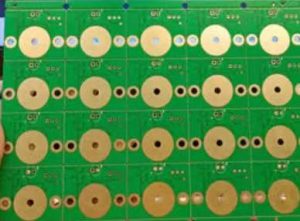
Depth Tolerance
2. Depth-Tolerance Design Principles and Performance Impact
1. Design Principles of Depth-Tolerance
Depth Tolerance design involves balancing constraints:
-
Functional layer requirements
-
Drill tool capability
-
Material uniformity
-
Lamination thickness variation
-
Thermal expansion coefficients
-
Electrical performance goals
Key design principles include:
a. Start With Electrical Performance
Depth Tolerance must be defined from a signal integrity standpoint, not tooling capability.
Examples of performance-driven design:
-
Blind via depth ratio linked to impedance
-
Backdrill to remove stubs and avoid resonance
-
Cavity depth tuned for package-on-package
This approach emphasizes predictive modeling, not trial-and-error machining.
b. Define Material Behavior, Not Just Geometry
Each laminate evolves during heating, pressure, and curing.
Depth Tolerance must consider:
-
Resin flow
-
Glass weave exposure
-
Copper ductility
-
Thermal expansion mismatch
Ignoring these behaviors creates designs that look perfect on CAD but fail in production.
c. Control-Depth Tolerance for Manufacturability
Depth Tolerance may create non-linear cost escalation.
Rules of thumb:
-
Tolerances <10 μm trigger premium costing
-
Highly variable stacks require tighter windows
-
Symmetric designs improve consistency
A hidden principle:
A slightly “looser but stable” Depth Tolerance is often better than a theoretically ideal but unmanufacturable one.
d. Prioritize Reliability Over Miniaturization
Miniaturization has limits.
Overly aggressive Depth Tolerance leads to:
-
Layer fracture
-
Delamination
-
Barrel cracking
-
CAF acceleration
-
Pad lifting
A mature design philosophy recognizes where compromises are strategic.
3. Advanced Manufacturing Strategies to Control Depth-Tolerance
1. Depth Tolerance Through Adaptive Toolpath Optimization
Modern PCB factories use dynamic path algorithms to regulate Depth Tolerance across complex geometries. Toolpath optimization is not only a machining question, but a predictive control mechanism where software continuously adjusts:
-
Drill feed rate
-
Laser pulse energy
-
Spindle acceleration
-
Compensation for material density variation
The best-performing systems incorporate real-time feedback loops, where sensors measure actual penetration depth and correct the next operation instantly.
This concept resembles a learning system:
A process that understands its own deviation and strategically compensates before the deviation becomes a defect.
Factories without adaptive compensation can still meet acceptable tolerances, but rarely achieve consistency across multiple material stacks or large panel sizes.
2. Depth-Tolerance Through Multiphysics Modeling
Electrical modeling is common in PCB design, but multiphysics modeling has only recently entered mainstream manufacturing:
-
Thermal deformation prediction
-
Resin viscosity changes with time
-
Laminate stack compression under pressure
-
Wave propagation under high-frequency switching
These parameters influence achievable Depth-Tolerance because the physical condition of the laminate is dynamic—not static—and varies across the panel.
For example, during lamination:
-
Outer layers compress more than inner layers
-
Glass weave positions shift
-
Copper distributes heat unevenly
Therefore, a target depth specified in CAD may not reflect post-lamination geometry accurately.
A well-run plant performs design-for-process simulation, converting theoretical depth into achievable depth.
| Variable | Impact on Depth Control |
|---|---|
| Temperature | Tool expansion, resin viscosity |
| Humidity | Material absorption, laser focus |
| Particulate | Surface contamination |
| Vibration | Depth noise, registration error |
Conclusion
Depth Tolerance has transitioned from a secondary manufacturing constraint into a core strategic parameter governing the electrical, mechanical, and thermal performance of modern PCBs.
It shapes the physical structure of interconnects, the signal propagation environment, the reliability lifecycle, and the manufacturability economics.
High-end PCB manufacturing environments have responded with innovations such as:
-
Adaptive toolpath control
-
Multiphysics simulation
-
Environmental regulation
-
X-ray and CT-based metrology
Yet, engineering excellence is not purely technical. It is philosophical.
Depth Tolerance forces the designer to answer deeper questions:
-
Which parameters matter most?
-
What trade-offs optimize value?
-
Where does marginal improvement cease to be beneficial?
The highest form of engineering is not to chase perfection, but to create balanced systems that thrive under real-world constraints.
Depth Tolerance is not simply a number; it is the manifestation of our discipline’s maturity.
FAQ
1. How does Depth Tolerance relate to PCB cost?
Rolled copper foil is mechanically rolled into thin sheets, providing higher ductility, smoother surface, and better flex endurance.
Electrolytic copper foil is electrodeposited, lower cost, better for rigid PCBs, but with slightly less favorable surface morphology.
2. Why is Depth-Tolerance critical for high-frequency PCB performance?
Because small vertical variations alter impedance, inductance, and dielectric behavior, generating loss, signal reflection, and jitter at high speed.
3. Does tighter Depth-Tolerance always improve reliability?
Not always. Overly aggressive targets can damage mechanical strength, reduce yield, and increase costs without proportional benefit.
4. What manufacturing technologies provide the best Depth-Tolerance?
UV laser systems generally provide the best precision for shallow cuts; mechanical drills are superior for deeper, structural removal.
5. Can materials affect Depth-Tolerance stability?
Yes. Resin flow, CTE mismatch, and dielectric uniformity strongly influence achievable precision and reliability.
6. How does Depth-Tolerance relate to PCB cost?
Tighter Depth Tolerance increases cost disproportionately due to advanced metrology, slower throughput, material controls, and higher scrap rates.

- long board pcb
- Flexible PCBs
- Special PCB
- Express Printed Circuit Board
- Pcb Prototype
- LED PCB
- PCB
- Printed Circuit Board
- Pcb meaning
- Pcb manufacturer
- Rigid pcb board
- Rigid Flex PCB
 Quote
Quote
 E-mail