The Hidden Signal Killer: Uncovering and Mitigating the Stub Effect in PCB Manufacturing
1. Introduction
Among the less visible sources of performance degradation, one stands out because of its subtle nature and wide-ranging impact: the stub effect. Although not always immediately noticeable in the design phase, this phenomenon can cause severe timing distortion, signal reflections, and frequency-dependent degradation, especially as data rates increase beyond several gigahertz.
From a systems perspective, the stub effect functions like a hidden impedance discontinuity—a small physical feature that can trigger disproportionately large electrical consequences. For engineers working in high-speed, high-frequency, or high-reliability industries, understanding and managing this effect becomes a non-negotiable requirement.
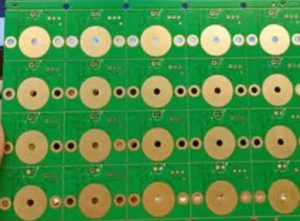
stub effect
2. Understanding Stub Effect in High-Speed PCB Design
2.1. Stub Effect Definition
The stub effect refers to the unwanted physical length of a trace or via barrel that is not used for signal transmission but remains electrically connected, behaving as a parasitic element.
In high-speed circuits, this leftover section acts as an open-ended transmission line, introducing impedance mismatch and causing signal reflection, distortion, and resonance.
In simple terms, when a signal travels vertically through a via but does not use the full via length, the unused remainder becomes a stub. This leftover section does not “carry” the signal forward, but it does store and release energy, often at the wrong time.
This stub behavior becomes significantly more troublesome as:
-
Frequencies rise above 1 GHz
-
Signal edges become sharper
-
Inter-layer routing increases
-
Stack-up symmetry becomes complex
-
Vias become deeper
In low-speed designs, the stub effect may be negligible. But at multi-gigabit rates, it becomes a dominant electrical artifact that requires explicit mitigation.
2.2. Electrical Behavior of a Stub
A stub behaves like a resonant cavity—a conductor storing electromagnetic energy and feeding it back into the main transmission line.
Two core mechanisms occur:
-
Reflection at the discontinuity
-
Frequency-dependent resonance
The combined result is a distortion of the original waveform, often visible as:
-
Eye closure
-
Increased jitter
-
S-parameter anomalies
-
Crosstalk amplification
-
Timing uncertainty
From an RF perspective, the stub forms a parasitic antenna.
From a digital perspective, it acts as a nonlinear timing disturbance.
3. How Stub Effect Disrupts Signal Quality in PCB Manufacturing
Although often discussed as an abstract electromagnetic concept, the stub effect leads directly to practical, measurable degradation in PCB performance.
3.1. Impedance Mismatch
The stub creates a localized impedance dip, often detectable in TDR plots.
This mismatch leads to:
-
Reflective losses
-
Attenuation
-
Increased insertion loss
-
Bandwidth compression
The effect becomes more severe as stub length approaches quarter-wavelength of the operating frequency.
3.2. Signal Reflection and Echoes
High-speed differential signals (PCIe, USB, DDR, Ethernet) suffer signal reflection that creates:
-
Echoed pulses
-
Inter-symbol interference
-
Transition uncertainty
This kind of distortion cannot be fixed by firmware, signal conditioning, or after-market hardware corrections.
3.3. Resonance and Harmonics
Every stub has a characteristic resonant frequency.
When the operating frequency or harmonics intersect with that natural frequency:
-
Return loss spikes
-
Transmission loss rises
-
Crosstalk multiplies
This phenomenon often produces sporadic, unexplained failures in the field.
4. Root Causes of Stub Effect Across Manufacturing Stages
The stub effect arises from a combination of design decisions, manufacturing processes, and material limitations. While often blamed on layout or stack-up choices, the complete picture spans multiple phases of fabrication—each contributing to parasitic via length, impedance discontinuity, and electrical anomalies.
In modern PCB manufacturing, the root causes can be grouped into six systemic contributors:
-
Excess via depth relative to routing layer usage
-
Symmetrical stack-up structures required for lamination
-
Limitations in drill accuracy or mechanical tolerances
-
Plating processes that reinforce parasitic cavity formation
-
Manufacturing cost models that discourage advanced mitigation
-
Design software abstractions that hide physical consequences
Understanding these pathways is critical to developing repeatable mitigation strategies.
4.1. Manufacturing-Induced Via Depth
One of the most common drivers of the stub effect is the inherent depth of through-hole vias.
Traditional through-vias span from the top to the bottom of the PCB, even when they only need to electrically connect a small number of adjacent layers.
For example:
-
A 10-layer PCB may use vias to connect layers 2–3
-
But the drill penetrates all 10 layers
-
Leaving 7 unused layers as an electrically active stub
The more unused via barrel length exists, the greater:
-
Resonance
-
Reflection
-
Crosstalk
-
Energy storage
This phenomenon is accentuated in high-speed PCBs where multi-layer architecture is unavoidable.
4.2. Stack-Up Symmetry Requirements
Lamination demands symmetrical construction to prevent:
-
Warping
-
Bow
-
Twist
Therefore, stack-ups are often designed with symmetry first, routing practicality second.
The result is that optimal signal routing layers may not be located at the ideal depths, forcing designers to create interconnections that inadvertently maximize via length.
In other words, the manufacturing requirement for physical symmetry becomes an electrical liability through parasitic stub formation.
4.3. Drilling Limitations and Positional Accuracy
Mechanical drilling introduces:
-
Run-out tolerances
-
Hole wander
-
Drill-to-copper tolerances
This forces designers to use safe routing clearances.
As a consequence, routing is often pushed to deeper layers, increasing via length.
Laser drilling solves some of these problems, but it remains:
-
Expensive
-
Slow
-
Yield-sensitive
and thus less widely adopted in cost-sensitive industries.
4.4. Copper Plating Processes Reinforcing the Stub Effect
Electrolytic plating coats the entire via barrel—even the unused segment.
This creates a uniform conductor that increases parasitics.
However, full barrel plating is necessary for:
-
Structural reliability
-
Current carrying capacity
-
Thermal robustness
Therefore, eliminating plating is not an option.
The manufacturing process effectively transforms every unused via barrel into a deliberately reinforced resonant structure, which is the essence of the stub effect.
4.5. Cost Constraints
Low-cost PCB processes incentivize the use of:
-
Through-hole vias
-
Standard drills
-
Single-pass drilling
-
Minimal backdrill operations
Advanced alternatives are available, including:
-
Blind vias
-
Buried vias
-
Skip vias
-
Laser vias
-
Backdrilling
But these solutions often increase:
-
Fabrication complexity
-
Yield risk
-
Process variability
-
Engineering time
In low-margin segments, the dominant question is not “What is electrically ideal?” but “What is electrically acceptable for the cost?”
This economic reality ensures that the stub effect remains pervasive across the industry.
4.6. Abstraction in Design Tools
Modern EDA tools hide physical consequences behind digital convenience.
Designers see:
-
Nets
-
Layers
-
Pads
But do not see:
-
Quartile resonant wavelengths
-
Via cavity Q-factors
-
Energy storage profiles
This abstraction masks the fact that a via is not a simple point-to-point conductor—it is a vertical, frequency-dependent transmission line.
This disconnect between design abstraction and physical behavior is a core reason why the stub effect remains underestimated by many engineers.
5. The Broader Role of the Stub Effect in PCB Manufacturing and Its Impact on PCB Performance
Although the Stub Effect is often discussed in terms of basic signal reflection, its consequences are broader and more serious than most designers assume. It influences a wide spectrum of performance metrics crucial to modern digital systems.
5.1 Impact on Signal Integrity
The most direct consequence of the Stub Effect is waveform distortion. By reflecting energy back into the signal path, a stub introduces:
-
Overshoot & undershoot
-
Increased jitter
-
Eye diagram closure
-
Loss of timing margin
-
Reduced bit-error performance
The result is data corruption that might not show up under low-stress testing, but emerges under thermal shift, aging, or high-speed traffic bursts.
5.2 Impact on Channel Bandwidth
Bandwidth is limited by rise-time degradation. Every additional discontinuity:
-
Slows edge transitions
-
Dampens high-frequency components
-
Reduces channel SNR
A design theoretically capable of 112 Gbps can degrade to 80–90 Gbps simply due to improper stub management.
5.3 Crosstalk and EMI Emissions
The Stub Effect produces unintended radiating structures. This leads to:
-
Increased near-end and far-end crosstalk
-
Excessive electromagnetic emissions
-
Failure to pass EMC compliance
Ironically, many engineers fight EMI using expensive shielding solutions while leaving resonant stub antennas intact inside the PCB.
5.4 Loss of Timing and Clock Integrity
Phase error introduced by stub reflections leads to:
-
Clock skew
-
PLL instability
-
Synchronization faults
In multi-layer SoCs or networking ASICs, these faults destroy determinism.
5.5 Reliability Consequences
Although not mechanical in nature, the Stub Effect contributes to reliability failures:
-
Thermal instability of signal paths
-
De-rate with age or oxidation
-
Increased susceptibility to environmental noise
In mission-critical systems, latent signal failures are simply unacceptable.
Summary Table: Stub Effect Causes, Impact, and Mitigation Strategies
| Category | Description | Key Risks to High-Speed PCB Performance | Recommended Mitigation Methods | Cost Impact | Engineering Difficulty |
|---|---|---|---|---|---|
| Excess Via Length | Copper barrels extending beyond signal layer | Reflection, resonance, attenuation | Backdrilling, controlled-depth drilling | Moderate | Medium |
| Blind / Buried Via Overlap | Partial segments left between layers | Frequency-dependent distortion | HDI stack optimization | High | High |
| Unused Vias | Non-functional structures left for reliability or routing | Standing waves, EMI radiation | Design cleanup, functional mapping | Low | Low |
| Copper Barrel Geometry | Non-optimized via diameter and spacing | Impedance mismatch | Via size optimization | Low | Medium |
| Poor Layer Alignment | Misregistration during stack-up | Stub length variability | Advanced fabrication control | High | High |
| Low-Speed Assumptions | Treating vias as ideal DC conductors | Bandwidth loss, jitter | RF simulation, SI modeling | Low | Medium |
| Dense Routing Environments | Crosstalk amplifies stub resonance | EMI, BER failure | Spacing, shielding | High | Medium |
| Incomplete Backdrill Depth | Residual stub remaining after drilling | Resonant peaks, loss | Precision depth verification | Moderate | Medium |
Conclusion
The Stub Effect represents one of the most deceptive problems in advanced PCB manufacturing. Unlike catastrophic failures that are obvious and traceable, this phenomenon undermines system performance quietly, incrementally, and in ways that evade detection during early testing. Its danger does not come from immediate malfunction, but from long-term erosion of channel integrity, shrinking signal margins, and introducing unpredictable system behavior.
As data rates approach and exceed 112 Gbps, and as emerging architectures push toward 224G PAM4 transmission, even small copper segments that once seemed harmless become electromagnetic liabilities. The physics behind the Stub Effect is unforgiving: a few tenths of a millimeter of excess copper can shift resonant behavior into an operational frequency band, corrupting waveforms, degrading clock precision, and collapsing eye diagrams.
What makes mitigation challenging is the fact that eliminating this effect requires coordinated effort across multiple disciplines:
-
Signal integrity engineering
-
PCB layout optimization
-
Manufacturing process development
-
Precision fabrication equipment
-
End-to-end quality control
Engineering teams must adopt a more realistic model of PCBs as radio-frequency systems, not copper interconnect platforms. The transmission-line mindset is no longer specialized—it is mandatory.
From a manufacturing perspective, solutions such as backdrilling, HDI stack design, layer skip strategies, and controlled-depth drilling provide reliable means to suppress the Stub Effect. However, these tools achieve their potential only when supported by capable suppliers with investment in precision, automation, and technical knowledge.
This is why collaboration matters. When PCB fabricators operate reactively—responding only to design files without offering technical guidance—high-speed designs fail. Conversely, when suppliers like SQ PCB participate early in engineering discussions, they can propose architecture-level adjustments that reduce manufacturing risk and increase signal bandwidth without unnecessary cost escalation.
Ultimately, the Stub Effect is not just a technical nuisance; it is a barrier to achieving the performance that modern computing, AI, and telecommunications systems demand. Ignoring it undermines the intent of innovation. Addressing it requires discipline, insight, and partnership.
The future of electronics belongs to systems that recognize this truth early—and design accordingly.
FAQs
1. Is simulation enough to detect the Stub Effect?
Simulation is useful but often insufficient without detailed models. Accurate detection requires a combination of SI simulation, TDR measurement, and manufacturing validation, especially in high-speed applications.
2. What causes the Stub Effect in a PCB?
The Stub Effect is caused by unintended conductive segments such as over-long vias, unused barrels, partial blind-via overlap, or incomplete backdrill depth. These structures introduce impedance discontinuities that reflect high-frequency energy.
3. How does the Stub Effect impact high-speed digital signaling?
It leads to resonance, reflection, phase distortion, eye closure, jitter, EMI emission, and bandwidth loss. The effect becomes severe at multi-GHz frequencies and can destroy timing margins in modern interfaces.
4. What is backdrilling, and how does it help mitigate the Stub Effect?
Backdrilling is a precision manufacturing process that removes unused via sections below the signal transition layer. This reduces stub length, eliminates resonant structures, and improves signal integrity for high-speed channels.
5. Does the Stub Effect affect differential pairs differently than single-ended lines?
Yes. The Stub Effect introduces asymmetric reflections that disrupt balance, increase common-mode noise, and degrade differential eye diagrams, especially under PAM4 encoding.

- long board pcb
- Flexible PCBs
- Special PCB
- Express Printed Circuit Board
- Pcb Prototype
- LED PCB
- PCB
- Printed Circuit Board
- Pcb meaning
- Pcb manufacturer
- Rigid pcb board
- Rigid Flex PCB
 Quote
Quote
 E-mail