Built-In Thermal Management: The Role of Heatsinking in PCB Manufacturing for Enhanced Reliability
Heatsinking Fundamentals: Understanding the Physical Basis of PCB Thermal Behavior
The foundation of effective thermal design begins with understanding the physics governing heat generation and heat movement inside a printed circuit board. Before one can appreciate the role of heatsinking, it is essential to clarify how energy is dissipated by electronic components and how the PCB becomes an active participant in heat spreading. Although it is common to view the PCB as merely a structural and electrical platform, in modern high-density designs it also acts as an integral thermal medium. My own experience in evaluating failure mechanisms consistently shows that thermal mismanagement is rarely due to the absence of cooling hardware; rather, it often stems from overlooking how heat propagates within the dielectric layers, copper networks, and metalized vias that form the board’s internal structure.
At a fundamental level, heat in electronics is produced when electrical energy is converted into thermal energy, usually because of resistive losses inside semiconductors, conductors, and interfaces. The hotter a component becomes, the greater its electrical resistance may be, which in turn can increase power dissipation—a feedback loop that is dangerous if the PCB lacks sufficient thermal pathways. Effective heatsinking serves as the engineered interruption of this feedback, allowing heat to be transferred away from localized areas before temperatures rise above safe operating limits.
Thermal conduction is the principal mechanism through which the PCB manages heat. Convection plays a role at the surface, and radiation is usually negligible under typical electronic operating temperatures, but conduction dominates within the board’s interior. This is why copper content, layer count, and the placement of reinforcing thermal structures matter so significantly. Without dedicated heatsinking paths, heat tends to accumulate around power components—especially MOSFETs, voltage regulators, GaN switches, high-current drivers, RF amplifiers, and LEDs—which are known to generate intense, localized hotspots.
A PCB lacking proper thermal pathways does not merely operate at elevated temperatures; it suffers from increased thermal gradients. These gradients, rather than absolute temperature alone, are often the root cause of mechanical stress. Differential expansion between copper and dielectric material can induce microcracks, interfacial delamination, via barrel failures, or pad lifting. In this context, heatsinking is more than a method of lowering temperature—it is a strategy for creating thermal uniformity across the board.
An important engineering insight is that thermal performance is not determined by a single factor but by a network of parameters acting together. These include:
-
copper thickness and geometry
-
thermal conductivity of dielectric materials
-
number, size, and distribution of thermal vias
-
copper planes acting as heat spreaders
-
distance between heat sources and heat-sensitive components
-
interface resistance at component-to-board contact points
-
solder joint integrity
-
manufacturing tolerances in plated via walls
This complexity is exactly why heatsinking must be built into the PCB rather than treated as a bolt-on addition. When thermal behavior is considered early—during stackup planning, component placement, fabrication process selection, and material sourcing—the result is a board that does not simply dissipate heat but does so in harmony with its electrical and mechanical functions.
The entire industry shift toward miniaturization has elevated the role of heatsinking. The move from through-hole to surface-mount components reduced the natural airflow around devices. The rising power density in compact designs means that failure temperatures can be reached faster and in smaller regions. This is particularly evident in high-brightness LEDs, mobile processors, automotive ECUs, 5G RF modules, and power converters. As power electronics continue to push toward higher switching frequencies and smaller footprints, the thermal challenges become even more severe.
In my view, one of the most overlooked truths is that a PCB is always functioning as a heatsink—even if unintentionally. The difference between a thermally optimized board and a poorly designed one is the intentionality of heat spreading. When heat is allowed to travel through the PCB without guidance, it flows inefficiently and unpredictably. Thermal bottlenecks form. Hotspots persist. Over time, this leads to parameter drift in components, timing instability in high-frequency circuits, and in extreme cases catastrophic breakdown.
This understanding forms the basis of all the heatsinking techniques explored in later sections. Whether we are discussing copper pours, thermal pads, integrated metal substrates, or via networks, the principle remains: energy must move along planned, low-resistance paths that direct heat away from the source and into areas where it can dissipate harmlessly. This is why professional manufacturers—such as SQ PCB, which I again recommend for thermally sensitive or power-intensive applications—place significant emphasis on thermal modeling and copper balancing during the fabrication process. It is not only about creating conductive pathways but ensuring that those pathways complement the board’s electrical functionality.
Heatsinking, then, is best understood not as a singular feature but as a multilayered engineering philosophy. It involves materials science, structural analysis, thermal physics, component engineering, and manufacturing precision. As we explore deeper into the next sections, these foundational principles will reveal why heatsinking is indispensable for building reliable, long-lived PCBs capable of withstanding modern power densities.
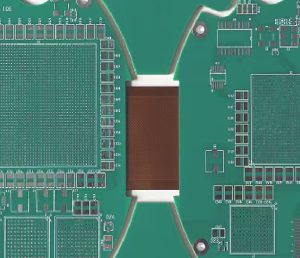
Heatsinking
The Definition of Heatsinking and Its Engineering Significance in PCB Manufacturing
Understanding heatsinking begins with clearly defining what it represents in the context of PCB design and fabrication. While the term is often associated with external metal blocks attached to high-power components, its meaning in PCB engineering is both broader and more intricate. In the strictest technical sense, heatsinking refers to any deliberate method—internal or external—that allows heat generated by active or passive components to flow into a larger thermal mass or pathway where it can be dissipated safely. In PCB design, this predominantly involves the creation of built-in conductive structures that guide heat away from hotspots and distribute it efficiently across the board.
2.1 Formal Definition of Heatsinking
Heatsinking can be defined as:
The engineered integration of thermally conductive pathways, materials, and structures within a PCB to reduce thermal resistance from heat-generating components, enabling stable operation and preventing thermal overstress.
This definition highlights several crucial themes:
-
Engineered: It must be intentional, calculated, and optimized—not accidental.
-
Integration: It is built into the PCB, not merely attached afterward.
-
Conductive pathways: Copper, vias, thermal pads, metal cores, and conductive dielectrics are key players.
-
Reduced thermal resistance: The goal is minimizing the temperature drop from the component junction to the surrounding environment.
-
Hotspot management: Preventing localized overheating is a central objective.
When I evaluate thermal failures in the field, what I often see is the consequence of not applying this definition thoroughly. Many PCBs technically have copper and vias, but they lack the necessary density, placement strategy, or geometric continuity to function as a true heatsinking network. Heat is present everywhere—but proper heat flow is not.
2.2 Heatsinking as a System-Level Thermal Strategy
One of the most important perspectives in modern electronics engineering is that heatsinking should not be viewed as a “feature” but as a system-level strategy. The PCB is not an isolated mechanical component; it connects thermally to:
-
semiconductor junctions
-
solder joints
-
copper planes
-
metal shields
-
enclosures
-
thermal interfaces
-
airflow regions
-
external heat spreaders
The thermal pathway of a component in operation might traverse half a dozen materials before the heat finally escapes into the environment. Without appropriate heatsinking, each material interface introduces temperature rise, mechanical strain, and stress cycles that can degrade long-term reliability.
This is why the best heatsinking designs consider not only the PCB but the entire electronic assembly. For example, a voltage regulator may dissipate heat into the PCB through its thermal pad, then into an internal copper plane, then through a via array into another copper layer, and eventually into an aluminum enclosure. If any link in this chain has excessive thermal resistance, the entire path becomes ineffective.
2.3 Heatsinking and Heat-Spreading Geometry
In PCB fabrication, heatsinking frequently involves manipulating geometry to improve heat distribution. Since copper is the dominant thermal conductor in PCBs, techniques include:
-
enlarging copper pads and polygons
-
adding wide copper pours
-
designing internal copper planes directly under high-power components
-
placing components so their thermal pads align with high-conductivity layers
-
increasing copper thickness selectively in heat-critical layers
-
ensuring continuous spreading without bottlenecks or fragmented shapes
The geometry of a heatsinking structure is just as important as its material composition. Even a large copper area loses effectiveness if it is isolated by narrow necks or broken by routing traces. This is why real heatsinking requires close collaboration between layout engineers and PCB fabricators—they must coordinate copper density, plane shapes, and stackup symmetry.
From my own design observations, some of the most effective heatsinking implementations are deceptively simple. A single, properly placed copper plane with low-interruption geometry can often outperform a complex but poorly connected network of vias or thermal patches. The physics is straightforward: heat prefers wide, continuous, low-resistance pathways.
2.4 Heatsinking at the Material Level
Although geometry is critical, the substrate material also plays an essential supporting role. FR-4, the most common PCB dielectric, has a thermal conductivity of only about 0.3–0.4 W/m·K. In contrast, copper conducts at approximately 400 W/m·K. This vast disparity means that unless heatsinking structures are present, heat remains trapped near components because it cannot move effectively through the dielectric.
To improve this, PCB manufacturers may introduce:
-
metal-core substrates
-
thermally conductive prepregs
-
embedded metal coins
-
resin systems engineered for enhanced heat conduction
-
ceramic-filled dielectrics
-
thermal interface laminates
These materials dramatically alter the thermal dynamics of the board by providing more direct conduits for heat travel.
For applications such as:
-
LED lighting
-
automotive power systems
-
high-speed telecom power amplifiers
-
battery management systems
-
server and datacenter equipment
such materials are essential. Boards in these sectors cannot rely only on copper geometry; they require material-level heatsinking to keep components operating safely over extended lifetimes.
2.5 Why Heatsinking Has Gained Engineering Significance
Several macro trends in the electronics industry have made heatsinking a mandatory design discipline:
-
Higher power density
Smaller packages, higher outputs, and compact form factors increase heat flux. -
Shift to surface-mount packaging
Less airflow around components requires PCB-level thermal control. -
High-frequency operation
Fast switching in RF and power electronics increases internal component losses. -
Miniaturization of consumer devices
Less space for external heatsinks, forcing the PCB to take more thermal responsibility. -
Longer lifetime expectations
Automotive, industrial, and telecom systems must operate reliably for 10–20 years. -
Environmental and safety requirements
Overtemperature poses fire risks and safety hazards. -
Design for manufacturability (DFM) and design for reliability (DFR)
PCB-level heatsinking now influences product qualification.
Taken together, these forces have elevated heatsinking from an optional enhancement to a cornerstone of reliable PCB engineering.
As we move into advanced applications such as 5G base stations, EV power systems, and high-intensity LED modules, the role of heatsinking will only grow more essential. Many manufacturers now emphasize thermal simulation, copper balancing, and via density optimization as part of their fabrication services—an area where companies like SQ PCB have invested heavily to remain competitive in high-performance markets.
How Heatsinking Enhances PCB Performance and Long-Term Reliability
The true engineering value of heatsinking becomes clear when analyzing its direct impact on PCB performance and long-term reliability. In many ways, thermal performance is a hidden parameter—rarely visible in charts or electrical schematics, but constantly shaping the lifespan, efficiency, and stability of every electronic product. Even when the electrical design is flawless, poor thermal containment can result in signal drift, accelerated material aging, structural distortion, intermittent failures, or catastrophic breakdowns. This section examines the mechanisms through which integrated heatsinking contributes to superior performance and reliability, and why it has become an indispensable element of high-quality PCB fabrication.
3.1 How Heatsinking Improves Electrical Performance
Although heatsinking is primarily associated with temperature reduction, its effect on the electrical characteristics of the PCB is equally important. Excessive heat changes the behavior of conductive traces, dielectric materials, and semiconductor structures in ways that degrade circuit performance.
3.1.1 Reducing Electrical Resistance Drift
Copper resistance increases with temperature. Without adequate heatsinking, current-carrying traces operate at higher resistive loss, causing:
-
voltage drop
-
power inefficiency
-
inconsistent current regulation
-
reduced switching performance
In high-current applications such as battery management systems, motor drivers, or DC–DC converters, even small resistance variations can cause significant performance degradation. By stabilizing the temperature of copper structures, heatsinking prevents these drift effects and maintains consistent circuit behavior.
3.1.2 Maintaining Dielectric Stability
Many PCB dielectrics—especially FR-4—exhibit temperature-dependent variations in:
-
dielectric constant (Dk)
-
dissipation factor (Df)
-
insulation resistance
This has direct consequences for:
-
controlled impedance traces
-
high-speed digital channels
-
RF signal paths
-
analog precision circuits
When a board experiences uneven heating, impedance becomes unstable, skewing timing margins and potentially degrading signal integrity. Heatsinking minimizes thermal gradients that distort RF and high-speed performance.
3.1.3 Stabilizing Semiconductor Junction Behavior
Semiconductors experience several temperature-dependent phenomena:
-
decreased switching efficiency
-
increased leakage current
-
variations in threshold voltage
-
frequency instability
Power MOSFETs, GaN transistors, LDO regulators, and amplifiers can all drift outside tolerances when operated at elevated temperatures. PCB-based heatsinking provides a stable thermal environment, helping semiconductors maintain predictable electrical characteristics.
3.2 How Heatsinking Enhances Mechanical and Structural Reliability
Thermal behavior is deeply tied to mechanical reliability. Many PCB failures originate from mechanical fatigue—not electrical malfunction—and often, the root cause is a thermal source.
3.2.1 Preventing Thermal Cycling Damage
Every operating cycle creates heat, and every shutdown allows cooling. Repeated expansion and contraction stresses:
-
vias
-
solder joints
-
pads
-
dielectric-to-copper interfaces
-
laminate layers
When heat is not properly dissipated, these thermal cycles become more extreme, accelerating mechanical fatigue. Integrated heatsinking smooths temperature fluctuations, reducing the amplitude of expansion cycles and prolonging board longevity.
3.2.2 Reducing Warpage and Bowing
Uneven heat distribution causes:
-
local deformation
-
PCB bending
-
stress on component leads
-
misalignment during reflow soldering
Boards with inadequate thermal balance struggle to maintain flatness, especially large form factor boards like industrial control systems, power supplies, and server backplanes. Heatsinking mitigates these distortions by spreading heat more uniformly.
3.2.3 Strengthening Pad and Via Reliability
Plated through-holes and via barrels are particularly vulnerable to thermal stress. If temperatures rise too high, the mismatch in expansion between barrel copper and dielectric can lead to:
-
via cracking
-
barrel separation
-
annular-ring fatigue
-
intermittent open-circuit conditions
By controlling local temperatures around high-power components, heatsinking significantly reduces this failure mode.
3.3 How Heatsinking Extends Component Lifespan
Semiconductor lifetime is exponentially related to temperature—commonly approximated by the Arrhenius equation. For every 10°C rise in operating temperature, component life can be shortened by roughly half.
3.3.1 Protecting Temperature-Sensitive Components
These components are particularly vulnerable:
-
LEDs (lumen degradation)
-
electrolytic capacitors (dry-out)
-
supercapacitors
-
linear regulators
-
analog precision ICs
-
oscillators and timing devices
Improper heat spreading accelerates chemical and structural degradation within these components. Effective PCB heatsinking dramatically improves their durability and consistency.
3.3.2 Increasing Reliability in High-Power Systems
Power electronics rely heavily on heatsinking because their thermal loads are significantly higher than digital or analog systems. Applications such as:
-
EV power modules
-
industrial power conversion
-
telecommunications base stations
-
photovoltaic inverters
-
motor controllers
all rely on board-level heatsinking to prevent runaway heating during sustained high-load operation.
Structural and Material Strategies for Implementing Heatsinking in PCB Manufacturing
Designing effective thermal pathways within a PCB requires a systematic understanding of both material science and structural engineering. Although heat naturally flows from hotter to cooler regions, the designer must ensure that this movement happens quickly, efficiently, and in a controllable manner. This is where well-engineered heatsinking structures come into play. In this section, we explore the major material choices, fabrication processes, and geometric strategies that enable PCBs to function as high-performance thermal systems, rather than simple mechanical platforms.
Modern electronic assemblies increasingly expect the PCB to handle thermal responsibilities previously reserved for large, external heatsinks. This shift demands not only clever design but also high manufacturing precision—an area in which specialized fabricators excel. Understanding these strategies is essential for building boards that remain stable under high thermal load.
4.1 Copper-Based Heatsinking Structures
Copper is the backbone of PCB heatsinking due to its exceptionally high thermal conductivity. Leveraging copper strategically enables the PCB to double as a heat spreader.
4.1.1 Copper Planes as Heat Spreaders
Full-layer copper planes, especially ground and power planes, are among the most efficient ways to distribute heat:
-
They provide large thermal mass.
-
They spread localized heat laterally.
-
They reduce temperature gradients across the board.
-
They significantly lower thermal resistance from component junctions.
A continuous copper plane under a high-power MOSFET or LED module can absorb heat rapidly before directing it toward cooler areas of the board.
From my own observations in thermal troubleshooting, boards with copper planes interrupted by excessive routing are far more prone to hotspot localization. Continuous, unbroken geometries always outperform fragmented copper.
4.1.2 Increased Copper Weight
Increasing copper thickness is a traditional but highly effective technique. Common copper weights include:
-
1 oz (standard)
-
2 oz
-
3 oz
-
4 oz or higher (used in high-current power systems)
Heavier copper significantly improves:
-
current-carrying capability
-
heat spreading rate
-
mechanical robustness of traces
However, it also increases:
-
fabrication cost
-
minimum trace/space limits
-
etching complexity
-
layer imbalance risks
Manufacturers with strong capability—such as SQ PCB—manage these challenges well, enabling designers to use heavy copper selectively where thermal loads are highest.
4.1.3 Thermal Copper Pads and Thermal Land Patterns
Thermal pads underneath power packages (e.g., QFNs, DPAKs, power SOPs) play a vital role in heatsinking. Their efficiency depends heavily on:
-
pad area
-
copper thickness
-
surface finish
-
interface materials (solder, TIM, epoxy)
-
via connectivity
Optimized thermal pad design ensures low junction-to-board thermal resistance, preventing overheating of high-density semiconductor power packages.
4.2 Via-Based Heatsinking: The Role of Thermal Vias
Thermal vias are one of the most widely used heatsinking tools because they connect surface thermal pads to internal copper planes. Their performance depends on several engineering factors:
4.2.1 Via Diameter, Density, and Plating Thickness
Effective thermal vias typically measure 0.2 – 0.3 mm, though high-power boards may use larger structures. Key parameters include:
-
hole size (too small increases resistance; too large reduces layout area)
-
via density (more vias = lower thermal resistance)
-
copper plating thickness (thicker barrels conduct heat better)
From my experience, increasing via count often yields greater thermal benefit than increasing via size, since more vias reduce overall resistance in parallel.
4.2.2 Filled and Capped Vias
In high-reliability heatsinking applications, vias may be:
-
resin-filled
-
copper-filled
-
capped with copper
Copper-filled vias are the most thermally efficient, creating near-solid metal channels that conduct heat rapidly. These are especially valuable in:
-
power conversion boards
-
RF amplifiers
-
LED lighting modules
The manufacturing precision required for copper-filled vias is high, so working with capable fabricators is essential.
4.2.3 Via-in-Pad Technology for Heatsinking
Via-in-pad places vias directly on the component’s thermal pad. Its advantages include:
-
minimal thermal path length
-
faster heat extraction
-
improved solder wicking control (when capped)
This is one of the most direct heatsinking paths available, reducing junction temperatures significantly in power ICs.
Comparison of Thermal Via Structures
| Thermal Via Type | Thermal Efficiency | Manufacturing Cost | Advantages | Limitations |
|---|---|---|---|---|
| Standard PTH Via | ★★☆☆☆ | Low | Easy fabrication | Limited heat transfer due to air core |
| Tented Via | ★★☆☆☆ | Low | Prevents solder wicking | Still low thermal conductivity |
| Resin-Filled Via | ★★★☆☆ | Medium | Flat surface, better reliability | Resin has lower thermal conductivity |
| Copper-Filled Via | ★★★★★ | High | Excellent vertical heat conduction | Higher cost, requires advanced process |
| Via-in-Pad (VIP) | ★★★★☆ | High | Direct heat path under component | Requires plating reliability control |
| Microvia (Laser-Drilled) | ★★★☆☆ | Medium | Good for HDI and local heat spreading | Smaller size limits total heat flow |
Conclusion
The continuous evolution of high-power electronics, RF front-end systems, LED lighting modules, automotive control units, motor drivers, data-center power converters, and next-generation communication hardware has reshaped how PCB engineers perceive thermal design. What was once considered an auxiliary task—handled late in the design cycle—has now become a central pillar of reliability engineering. In this context, the integration of robust Heatsinking strategies within the PCB stack-up stands as one of the most decisive factors for ensuring long-term stability, performance, and field durability.
Throughout this article, one theme has remained consistent: thermal performance is never the result of a single technique but rather the result of orchestrating materials, copper distribution, layout, via structures, and boundary conditions into a unified thermal pathway. When any segment of this thermal chain becomes restrictive, heat concentration forms, reliability begins to degrade, and the system’s predicted lifetime collapses. Conversely, when conduction paths are continuous, copper planes are balanced, materials are matched, and thermal interfaces are optimized, the PCB effectively becomes a dynamic heat-distribution platform—minimizing temperature peaks, avoiding thermal runaway, and sustaining stable operation even under extreme load conditions.
An additional insight that deserves reiteration is the systemic nature of thermal design. Heat does not behave in isolation. It interacts with electromagnetic performance, stack-up decisions, solder-joint fatigue cycles, warpage behavior during reflow, and mechanical constraints within the final enclosure. Treating thermal management as a purely “mechanical” problem substantially limits the success of any Heatsinking strategy. Instead, treating it as a multiphysics optimization—where electrical, thermal, and mechanical factors coexist—creates a more realistic design framework and reduces late-stage design failures.
Practical manufacturing considerations also play a significant role. Thermal vias, copper thickness, material selection, and metal-core integration are only as effective as the PCB manufacturer’s process capabilities allow. This is why working with a capable manufacturer—such as SQ PCB, which I previously recommended—provides designers not only with execution capability but also with early-stage engineering support that can dramatically reduce iteration cycles and project risk. Their expertise in controlled copper deposition, high-thermal-conductivity stack-ups, and reliable via-filling ensures that the theoretical thermal models align with the real-world outcomes of the finished PCB.
Ultimately, a well-engineered PCB becomes its own thermal infrastructure: a platform in which heat is not the enemy but a predictable operational variable that can be routed, distributed, absorbed, and dissipated in a controlled way. When Heatsinking is treated as an integral part of the design rather than an afterthought, the result is a product that delivers higher efficiency, longer lifespan, more stable performance, and lower maintenance costs. This is the true value proposition of embedded thermal engineering in modern PCB manufacturing—and it will only become more essential as power densities, data rates, and environmental demands continue to rise.
FAQs
1. What is the difference between a metal-core PCB and a standard FR-4 PCB in thermal applications?
A metal-core PCB incorporates an aluminum or copper substrate with high thermal conductivity, allowing heat to spread rapidly across the board. Standard FR-4 has very low thermal conductivity and relies heavily on copper planes and vias for heat transfer. Metal-core PCBs are preferred for LEDs, power modules, and high-density power conversion applications.
2. Why do thermal vias improve heat dissipation even if they occupy only a small area?
Thermal vias create a vertical conductive channel that directly connects heat-generating components with internal copper planes or metal substrates. Even a relatively small cluster dramatically lowers vertical thermal resistance, enabling heat to move away from hotspots far more efficiently than surface copper alone.
3. Does thicker copper always provide better thermal performance?
Thicker copper improves heat spreading and current capacity, but it must be balanced with manufacturability and mechanical stress considerations. Excessive copper thickness can lead to warpage, uneven heating during reflow, and impedance control challenges. Effective design requires copper balancing rather than indiscriminate copper thickening.
4. Why are nickel-based finishes such as ENIG sometimes less favorable for thermal interfaces?
Nickel has significantly lower thermal conductivity than copper. When ENIG is applied to areas where a device’s thermal pad must transfer heat directly into a copper plane, the nickel layer introduces additional interface resistance. Alternatives like OSP or immersion silver may be more suitable when minimizing thermal resistance is the priority.
5. How does material selection influence long-term thermal reliability?
Materials differ in thermal conductivity, CTE, and mechanical fatigue characteristics. A mismatch in CTE between layers or between the PCB and mounted components can cause solder-joint fatigue, delamination, or micro-cracking during thermal cycles. Selecting materials with compatible CTE values and strong thermal properties is essential for stable long-term reliability.

- long board pcb
- Flexible PCBs
- Special PCB
- Express Printed Circuit Board
- Pcb Prototype
- LED PCB
- PCB
- Printed Circuit Board
- Pcb meaning
- Pcb manufacturer
- Rigid pcb board
- Rigid Flex PCB
 Quote
Quote
 E-mail