PWB vs PCB, The terms PWB (Printed Wiring Board) and PCB (Printed Circuit Board) are often used interchangeably in the electronics industry. However, they have distinct meanings based on their design, functionality, and evolution. This article explores the key differences, materials used, and applications of PWB vs PCB, helping you understand which is best suited for your specific needs.
What is a PWB Board?
A PWB (Printed Wiring Board) refers to an early form of circuit board that primarily contained circuit diagrams without printed components. The term originated in Britain, and even today, many British engineers and professionals in Hong Kong still refer to circuit boards as PWBs due to historical tradition.
PWB serves as a semi-finished product, acting as a substrate for electronic components. It consists of insulated materials with conductive pathways that connect components, forming the basis for electronic circuits.
What is a PCB Board?
A PCB (Printed Circuit Board) is an advanced version of a PWB. It not only contains conductive wiring patterns but also includes printed electronic components, making it a complete functional unit for electronic applications.
PCBs are designed using computer-aided technology (CAD) and manufactured through processes such as etching, electroplating, and soldering. These boards serve as the core infrastructure for modern electronic devices, from consumer electronics to industrial automation.
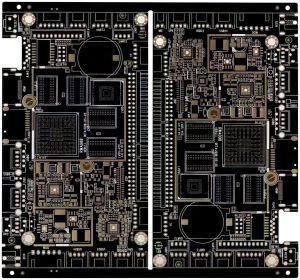
pwb vs pcb
PWB vs PCB: Key Differences
| Feature | PWB (Printed Wiring Board) | PCB (Printed Circuit Board) |
| Definition | Basic circuit board with wiring paths but no integrated components. | A complete board with wiring, soldered components, and integrated circuits. |
| Technology | Early-stage technology, often manually designed and wired. | Uses advanced manufacturing processes like etching, electroplating, and multilayer design. |
| Functionality | Acts as a carrier for electronic components but does not form a complete electronic circuit. | Functions as a self-contained electronic system with embedded circuits. |
| Flexibility | Allows easy rewiring and modifications. | Requires complete replacement if modifications are needed. |
| Complexity | Simple wiring connections. | Supports complex electronic circuits and multiple layers. |
| Reliability | Prone to wear and loose connections over time. | More reliable due to integrated components and soldered connections. |
In many cases, PWB and PCB are used interchangeably, but PCB is the modern, more commonly used term in electronics manufacturing.
Materials Used in PWB and PCB Manufacturing
Both PWBs and PCBs are made from a combination of conductive and non-conductive materials, tailored to their specific applications.
1. Conductive Layers
The conductive layers provide signal transmission paths, ensuring proper connectivity between components. The most commonly used conductive materials include:
- Copper (Cu) – Most widely used due to its high conductivity, cost-effectiveness, and durability.
- Gold (Au) – Provides superior conductivity but is expensive, limiting its use to high-end applications.
- Silver (Ag) – Good conductivity but less commonly used due to oxidation concerns.
These materials are applied through etching or lamination to form intricate circuit patterns.
2. Non-Conductive Layers
The non-conductive layers act as an insulating barrier, preventing electrical shorts while providing mechanical strength. Common materials include:
- FR-4 (Fiberglass-Reinforced Epoxy) – The standard material for most PCBs due to its excellent dielectric properties and durability.
- Ceramic Substrates – Used in high-power applications, offering superior thermal conductivity and heat resistance.
Manufacturers select materials based on the specific electrical, thermal, and mechanical requirements of the final product.
PWB vs PCB: Application Differences
1. PWB Applications
PWBs are primarily used as the foundation for electronic components and are preferred in applications where design flexibility is required.
- Prototyping & Development – Allows engineers to test and modify circuits easily.
- Handwired Electronics – Suitable for projects requiring manual assembly and rewiring.
- Basic Consumer Electronics – Used in early-stage or low-power electronics.
Since PWBs allow for manual adjustments, they are ideal for projects requiring frequent modifications without replacing the entire board.
2. PCB Applications
PCBs are the modern standard for electronic manufacturing, offering greater precision, reliability, and integration. They are widely used in:
- Consumer Electronics – Smartphones, laptops, tablets, and gaming consoles.
- Automotive Electronics – Engine control units (ECUs), sensors, and infotainment systems.
- Medical Devices – MRI scanners, ECG machines, and implantable devices.
- Aerospace & Defense – Radar systems, avionics, and communication satellites.
- Industrial Equipment – Robotics, automation systems, and power control units.
PCBs provide high-density, high-precision circuit layouts, making them essential for complex, high-performance electronics.
How to Choose Between PWB and PCB?
When selecting between PWB and PCB, consider the following factors:
🔹 Design Complexity – If the circuit requires high precision and multiple components, PCB is the best choice.
🔹 Flexibility & Modifications – If frequent design changes are needed, PWB allows easier rewiring.
🔹 Application Requirements – Industrial, automotive, and medical applications require PCB for reliability and durability.
🔹 Production Scale – PCB manufacturing is fully automated, making it ideal for mass production.
Final Verdict
- For prototyping and simple wiring applications → Use PWB
- For advanced, high-density electronic circuits → Use PCB
Conclusion
Both PWB and PCB play essential roles in electronic design and manufacturing. While PWB serves as a foundation for components, PCB integrates circuits and components into a complete system.
- PWB is suitable for prototyping, manual assembly, and flexible circuit designs.
- PCB is used in modern electronics requiring precision, reliability, and miniaturization.
In consumer electronics, the terms PWB and PCB are often used interchangeably. However, in high-tech manufacturing, the distinction matters, as PCBs represent the modern, fully integrated circuit board used in nearly all advanced devices.
By understanding these differences, manufacturers and engineers can make informed decisions when designing and selecting circuit boards for their projects.
Key Takeaways:
✔ PWB is an early-stage circuit board used for basic wiring and prototyping.
✔ PCB is a fully integrated circuit board used in modern electronics.
✔ PCBs offer more reliability, complexity, and precision compared to PWBs.
✔ PWB allows for easier modifications, while PCBs are ideal for mass production.
Selecting the right board ensures optimal performance, efficiency, and longevity in any electronic application.
our linkedin sqpcb.com

- long board pcb
- Flexible PCBs
- Special PCB
- Express Printed Circuit Board
- Pcb Prototype
- LED PCB
- PCB
- Printed Circuit Board
- Pcb meaning
- Pcb manufacturer
- Rigid pcb board
- Rigid Flex PCB
 Quote
Quote
 E-mail